


Donald Trump the 'Negotiator' Blindly Passed On a Great Deal
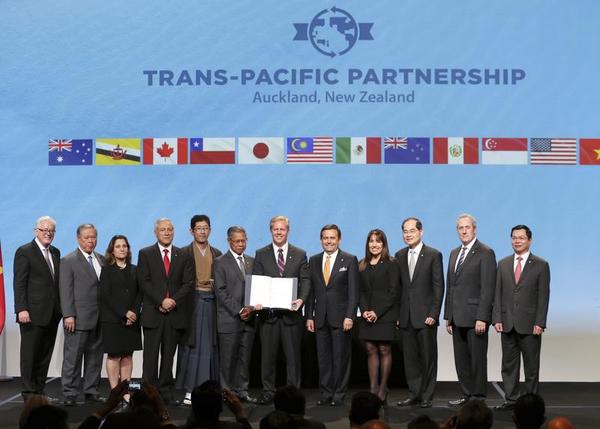
Commerce Secretary Wilbur Ross has come up with an idea – use the Trans-Pacific Partnership (TPP) as a basis for renegotiating NAFTA. Only one problem: Canada and Mexico made concessions during the TPP negotiations – and received little in return – in order to gain access to the huge Pacific Rim market. In the absence of the TPP carrot, the Trump Administration will find it hard to wring the same concessions out of the NAFTA partners – not without U.S. concessions in return. Basically, President Trump tore up TPP in January – only to try to tape it back together in May.
Ross made it clear just how much Trump gave away by walking away from TPP. “There are some concessions that the NAFTA partners made in connection with the proposed TPP. There is no reason to throw those away. We would view those as the starting point,” he told Bloomberg on May 3. The only problem is, President Trump has already thrown a great deal away – all the advances that the Obama Administration made during years of negotiating TPP. The United States was already at an end point when it comes to wringing concessions out of its neighbors. Now it is back to square one.
And it is going back to the starting line without one of their biggest advantages. It is important to keep in mind that both North American trading partners were reluctant to make the concessions they did. The inducement to both of them was the value of the total Pacific Rim market, offered by TPP. Canada was reluctant, for example, to increase access for American farmers to the Canadian market. The Canadian government has long been committed to a supply management system that effectively ensures a monopoly for Canadian dairy farmers (and only those who own quotas). Nonetheless, the Canadian government ended up agreeing to compensate dairy farmers in TPP countries, including the United States. A small step, but also an unprecedented one. President Trump has complained about Canadian dairy protectionism. TPP would have curbed it.
Mexico was disinclined to agree to labor and environmental reforms. Nonetheless, through TPP negotiations it reluctantly agreed to concessions in both areas (accepting requirements and costs which U.S. companies must already meet) such as protection of collective bargaining. For years, the United States has hankered to open up Canadian and Mexican service sectors like insurance, accounting and express delivery, where the U.S. is at the leading edge. The TPP agreement would achieve that. Washington, and American businesses, had hoped to expand NAFTA to cover areas that didn’t even exist when the North American agreement was written, like e-commerce and other digital industries. That was achieved under TPP. New restrictions on government-owned businesses, new protections for intellectual property: The U.S. has long wanted this, and TPP provided it.
How did the Obama Administration get Mexico and Canada to agree to these major concessions? By working to get them into the TPP agreement – therefore giving the two NAFTA trading partners better access to sell their products in the nine other TPP partners’ markets. Obama and his negotiators used access to the Pacific market to further open up the Mexican and Canadian markets. Will Mexico and Canada do the same in return for access they already have to the U.S. market? Or will they hold out, or demand compensatory concessions from the United States?
President Trump likes to portray renegotiating NAFTA as easy. The ironic thing is that TPP made it as easy as could be – the concessions had already been made. Now, Secretary Ross is seeking to reinvent the wheel. It might be a lot tougher this time.
