




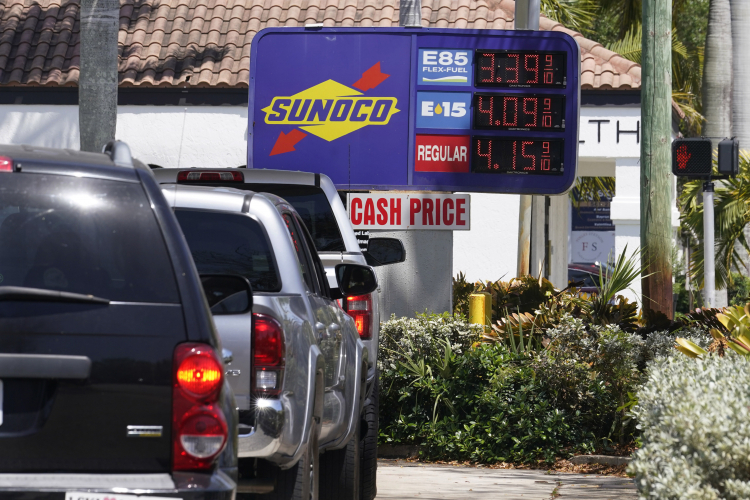
For the last two decades a growing share of the nation’s corn crop has gone towards producing ethanol, to be used as an additive in gasoline. Today, somewhere between 35 to 40 percent of all corn grown is used to produce ethanol. The ostensible motivation for the legislation creating the mandate two decades ago was to help the U.S. become energy independent, while Democrats supported it because of its perceived environmental benefits via reduced greenhouse gas emissions.
However, the massive increase in domestic oil and natural gas production beginning in the late 2000s--due to improvements in fracking technology--led to the U.S. achieving effective energy independence without the need for ethanol, and the supposed environmental benefits of ethanol turned out to be overstated. A better way to understand the laws that led to the tremendous use of ethanol in our energy supply today is that the main motivation for their creation was to serve as a vehicle to transfer money from consumers to corn farmers.
This corn farmer enrichment mechanism may soon get a boost, as a recent proposal would change the current blend of ten percent ethanol and 90 percent gasoline to a fifteen percent ethanol mix. Such a change would have severe ramifications in the refining market--most concerningly by threatening the viability of small, independent refiners.
The large refineries in the U.S. are owned by large oil producers and also have their own gas stations. They blend the ethanol into the gasoline on their own and then directly distribute it to the stations they own. However, independent refiners do not have the ability to do the blending on their own: To ensure that the gas they ultimately sell has the required ten percent share of ethanol they must purchase a Renewable Identification Number (RIN) for each gallon they sell.
However, gasoline demand did not grow as fast as the law that created the ethanol blending mandates assumed, which has led to RIN costs increasing considerably. This has significantly increased the operating costs of independent refiners, which has led several to close while also pushing up the cost of gasoline in the retail market. Since independent refineries tend to be concentrated in smaller, rural communities, their closing can have a considerable impact in such places--both by the jobs and income lost as well as higher gas prices.
The law that created the renewable fuel standard originally had a small refiner exemption from the start, but in the early days of the RFS, when the ethanol mandate was below the blend wall, RIN prices remained low and stable. It was only when the RFS reached the blend wall--or the total amount of ethanol that the market could absorb--in 2013 that RIN prices went out of control. In other words, the RIN prices spiked when the demand for RINs exceeded the number of RINs that could be generated by blending ethanol with gasoline.
The Obama Administration chose not to grant small refiner exemptions, as its goal was to displace petroleum with biofuels. The Trump administration did grant SREs, causing the price of RINs to fall once more to manageable levels. The SREs were tied up in litigation from 2020 to 2024, but after a favorable Supreme Court ruling, the Trump Administration is able to grant them again.
Doing such a thing would be propitious, as the Administration appears poised to increase the ethanol requirements to fifteen percent, which would cause the cost of the RINS that small refiners would need to purchase to ensure the appropriate level of ethanol gets blended into their gasoline to spike, resulting in higher costs for those refiners and higher gasoline costs for consumers.
The American Fuel and Petrochemical Manufacturers, an industry group representing independent refiners, estimates that the total cost of D6 and D4 RINs would reach $70 billion in 2027, which would translate to a 50 cent increase per gallon of gasoline. This is far higher than during the historical peak in 2021, when total RIN costs were in the range of $32 billion.
More importantly, a higher mandate without a provision that gives small refiners flexibility with the ethanol mandates would result in widespread refinery closings, resulting in the destruction of tens of thousands of well-paying jobs in the regions of the country where such things are in short supply.
The benefits of changing the ethanol mandate are limited and the potential costs to U.S. consumers as well as those people who live in communities near small refiners would be significant. A robust expansion of ethanol requirements will invariably lead to the loss of jobs in smaller communities where independent refiners currently operate as well as higher costs at the fuel pump.
The RFS is a flawed system because of the burden it places on independent refiners, and there should be no increase in the ethanol mandate until the EPA fixes the system. The SRE is an essential safety valve to protect small refiners when the cost of RINS is too high, and there should be no year-round E15 without structural changes to the RFS to make it less stressful for small refiners. The SRE does not fix the problem, but it keeps the problem from getting worse.
