




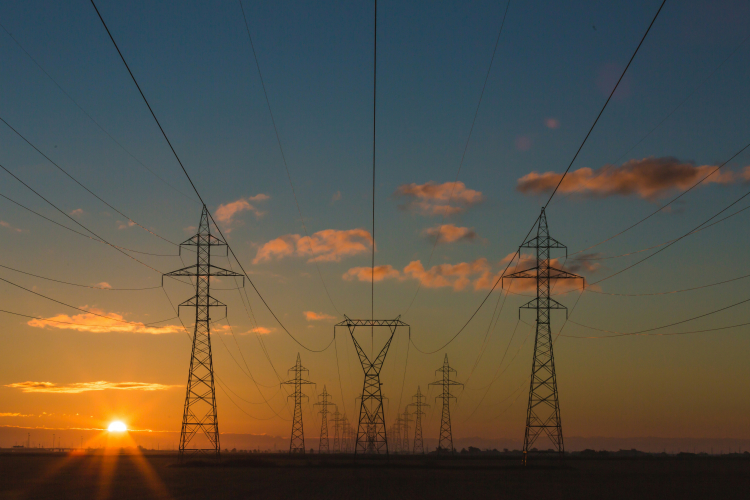
Lately, PJM, the regional electric grid manager that connects 13 states and the District of Colombia, has been in the news but for all the wrong reasons. Stretching from the Carolinas to Chicago, PJM’s core problem is that customers who live and work inside its footprint are facing higher electric bills, and there are no plausible solutions that will provide ratepayers relief anytime soon.
PJM was created in the early 1920s, but its current construct took shape about 25 years ago during the energy deregulation movement that swept the country.
There were many rationales for electricity deregulation, but the core principle was that monopoly utilities were an antiquated way to serve electricity customers. The idea was to leverage the benefits of a “marketplace” to allow energy providers to compete with the utilities to deliver electricity more efficiently, which would then translate into lower prices and improved reliability for customers.
But PJM’s troubles today are a clear manifestation that things are not working out as planned. PJM does not function as an actual marketplace, because it is not facilitating legitimate competition among electricity providers. The result is that PJM is facing a shortage of electricity that is driving up power bills for customers, which in turn has led to pressure from lawmakers to do something about it.
In fairness to PJM, it’s worth pointing out that lawmakers in more progressive PJM states have, in the last decade, taken the position that electricity produced from fossil fuels is bad. As a result, these states have retired gas and coal plants (or failed to construct new ones) and replaced those missing electrons with renewable sources like wind and solar and battery storage.
But these renewables are not one-to-one replacements for baseload sources like natural gas--nor can they be turned on and off as power demand increases and wanes. Hence, electricity rates are being driven up by the combination of limitations on electricity production from renewables as well as the increase in demand from data centers, the electrification of new household appliances, and electric vehicles.
This overreliance on renewables in a few PJM states is just a part of the problem and hardly absolves PJM. It had years of warnings about these market dynamics (declining capacity and increased demand) and did little to address it. It’s painfully clear that PJM is broken and its underlying problem is that it has become a dysfunctional bureaucracy under the guise of being a marketplace.
PJM is governed by a series of highly complex and voluminous rules and regulations consisting of The Open Access Transmission Tariff and Operating Agreement, a Reliability Assurance Agreement, and a series of PJM manuals that are the “administrative, planning, operating and accounting procedures of PJM.” This creates layers of rules and guidelines that translate into a bureaucracy and not a free market.
PJM’s complexity has serious consequences, including the reality that adding new generation onto PJM has become a disaster. A Canary Media report found that PJM isn’t the only grid operator with interconnection challenges but it has one of the worst track records of any power grid operator, with projects taking an average of more than five years to complete all that is required to finally plug into the grid. Advanced Energy United gave PJM a D- score for its interconnection processes in a 2024 survey, the lowest of any U.S. grid operator.” As a result, PJM does not have much more generation capacity than it did in 2024.
Also of note, PJM relegated the regulated utilities to lines and poles companies (in nearly all PJM state utilities are no longer allowed to build their own power plants), to prevent the utilities from overbuilding generation to earn profits from charging their customers for those assets. In PJM, only independent power producers (IPP) can both own generation and sell power to customers. The problem is that these IPPs are not building new power plants to profit from the higher prices in PJM, but are choosing to hold tight and watch their current assets increase in value. Another way of putting it: electricity scarcity means higher profits for IPPs. So, it’s not surprising there is energy scarcity in PJM.
One way to address this growing imbalance would be for PJM to reconsider allowing regulated utilities to build power plants again and sell that electricity to customers. Rather than relying on the IPPs to lose money by building power plants, maybe we could allow utilities to respond to price incentives by building their own power plants. Some states in PJM--most notably Maryland and Pennsylvania--are considering this step.
