




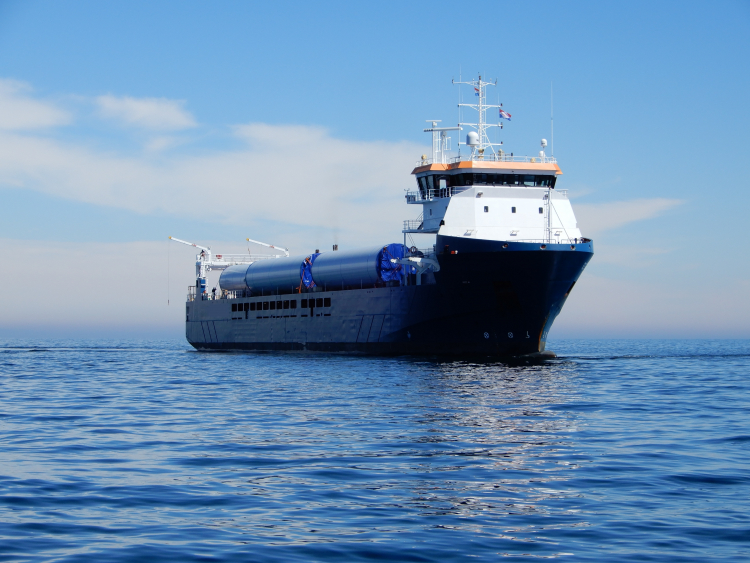
Gasoline prices have surged since conflict broke out in the Middle East between Iran and the U.S., with the former escalating its attacks on oil tankers and infrastructure in the region. President Trump just waived the 106-yr-old Jones Act to help alleviate the subsequent pain at the pump, a law which really belongs in the scrap bin of history.
Intended to maintain a strong domestic maritime industry, the Jones Act requires goods shipped between American ports to be transported on vessels that are built, owned, flagged, and crewed by the U.S. No other comparably stringent regulations exist for other means of transportation.
Press Secretary Karoline Leavitt previously stated, “In the interest of national defense, the White House is considering waiving the Jones Act for a limited period of time to ensure vital energy products and agricultural necessities are flowing freely to U.S. ports.” Ironic that the very law imposed for national interest must be waived for national interest.
But it also begs the question: If waiving the act will reduce prices at the pump (and on other goods), why are we keeping a statute that raises them in the first place?
Restricting U.S. and inland waterways transportation to solely U.S.-built and -run ships artificially inflates the costs of moving cargo by water by protecting them from foreign competition. The Department of Transportation estimates operating a Jones-Act-compliant vessel is twice as expensive as the alternative; a U.S. Maritime Administration study pegs it closer to triple the cost.
American-made ships tend to cost between $190 and $250 million; a similar vessel in a foreign shipyard is about $30 million. At that price tag, U.S. shippers buy fewer ships, and therefore, U.S. shipyards build fewer of them. Only 93 Jones-Act compliant ships are in use today, and the dwindling fleet is aging.
The typical economically useful life of a ship is 20 years. Yet, the ships in operation currently average approximately 30 years old, roughly twice the average ship age of other developed countries.
Between all the complications, risks, and costs of complying with Jones Act regulations and barriers, it is no wonder that shippers seek alternate methods to transport fuel or other goods to various destinations.
Because Jones‑compliant tankers are scarce and expensive, U.S. fuel often takes longer, costlier, and higher‑emission international routes: The U.S. East Coast imports gas from Europe and the Gulf Coast exports gas to Latin America or Asia (instead of simply shipping Gulf Coast fuel to the East Coast by sea). As a workaround, some shippers are routing gas from the Gulf Coast to California through a pit-stop in the Bahamas. These “logistics” defy logic, and the rerouting simply costs more money.
Hawaii and Alaska, both separated from the contiguous U.S., pay some of the highest economic penalties because they rely almost entirely on ocean freight and cannot access cheaper foreign-built vessels for domestic shipments. Critics argue the act is “strangling the economy” of these two states by driving up prices and crushing local businesses.
The Jones Act also increases carbon emissions through shifting freight to trucks and rail, which emit far more CO₂ per ton‑mile, and contributes to traffic congestion.
Considering nearly 40 percent of the U.S. population lives along the coast, eliminating parts of or the entire Jones Act—by allowing cheaper, more efficient ships and shifting freight from trucks to water—would decrease domestic shipping rates by 50 to 75 percent and reduce environmental damages by over $8 billion per year. Transferring a significant portion of domestic shipping to the waterways would ease prices, curtail emissions, and reduce damage to our road and highway infrastructure.
Fuel shipments from the Gulf Coast to the East Coast would also grow by nearly 47 percent, from roughly 250 million barrels per year to 371 million barrels, not only growing the industry in the Permian Basin but terminating the need to import from Europe. Motorists could save anywhere from two to ten cents per gallon.
Politicians talk a lot about affordability these days and bringing prices down for consumers. The current administration ran on it. Scaling back or completely repealing the Jones Act would be one way to advance that objective.
