




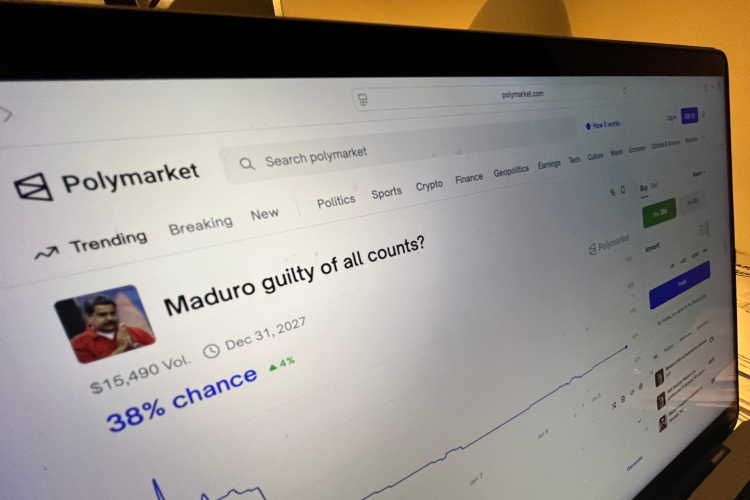
Critics argue that predicting markets allows wagerers to profit from tragedy. However, when the parent company of the New York Stock Exchange invests $600 million in this emerging space, it’s no longer a novelty; it’s a financial reality.
The media and lawmakers have focused on the possible drawbacks of prediction markets, overshadowing the benefits. The information generated on these platforms can help improve decision-making and, in some cases, save lives.
Regulators should avoid bans and excessive red tape. With proper oversight in place, prediction markets can effectively replace misinformation at a time when confidence in experts is plummeting.
Trust in expert forecasts and opinions has declined in recent years, which shouldn’t surprise anyone. The problem isn’t a lack of expertise; no individual has access to all the information.
Nobel Laureate F.A. Hayek argued that knowledge is “dispersed” across individuals rather than concentrated in the hands of a few people. To overcome the limitations of centralized knowledge, the answer is not to produce more expert analysis, but to aggregate the information held by millions of people.
Prediction markets present a potential solution. By allowing participants to place wagers on outcomes, these markets create financial incentives for accuracy and honesty, thus bridging the gap between expert opinions and local knowledge.
For years, Prediction markets have proven their worth in both the public and private sectors. The Iowa Electronic Markets (IEM), the oldest existing prediction market, outperformed 964 polls across five presidential elections and was more accurate 74% of the time.
Before DARPA discontinued the FutureMAP program, it was 75% more accurate than official forecasts in predicting geopolitical events. Companies like Google and Eli Lilly use prediction markets to manage internal operational challenges.
Despite their accuracy, prediction markets have increasingly drawn scrutiny. Critics argue that the current regulatory landscape resembles the “wild west”, as concerns surface over insider trading. These are valid concerns. As prediction markets continue to grow, questions regarding transparency and market integrity will become more pressing.
In response to the growing criticism, new regulations and restrictions on these platforms are in the works, including the Prediction Markets Are Gambling Act, which seeks to ban contracts related to sporting events.
Heavy-handed regulation can cause a chilling effect, reducing access and decreasing participation, undermining the very purpose of these sites. A light-touch approach, such as a sandbox framework, is what is needed, not onerous regulations and bans.
In regulatory sandboxes, companies can innovate while authorities monitor them. After the exploration phase of the sandbox, policymakers determine which rules need refinement, striking a balance between oversight and the freedom to innovate, without stifling progress through over-regulation.
Several states in the U.S. have already adopted sandbox regimes to oversee AI and fintech companies in their early stages of development, with Arizona leading the pack in 2018. An approach that is highly adaptable to govern prediction markets more effectively.
Prediction markets have come under fire from critics as being immoral. Skeptics question the ethics of “gamifying” death and destruction, and this concern is understandable. The stigma associated with gambling makes it seem crass to speculate on tragedies.
However, there are some fields in which assessing risk is encouraged and rewarded rather than scorned. The median salary of an actuary is around $125,000 annually, and no one ever questions the morality of this profession. A meteorologist who “correctly predicts” a hurricane provides a social benefit. Why should the projections from platforms like Polymarket be viewed any differently?
The data from prediction markets is not only useful, but could save lives. Market signals can help people make informed decisions before catastrophic events strike. They provide advanced warning to those living in an area about to face a natural disaster, giving them time to evacuate. When lives are on the line, early access to reliable information is critical. If anything, this makes the pursuit of prediction markets a worthwhile endeavor.
Prediction markets and their incentives are here to stay. The question is not whether they should exist, but whether we are ready to see them as a means of seeking better information. It is a greater danger to regulate them out of existence than it is to allow prediction markets to thrive.
