




The Trump Administration’s efforts of late to make life more affordable in the United States--a common complaint of voters these days--have primarily focused on housing costs and consumer debt. While these two do contribute to consumer costs--especially in dense urban areas--politicians have few tools at their disposal to ameliorate their effects.
However, one of the quieter forces driving up prices as of late is receiving far less attention: the cost of transporting goods across the country. The costs of shipping delays resulting from increasing highway traffic and congested railways filter into nearly every good Americans buy.
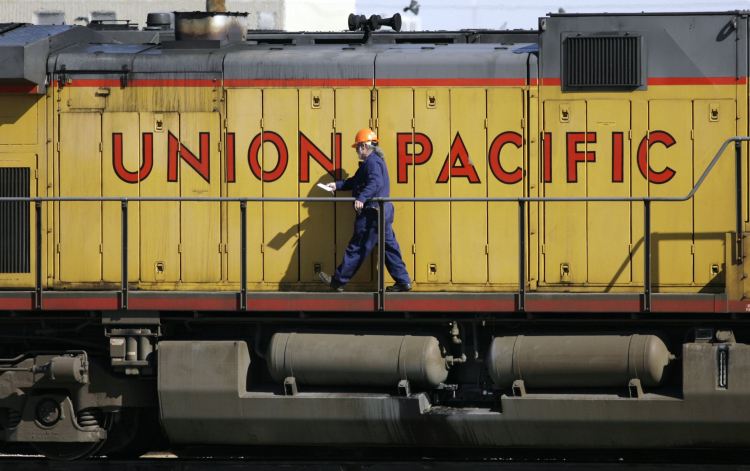
Disrupted supply chains and their impact on consumer prices are the broader context in which the Surface Transportation Board’s (STB) recent request for more information on the proposed Union Pacific–Norfolk Southern merger should be understood. The potential creation of an integrated cross-country railroad, which is what their merger would accomplish, constitutes an opportunity to address one major source of inflationary pressures in the economy.
The pandemic made it clear that productivity and scale matter. Supply chains fail when fragmented systems lack the scale and flexibility to withstand disruption.
The proposed UP–NS merger would create America’s first transcontinental railroad, connecting thousands of miles of tracks across 43 states and linking nearly 100 ports from coast to coast. The resulting corridor would eliminate some of the most persistent bottlenecks in our freight network and deliver real economic benefits: In effect, this merger would enable freight rail to better compete with trucking, putting downward pressure on shipping costs in the U.S.
The problem with the status quo is that goods traveling via rail across the country often have to be transferred between two railroads to get to their final destination. Union Pacific (UP) and Norfolk Southern (NS) exchange roughly one million shipments each year, which entails a complex handoff that greatly increases both shipping time and cost. Cargo often sits for days in railyards before getting transferred, and these delays put pressure on input prices, with consumers ultimately shouldering the costs via higher sticker prices. The single-line service that this merger would enable would reduce these friction points by allowing goods to move seamlessly from start to finish.
Faster and more efficient freight movement would essentially expand rail capacity without the need to build new infrastructure, reducing shipping costs for businesses across all modes, opening markets, and further reducing logistics costs. For smaller communities, a faster and more direct access to ports and customers means their manufacturers would have new opportunities to potentially export their goods abroad, creating the potential for new investment and job creation in their communities.
Expanding the capacity of freight rail would have other benefits besides reducing inflationary pressures. A more efficient rail network would be a competitive alternative to long-haul trucking, which currently contributes significantly to highway congestion. One intermodal train can potentially replace hundreds of trucks from American roadways, reducing wear on local roads and cutting emissions.
Further, rail is by far the safer transportation method: rail produces one-eighth the fatalities and one-sixteenth the injuries of trucking per ton-mile.
The STB’s request for additional detail regarding the merger is merely a procedural step, not a verdict, and it arrives at a time when the U.S. economy urgently needs infrastructure and affordability. Well-structured consolidation would reduce bottlenecks and strengthen supply chains. The question for regulators is not whether the merger would result in a railroad that is “too big,” but if it has the potential to deliver measurable economic benefits to Americans.
The federal government effectively subsidizes truck freight by nearly $50 billion by keeping diesel taxes well below what would be needed to pay for the road wear and tear caused by trucks. It makes no sense to subsidize trucking, which imposes myriad other costs on drivers, while concomitantly fighting efforts to boost rail freight productivity.
If the government is serious about lowering costs for American households and businesses, it must help modernize the way freight travels. A transcontinental railroad network that improves reliability and increases capacity would help make the American economy more affordable and competitive. The UP–NS merger deserves to be evaluated on those merits.
