




Do you remember the legislation that put incredibly affordable supercomputers in our pockets, or the federal decree that made Artificial Intelligence (AI) access as costless as an internet connection? That's the point.
Great advances in commerce are never an effect of legislation, and they’re certainly not a consequence of politicians scanning the marketplace, finding expensively priced goods, and then promising programs to make cheap what was formerly dear. Instead, and as we see with both smartphones and the myriad AIs that we can freely enjoy on smartphones, the best products and services are generally the ones we didn’t know we wanted until the entrepreneurial in our midst discovered our wants and needs for us.
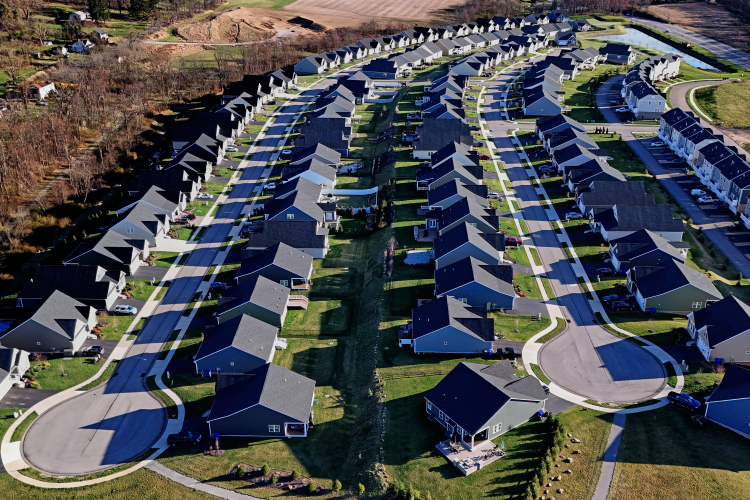
Live, opposite thinking minds, not policy, are the path to material abundance. This being true, how unfortunate that politicians on the local, state and national levels can’t restrain themselves from efforts to regulate and legislate affordable housing.
The flaw in this broad political conceit starts with the blanket presumption by members of the political class that more housing is the answer to the housing affordability question. Not asked enough is if the latter is true.
It’s worth contemplating the supply question through the prism of smartphones and AIs. Popular and pricey as RIM/Blackberry communication devices were, Steve Jobs didn’t add to the supply of them with the iPhone. Just the same, OpenAI didn’t create another Google-like search engine with the rollout of ChatGPT. With housing it’s become an article of faith that more supply of the market good is the obvious answer, but when have politicians and policy experts so distant from the marketplace ever been able to lead consumer needs?
Some reading this will respond that market signals are just that, and rising housing prices are a signal that more supply is needed. It seems so logical, but seemingly never acknowledged is that pundits and legislators well outside the arena are misreading the market’s message.
Specifically, what if the true message from expensive, unaffordable housing is that Americans just shouldn’t own housing? It’s not an unrealistic speculation. Way back in the 19th century, Alexis de Tocqueville described Americans as “restless amid abundance.” Translated, Americans were constantly on the move in search of the best way to maximize their talents.
Of course, the consumption of housing doesn’t enhance our mobility as much as it ties us down to a specific location. It’s possible the price signals aren’t calling for more supply so that more Americans can own, but for more Americans to pass on home ownership in favor of renting or, yes, something else entirely.
It’s no insight to observe that the best politicians can offer us on the matter of housing is more legislation meant to produce more of what already exists. Politicians are constrained by the known, which means at best they can give us stasis.
Yet the question remains: is more access to home ownership really what Americans want? This opinion piece won’t presume to answer the question, but it will passionately contend that the political class can’t possibly know the housing needs of a 330 million strong market, and better yet, shouldn’t presume to know.
All this column will say is that is that time after time, product after product, and frequently failure after failure, intrepid investment matched with live minds has resulted in market outcomes that much more often than not revealed human wants and needs very much at odds with what surely well-meaning politicians thought.
Instead of promising more supply, politicians should admit they don't know. Yes, less policy alongside more capital meant to discover a surely opaque housing future.
