




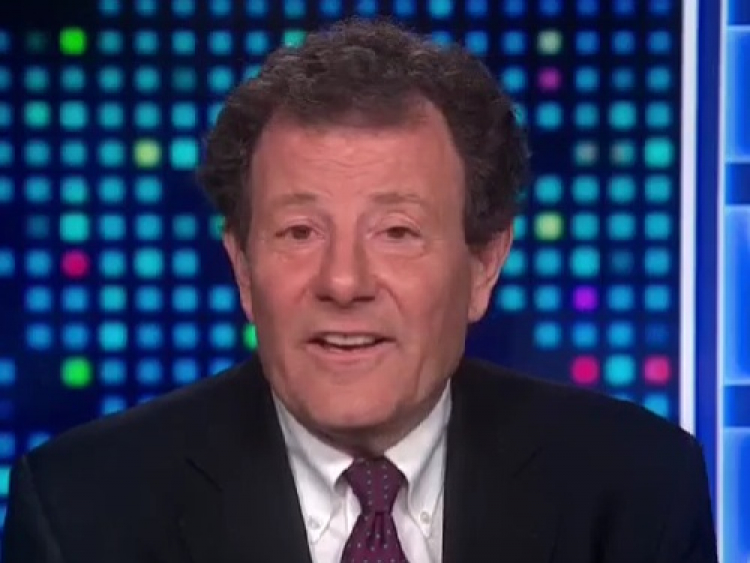
The New York Times is in open civil war over a Nicholas Kristof column its own reporters say wouldn't have cleared the news desk, particularly his fantastical allegation that Palestinian prisoners were the victims of rape by Israeli-trained dogs. That alone is a major media development. But the Times publishes in a city where 57% of every NYPD-recorded hate crime in 2025 targeted Jewish residents — about 10% of the city — under a mayor whose record toward them is among the most antagonistic in living memory. This is not only a media story, but it’s also a public safety issue.
Six years ago, the same paper fired James Bennet over Senator Tom Cotton's “Send In the Troops” op-ed. In doing so, the paper told the country something important: that words on its Opinion page could be so dangerous, so reckless, that the editor responsible had to be removed. That was the standard the Times wrote for itself. The newsroom revolt over Kristof mirrors 2020 in shape. The institutional response inverts it.
As Puck News reported this week, Times journalists are “suspicious of Nick's sourcing for the most incendiary allegations” in his recent column on Israeli treatment of Palestinian prisoners, and “skeptical that those sources would have cleared the standards of the newsroom rather than Opinion.” The 2020 logic — newsroom flags a piece it can't defend on its own standards, paper acts — is fully present. But in this case, action has been replaced with deafening inaction.
Cotton's June 2020 op-ed argued for deploying the military against George Floyd protesters. The Times's own reporters said the piece endangered Black colleagues and, within days, the paper said the column didn't meet its standards and fired Bennet. The rule was simple: when Opinion publishes something the newsroom can't defend, and the piece carries real-world risk, the institution acts. Today, the same newsroom is saying the same thing about the same kind of column. But the institution is doing nothing.
That choice could be dismissed as inside-baseball if New York were not where it is right now. Mayor Zohran Mamdani has spent years cultivating, defending, and celebrating figures and ideas hostile to Jewish New Yorkers — a pattern not of inference but of receipts.
In 2017, as the rapper Mr. Cardamom, he praised the Holy Land Five – leaders of a Texas foundation convicted in 2008 of funneling more than $12 million to Hamas – with the line “My love to the Holy Land Five / You better look ’em up.” When his wife's social-media history surfaced this spring, including posts liking content that celebrated the October 7 attacks, he declined to address the content, defending her as a “private person.” Last November, when protesters outside Park East Synagogue chanted “globalize the intifada” and “death to the IDF,” his response faulted the synagogue for misusing “sacred space.” His transition and inaugural rosters included figures with documented antisemitic records — one inaugural committee member is on the record celebrating the tearing down of Israeli hostage posters — and his own director of appointments resigned after past posts surfaced including “Money hungry Jews smh.”
And this week, the mayor became the first New York mayor to publicly mark Nakba Day with a one-sided video, has opted to skip this year's Israel Day parade, and named a Jewish Voice for Peace activist as his “faith liaison.” Each gesture is its own news cycle. The accumulation is the message. The NYPD recorded a 182% surge in antisemitic hate crimes during his first month in office — and Police Commissioner Jessica Tisch has called antisemitism “the most persistent hate threat that we face.”
This is the environment into which Kristof's column lands — and into which the Times's decision to stand behind it lands too. Puck ran its reporting under a headline asking whether the column amounted to blood libel. Whatever one thinks of that framing, his own colleagues describe allegations — of sadistic Israeli abuse of Palestinian prisoners — that wouldn't have cleared the news desk, in a city already at the temperature it's at. The paper is letting him publish them anyway.
The Times doesn't owe anyone an apology for Kristof. It owes its readers consistency. Either the Bennet standard meant something — that Opinion content can carry real-world consequences and the paper will act — or it was a one-time accommodation to a particular newsroom uprising. New York is watching the answer in real time, on the ground, in a way the Times can no longer outsource.
