

Will artificial intelligence improve workers’ lives, or hand them the equivalent of a pink slip? It is one of the most pressing questions facing the U.S. economy, and polling shows that Americans are currently more anxious than excited about AI’s effect on work. Even among top economists, there is a sharp divergence of opinion: while there is broad consensus that AI will boost near-term productivity, experts are heavily split on whether the technology will ultimately eliminate more jobs than it adds. The prevailing narrative focuses heavily on cognitive displacement, warning that experienced workers in routine, information-processing roles face genuine risk.
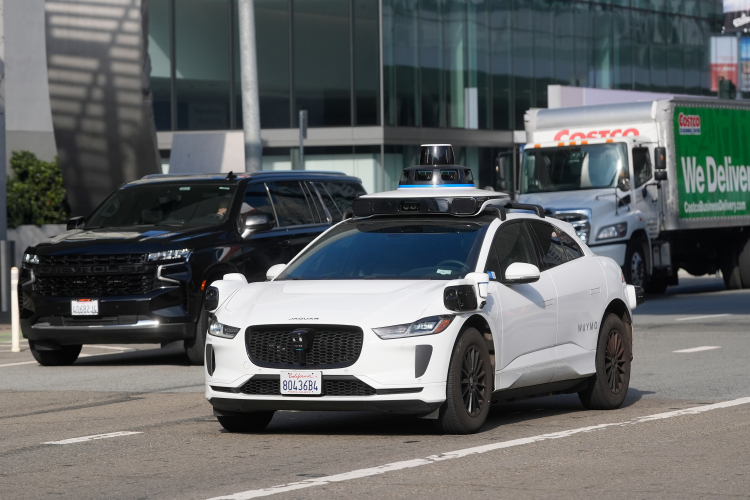
However, this hyper-focus on white-collar tasks entirely overlooks a massive, offsetting effect of AI: its enormous potential to improve tangible labor market benefits to households through advances in mobility. We are already seeing the vanguard of these advances in autonomous vehicles (AVs) via the deployment of robotaxis throughout the world and advanced experiments with autonomous trucking deliveries. By applying artificial intelligence to the physical world, we are on the verge of fundamentally reducing the cost of distance—the ultimate physical friction of geography and human physiology that constrains the performance of key markets in the U.S. economy, above all, the labor market.
AI serves as the "brain" of an AV, allowing it to drive itself by perceiving and, as necessary, communicating with its surroundings through vehicle-to-everything (“V2X”) communications, making real-time routing decisions, and navigating without human intervention. Cooperative automated driving, in which vehicles communicate with one another using a local network, has the potential to smooth traffic flows, reduce travel times, and improve reliability. By ameliorating the massive congestion and safety externalities that plague our current infrastructure, it can virtually eliminate accidents and the resulting loss of life, injuries, and property damage.
Consider how the returns to work change when we analyze the labor market through the lens of a world where AVs are widely adopted by commuters and the firms that employ them:
Expanded Job Reach and Matching. The current human-driven transportation system restricts a worker's optimal job search radius due to the heavy friction of the daily commute. By reducing congestion and improving safety, AVs drastically lower this barrier, compressing out-of-pocket, travel-time, and safety-related costs. Expanding a worker's viable spatial reach empowers individuals to find highly specialized matches for their skills and secure higher wages.
Reclaiming the Commute. By freeing commuters from the active task of driving, AVs transform the vehicle into a productive mobile office or a restorative leisure space. This drastically reduces the psychological burden of travel time, converting the daily commute—which surveys consistently rank as a leading source of daily stress—into a direct, useful extension of the home or workplace.
Preserving Human Capital. Today’s high-risk transportation network imposes a massive tax on human capital. Every mile traveled carries a statistical risk of mortality, morbidity, or costly vehicle damage. According to the National Highway Traffic Safety Administration, the annual social cost of motor-vehicle crashes—accounting for loss of life, pain and suffering, and direct economic losses—exceeds one trillion dollars. AVs shift the paradigm from human-operated to system-governed safety, removing the human errors that cause highway accidents and preserving the physical well-being, quality of life, and productivity of the workforce.
Scaling Firm Output and Employment. In the firm sector, AI-driven autonomous trucking removes the physical fatigue constraints of human drivers, allowing freight to move continuously. This cuts intercity transit times in half and drastically reduces the unpredictability of deliveries. The resulting drop in inventory holding and logistics costs unlocks hundreds of billions of dollars in capital. Leaner, more productive firms can then compete more aggressively, expanding output and ultimately driving the aggregate demand for labor.
The Synergistic Connection. Connecting these mobility breakthroughs back to the broader debate about AI and jobs reveals a profound synergy that the current conversation entirely misses. When we worry about AI eliminating cognitive or routine tasks, we treat the labor market as a static, localized pool. But AI for mobility actively enlarges and dynamizes that pool. The efficiencies gained from safer, faster commutes and streamlined logistics don't just insulate workers from displacement; they structurally lower the baseline costs of doing business, enhance supply chain resilience, and expand a firm's capacity to create entirely new employment opportunities. Overlooking AI's role in mobility means ignoring the primary economic mechanism capable of absorbing labor disruptions and converting abstract productivity into tangible household wealth.
The integration of AI into our mobility networks is a marathon, not a sprint. It represents a structural transition from a system constrained by human biology to one constrained only by infrastructure and energy. Unfortunately, AI in mobility is frequently written off by critics and ignored by technophobic policymakers before it has even reached the starting line. Policymakers have historically failed to encourage efficient innovations, allowing systemic frictions to metastasize. To date, the federal government has done little to expedite AV testing and adoption.
This must change. Human progress has always been defined by conquering spatial constraints. When early civilizations transitioned out of the nomadic hardships of the Neolithic Age, the development of permanent settlements and physical transport infrastructure first allowed specialized labor and diverse markets to exist. Today, if we are to have an accurate vision of how artificial intelligence will shape the future of work, we must recognize that its ultimate labor market dividend will come not just from writing code faster, but from fundamentally increasing the extent of the market to elevate the daily lives of households.