

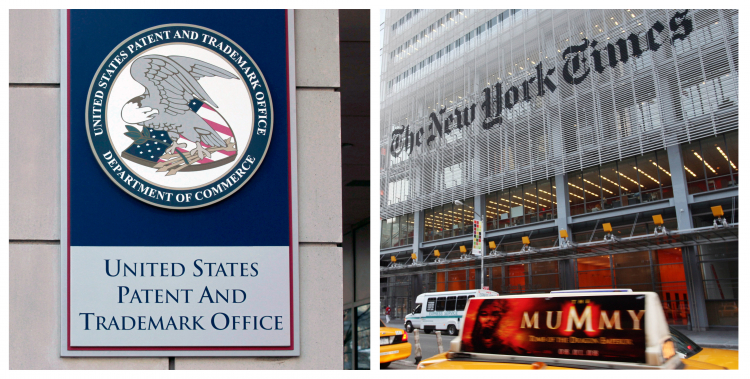
Our Founders did something that the Kings and Queens of Europe never did, something that made America the country it is today—they gave us a patent system that anyone could benefit from. In England, writs of ownership were given to the friends of the King, but in America anyone could receive a patent. That lit a fire under our economy that helped America grow into the greatest nation on Earth. However, our government has grown and grown, as has its regulatory bureaucracy, and today our engine of innovation is seemingly coming to a halt under the slow stranglehold of bureaucratic paralysis.
When ideas can’t move forward because of government delays and inaction, it doesn’t just hurt specific companies. The delays also have effects that ripple throughout the economy. Investors, entrepreneurs, and innovators see these actions and invest less, start fewer companies, and pursue fewer innovations because the risk is too high. Innovators and investors need predictable rules and timely government action to compete effectively.
For example, Regenative Labs has been waiting since the Biden administration for a clear answer on its numerous export certificate applications. Now, they are suing to force a response. While the suit makes sense for a company in regulatory purgatory, it is a waste of money that could be going toward more innovation. It will also be a waste of taxpayer resources that could be better used by just responding to companies like Regenative Labs.
Should federal agencies be able to leave businesses in indefinite uncertainty while competitors overseas, who don’t have to deal with the FDA’s rigid rules, lap them in the market?
Small and emerging companies are often hit hardest by bureaucratic slowdowns because they lack the resources to withstand prolonged uncertainty. When regulatory processes become unpredictable, incumbents gain an advantage while new entrants face higher barriers to growth. Less competition ultimately means fewer choices, less investment, and slower innovation.
The best advice I received when moving to DC was that having a quality network might not mean just getting more “yeses”, but that a quick “no” is often just as valuable. There is an important distinction between enforcing the law and indefinitely delaying decisions. Even when regulators have concerns about a company or product, businesses deserve clear answers, not administrative limbo. A functioning regulatory system should be able to say "yes," "no," or "not yet"—and explain why.
One of the reasons that we should have a smaller government is that a bigger bureaucracy needs to justify its own existence. That justification entails more rejections, more delays, and administrators who act more important than they are. At the very least agencies need to meet statutory deadlines and make decisions transparently. When agencies can effectively sidestep deadlines by delaying action, businesses lose certainty and confidence in the regulatory process.
The United States has historically led the world in innovation by recognizing what’s possible when we unleash our dynamic private sector. But our future leadership in this area is in peril if we accept a regulatory system that isn’t efficient, transparent, or accountable.
Congress and policymakers should examine which government agencies are actually providing a benefit to the economy and taxpayers. One place to start would be to look whether these agencies are meeting statutory obligations and providing timely decisions. If they aren’t, then it is even more important to examine whether or not those decisions are actually needed.
In a global economy, America's competitive advantage depends not only on what we invent, but on how quickly and effectively the government can get out of the way.