

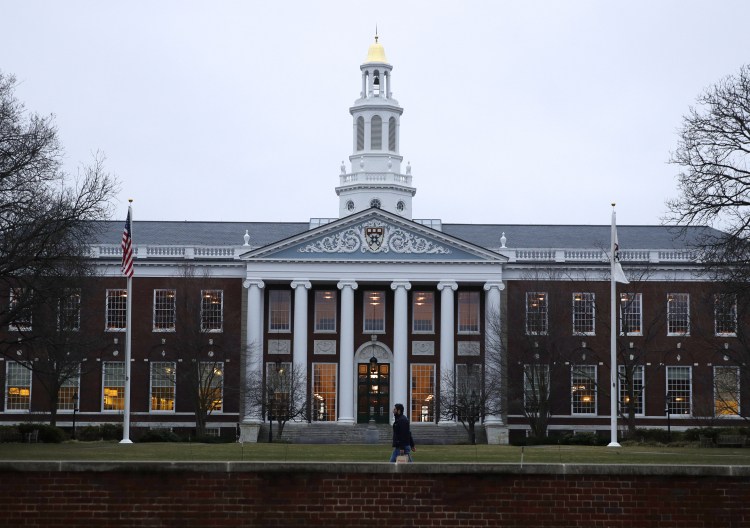
In an October 18 New York Times guest essay, "I Teach at a Business School. It's Time to Shut Them Down," Cambridge professor Christopher Marquis argues that business schools train students to put profit ahead of the public good. Most of the responses since have been gentle. They concede that he raises valid concerns and dispute only the remedy.
Marquis has the problem backward. Business schools are not failing because they teach profit maximization. They are failing because they stopped.
In my own business programs, ethics and social responsibility were not confined to a single course. They were built into nearly every class. Finance, accounting, and management each spent much of the term on the discipline itself, but the final stretch was always ethics, which usually meant corporate social responsibility, ESG, or stakeholder theory. Milton Friedman's shareholder framework was called out explicitly as outdated at best and unjust at worst. Accreditors now push in the same direction, requiring schools to demonstrate their "societal impact."
That was a mistake from the start. Business schools have already begun down the path of compromise Marquis wants. They traded a clear purpose for a vague one, and his solution is to finish the job.
Friedman famously made the case in the same newspaper in 1970, asserting that the social responsibility of business is to increase its profits. Shareholders own the company with the board of directors and CEO ultimately accountable to them. When executives spend resources on social goals of their own choosing, they shirk their primary duty. Those resources could have been used to expand to new markets, develop new products or services, compensate strong employees, or put to any number of other uses in pursuit of long-term profit. Shareholders have an unambiguous motive for buying the stock of a company. They are investing in businesses expected to grow and earn profit.
Every course in a business program from accounting to operations exists to serve one goal: helping a firm use scarce resources to create value people will pay for. That very value creation is the societal benefit that firms provide, and profit is a measure of how well it is working.
Critics treat profit maximization as permission to exploit employees, squeeze suppliers, gouge customers, and harm the environment. The opposite is true. A company that treats its workers badly cannot expect them to perform. One that pays suppliers late will burn its bridges with those suppliers. One that ignores customers will lose them. Treating stakeholders well is not an alternative to maximizing profit; it is the very path to maximizing profit. Stakeholder theory adds little beyond a license for managers to justify spending on social goals with shareholder money.
Critics also suggest pursuit of profit leads to short-sighted decision-making. Serving shareholders means pursuing long-term profit, not merely this quarter's earnings report. Sustained profitability is what lets a business invest in new products, hire and train workers, survive downturns, and one-up competitors. This is what provides value to shareholders, who are often ordinary workers saving through 401(k)s, IRAs, and pensions. A graduate who treats profit as an afterthought will run a business that cannot survive, and harm the portfolios of those hopeful retirees.
Marquis cites research by Daron Acemoglu and colleagues finding that business-school-trained managers tend to cut wages without improving performance. The fix is teaching students better economics, not promoting a social mission. A 2026 New York Fed study by Natalia Emanuel and Emma Harrington found that a $1-per-hour raise at a Fortune 500 company's warehouses halved turnover and boosted productivity enough to fully cover its cost. Business schools should teach the economics of when investing in employees improves productivity and profitability, rather than presume that profit maximization and stakeholder welfare are inherently at odds.
Marquis also laments that ambitious students who arrive hoping to transform nonprofits or fix the healthcare system often abandon those noble missions for a large paycheck at Goldman Sachs and McKinsey. That is no mystery and is not the curriculum’s fault. Students who pay $200,000 and often forgo their day job to attend business school will go where the pay and prospects are best. If schools want more graduates employed in hospitals and nonprofits, they should build those pipelines to compete with the banks and consulting firms. Offer internships, recruiting relationships, and offers that compete on salary and advancement. When students see a genuinely comparable offer, many will take the work they find more meaningful. A class on social responsibility simply cannot overcome such strong incentives.
Marquis has since told Poets&Quants that what he really wants is reinvention rather than complete abolition. He envisions a new curriculum and new faculty incentives. But that redesign is merely more of what business schools have spent decades doing, and it is a continuation of precisely what weakened them.
We do not need to abolish business schools. We need business schools willing to teach, without apology, that profit is the measure of whether a business is succeeding, along with enough economics to tell value creation from rent-seeking.
A free society does not require every business to pursue the same vision of “societal good.” It allows the freedom to pursue different goals through voluntary exchange. Customers, employees, shareholders, and other stakeholders can choose which businesses to buy from, work for, and invest in. Business schools should teach students how those incentives work and the tradeoffs of their decisions, not which societal goals to pursue.