

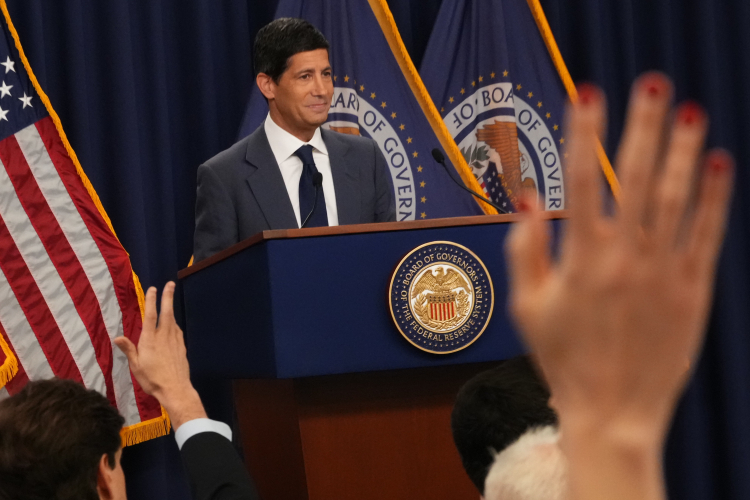
On October 28, the Federal Reserve held its benchmark rate at 3.75 to 4 percent, and two of its voting members wanted another increase. President Trump wants rates cut to 1 percent or lower. The two sides disagree about nearly everything except one assumption: that a committee in Washington sets the price of money for the country.
A retiree's bank statement says otherwise.
With that benchmark near 4 percent, the average savings account paid 0.38 percent in August and the average 12-month CD 1.71 percent. The best 12-month CDs paid around 4.35 percent in September. The 30-year mortgage has run above 7 percent this autumn. That is not one rate. It is thousands of prices, set by lenders and borrowers, banks and depositors, each weighing risk, time and the value of the dollar. The rate the Fed announces is one of them, and rarely the one most Americans pay or earn.
An interest rate is a price, the price of using someone else's money today. Like any price, it has a payer and a payee, and on that price Americans fall into roughly three groups.
The wealthy do fine either way. When money is cheap they borrow against their assets on good terms, and when rates rise they move cash into Treasury bills and collect the yield. They have advisers, choices and time.
The borrowing middle class has a real grievance. The 30-year mortgage averaged a record low 2.65 percent in January 2021. On a $400,000 loan, today's rates mean about $2,750 a month in principal and interest instead of about $1,600. For a young family, that is a genuine burden, and the president is right that it matters. But mortgage lenders price thirty years of risk and inflation. No committee can order them to forget either.
The third group rarely gets counted: retirees who live partly on what their safe savings earn. Many baby boomers hold stocks in 401(k)s and IRAs, but the money they count on for monthly bills usually sits in CDs, Treasury bills and bank deposits, since a market loss at 75 cannot be earned back with another decade of work. For them, the interest rate is income. And their experience shows most clearly who actually sets it.
I came from India in 1982 as an exchange scientist sponsored by Johns Hopkins University, on a fellowship of $13,000 a year. My small savings account paid close to 13 percent while inflation ran about 6 percent. Banks paid that because they had to. After a decade of inflation, savers had learned what a dollar could lose, and they demanded to be paid for the risk.
Forty years later the lesson ran the other way. In 2022, consumer prices rose 8 percent, and official rates climbed through the year, yet bank savings paid next to nothing. Banks flush with deposits had no reason to bid for more. A retiree with $100,000 in the bank lost about $8,000 of purchasing power without spending a dime.
Today the same benchmark produces a 0.38 percent savings account at one bank and a 4.35 percent CD at another, against inflation of 3.7 percent in September. The difference is not the Fed. It is whether the saver shops.
My own story cuts both ways. High rates helped me when I had only a salary and savings, and low rates helped me again once I owned a house and investments. I do not depend on what a CD pays. Millions of retirees do.
Where Washington does hurt savers is not in its rate announcements but in the dollar and its own borrowing. A weaker dollar is the surest way to rob someone living on savings. And Washington borrowed through the cheap-money decade as if it would last forever; federal net interest costs rose from well below $400 billion a year to about $970 billion in fiscal 2025.
The rate debate would be more honest if it started with the retiree. Retirees see a dozen different rates on their bank's website and know no decree sets them. What the retired need from Washington is neither a cut nor a hike. It is a dollar that holds its value, and a government that stops treating savers' money as free.