




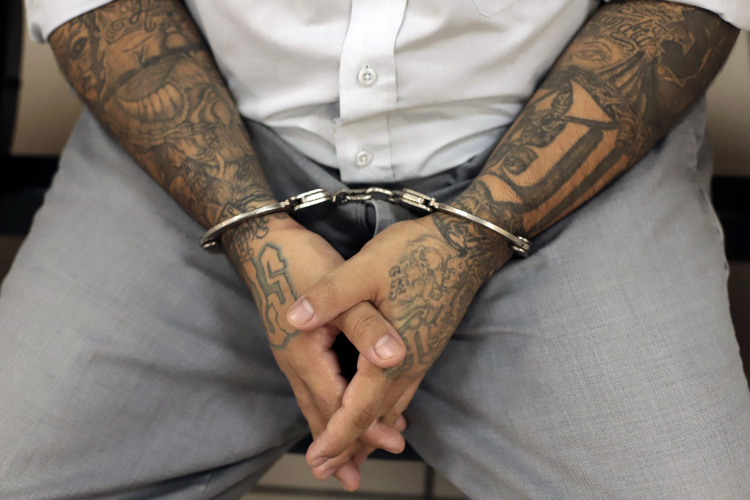
“Every society gets the kind of criminal it deserves. What is equally true is that every community gets the kind of law enforcement it insists on.” — Robert F. Kennedy
“Buzzards gotta eat, same as worms.” — The Outlaw Josey Wales
If you are one of those Critical Race Theory, Michel Foucault, Herbert Marcuse, DEI, intersectionality, social-justice, big–blue-city mayor types, you love crime. It is the fuel that feeds your ideology, which proselytizes that crime rates are a byproduct of capitalism, which oppresses people and forces punks and thugs to be punks and thugs. Thus, the more crime and bedlam, the more it empowers the Left’s political agency. The neo-Marxist needs punks and thugs out in the streets creating chaos and turmoil. They need their votes and allegiance. Most of all, since many punks and thugs are uninformed, they can be radicalized into an army of “useful idiots.”
Crime is likely the biggest economic and self-destructive burden in the modern West. It is the G.O.A.T. of hidden taxes. It’s not just economic; it’s a disease that eats at society’s soul. It interferes with its spirit and degrades happiness. There is likely no other domestic problem whose reduction would benefit society more than a massive drop in crime. Of all social and economic problems, it is the easiest to fix.
Where to even start? There are giant swaths in practically all major cities that were once nice middle- or even upper-middle-class neighborhoods that are now gutted. The sole reason: neighborhood crime. Not surprisingly, crime and misbehavior abound in the public schools of these neighborhoods. Businesses will not locate there, resulting in less economic opportunity and higher prices. Crime in bad neighborhoods has profound effects on good neighborhoods, as residents bear costs that ripple through every element of fiscal and social life.
Recently, I walked into a Duane Reade in midtown Manhattan—a good neighborhood—and every item from ChapStick to toothpaste was locked up, meaning everybody in all Duane Reade stores pay more for products. Service sucks, labor costs go up, insurance rates skyrocket. Practically every building in Manhattan has doormen and security guards. Police, social services, and prisons in NYC spend enormous sums. If there were little crime, police forces would shrink, social problems would be drastically reduced, and without the lure of criminal activity, more people would get real jobs, develop skills, and embrace responsible middle-class values and mores.
I used to love the sweet Black ladies who babysat my children. Their once-thriving neighborhoods have gone to hell. The foremost unwritten civil right for any government entity—indeed, the paramount reason government exists—is to ensure its citizens’ safety. Many of these ladies are afraid to walk out of their houses at night. The same is true in Atlanta’s tony Buckhead community, downtown Memphis, the Upper East Side, and scores of other places. What good are our other civil rights if one cannot be protected from thugs who prey on the weak? Every woman ought to feel safe walking any street in America at night.
HANG ’EM HIGH!
As I’ve noted before, when I grew up in small-town Virginia, no one locked their doors. Everyone left their keys in their cars. We had no lockers in school. I never knew anyone to steal anything. Much commercial activity rested on a handshake.
The most obvious failure of modern government, brought to us by the Left, is the coddling—indeed, the celebration—of criminal behavior. While crime is an enormous invisible tax, it also causes soul-crushing mental anguish, degrades what we call “civilization,” and erodes our collective ethos that America is special because she is good, orderly, and just. Would you still believe in the spirit of America if everywhere around you there were graffiti, theft, carjackings, vandalism, and Medicare fraud?
Let’s start at the beginning and ask: Why was there so little crime when I was a boy? Was it because we were special? Civilized Virginians? Just better people? No. There were many communities, from the Bronx to L.A.—many of them poor—filled with good people and relatively crime-free neighborhoods. The real reason can be found a generation or two ago.
Our rural county hung people in public, right on the courthouse lawn. In fact, all Virginia counties and municipalities did so from 1607 to around 1910. For me, the shame of disgracing my family would have been worse than the noose snapping my neck. Capital punishment covered not just first-degree murder, but a host of other offenses: arson, burglary, armed robbery, attempted rape, rape, and more. Certainly, the punishment, especially the public nature of it, molded generations to obey the law. Nobody wants to swing from a rope or be locked up for life. Living where there was no toleration for crime instilled a generational ethos, creating better citizens, better workers, and people striving to improve themselves. It gave rise to charitable impulses. People even dressed nicer. Living right became embedded in the culture. This may be controversial to say, but it strengthened Christianity and drove more to live by its tenets, as upward mobility depended on being good and not bad. Bedford Falls is better than Pottersville. Since the late ’60s, when tough-on-crime laws began to relax, our once “model” culture slowly began to evaporate, and wrongdoing became more normalized and accepted.
It can hardly be argued that when countless petty and even felonious crimes are not prosecuted—or, in some places, like Minnesota, are encouraged—basic honesty and virtue decline as well. If established government entities refuse to frown on petty crime and lawbreaking, why should people not lie, dishonor commercial transactions, or even bother to help an old lady across the street?
I’ve had a lot of fun writing and speaking about the feminization of our culture (pissing people off, especially women, is one of my greatest skills). Some sociologists call this “toxic femininity.” The attitude becomes: Feel sorry for criminals. Don’t punish them. But this empathy-driven lack of logic and reason is Helen Keller blind, deaf, and dumb to the damage it causes.
A good start to fix this problem is to crank back up public hangings at county courthouses for murderers, rapists, and violent offenders. Suppose just 200 of the 19,000-plus murders per year resulted in televised public executions. My guess is this would save ten thousand lives yearly. Nobody wants to swing from a rope. Do the same for violent rapes. Castrate perverts. Who wants their nuts cut out? Lock people up for long prison sentences for a host of lesser crimes, and you know what happens: crime drops drastically; those nice Black ladies can enjoy their neighborhoods; trash and graffiti dissipate; respect for property increases; taxes fall; productivity rises; jobs and wages improve; respect for others grows; and happier people abound. Eventually, society needs to punish fewer people because culture changes and behavior improves. Police forces are reduced, social welfare services are less strained, hospital costs go down and public schools become safer and better. The benefits are enormous.
The Left has distorted the word “hate.” Punishment is not hate. Love the sinner, hate the sin. Only God judges souls, but on earth, we judge earthly matters. Many people will not be killed, women raped and building burned if offenders merely got their just deserts. When Josey Wales shot the bad guys and spit tobacco juice on their faces, he acted for the greater good. The situation demanded that he act, and he did. The same applies today.
