




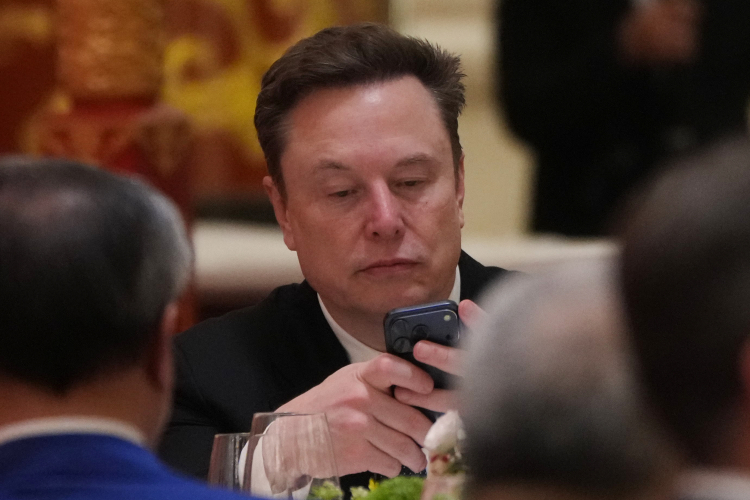
Senator Elizabeth Warren reintroduced her Ultra-Millionaire Tax Act of 2026 in March, proposing annual levies on net worth above $50 million and a 3% surtax on billionaires. The timing is notable: Elon Musk just crossed the $1 trillion threshold, becoming the world's first trillionaire — a fortune tied almost entirely to illiquid ownership stakes in Tesla, SpaceX, and xAI. He doesn't hold $30 billion in cash. That's roughly what the surtax would demand of him annually. The financial mechanics of this proposal collapse the moment you examine them.
I've spent more than 30 years in private equity, private credit, and investment management. I know the difference between taxing income and taxing a mark-to-market valuation that can swing by tens of billions in a single trading session. Warren's plan treats unrealized paper gains as a reliable, recurring tax base. They are not. They're a snapshot of market sentiment, subject to correction, contraction, and outright reversal — with no refund mechanism when the market proves the snapshot wrong.
History is not subtle on this point. France ran a wealth tax for nearly 30 years. It drove out capital — an estimated 60,000 millionaires left the country between 2000 and 2017 — chilled investment and was quietly abolished in 2018 after it became embarrassingly clear that it was exporting entrepreneurs rather than funding social programs. Sweden repealed its wealth tax in 2007 after watching its most productive citizens relocate to Switzerland and Monaco, including IKEA founder Ingvar Kamprad. These weren't ideological decisions. They were admissions of failure.
The numbers here in the United States tell the same story. The Penn Wharton Budget Model estimated that an earlier version of Warren's legislation would reduce capital by 3.1%, cut average hourly wages by 1.2%, and shrink GDP by 1.2% by 2050. The Tax Foundation found that her wealth tax would reduce long-run GDP by 0.37% while more than doubling the trade deficit as foreign capital floods in to replace depleted domestic savings. That's not soaking the rich. That's taxing the people who work for them.
Musk's wealth is not sitting in a vault somewhere in Bel Air. His net worth is a market valuation of the companies he built. As he wrote on X in February, "My 'net worth' is almost entirely due to my ownership stakes in Tesla and SpaceX. I have <0.1% that is cash." Tesla is more than 80% owned by retail investors and index funds. The pension holder in Ohio, the teacher with a 401(k) in Phoenix, the union member in Michigan: they all ride along.
SpaceX now employs more than 22,000 people and has reshaped the economics of orbital spaceflight. Before SpaceX, getting a kilogram of payload to low Earth orbit cost $15,000 to $20,000. Falcon 9 does it for under $2,750. That's an 85% cost reduction that opened space to entire industries that couldn't previously afford it. These are not abstract corporate achievements. They are jobs, infrastructure, and technologies that did not exist before he built them.
Under Warren's structure, a 3% annual surtax on roughly $1 trillion in paper net worth means a $30 billion annual bill against assets that are overwhelmingly illiquid. The only path to payment is forced liquidation — selling equity stakes in operating companies to meet a tax on wealth that hasn't been received. The Tax Foundation found that stacking Warren's various proposals can push effective tax rates above 100% on capital income for some investors. From an investment standpoint, that's a seizure schedule. When assets are marked down 40% in a bear market, the tax paid on the prior year's paper gains is permanently gone — no recovery provision, no refund.
Then there's the question of who's doing the asking. Warren built her public brand on consumer protection and financial regulation. That's legitimate work. But her credibility carries an asterisk the size of a Harvard Law School building. For years, she listed herself as a minority faculty member at Penn and Harvard, describing herself as Native American based on family lore about Cherokee ancestry. The Cherokee Nation called it "inappropriate and wrong," noting that tribal identity is "rooted in centuries of culture and laws, not through DNA tests." Warren eventually apologized, though only after the controversy had served whatever political purpose she'd intended. A person who constructed a personal narrative out of thin air now wants to dictate the terms under which America's actual builders pay tribute. The irony doesn't need commentary.
Her supporters will argue that wealth concentration is a genuine problem, and they're not entirely wrong. The gap between the very top and working Americans is real and worth debating. But a wealth tax doesn't address that gap. It performs concern while making the underlying problem worse. When market corrections hit, does Warren's government issue refunds on the taxes paid against gains that evaporated? The proposals always capture the upside and ignore the downside. That's not tax policy. That's heads-I-win, tails-you-lose.
I coached youth rugby for years. One thing you learn early, whether you're coaching teenagers on a pitch or managing a credit portfolio through a liquidity crunch, is that you don't get more of the behavior you punish. You get less. America produces innovators at a rate that remains the envy of the world because, historically, we've allowed people to keep what they build. That bargain produced Tesla, SpaceX, the internet, and most of the pharmaceutical therapies Warren relies on to win over 65 voters. It's a productive arrangement. She wants to rewrite it from the losing side.
Elon Musk built things. Real things that fly, drive, and connect people across continents. Elizabeth Warren built a legislative career, a professorial reputation, and an ancestry story that didn't quite survive scrutiny. One of them has earned the right to lecture the other about who's playing fair. The answer isn't the senator from Massachusetts.
