


Eminent Domain Thrives - 1/31/10
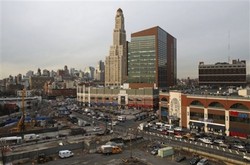 | In the backlash that followed the Kelo decision, 43 states passed laws limiting the use of eminent domain. Thousands of families continue to lose their homes every year, though most were lost to public works projects rather economic development projects like the one in New London. |
The Fannie & Freddie Earmark - 1/31/10
 | Last week, Sen. Schumer demanded that the two failed mortgage giants guarantee low rent for tenants in a Manhattan property they now own after the owner defaulted. More |
Wealth from Wreckage? - 1/27/10
 | This month's horrendous earthquake in Haiti brings to mind the economic question of greatest importance to Adam Smith: What causes wealth? What conditions best encourage economic growth and widespread prosperity? Why are the Haitians and North Koreans so poor while Americans and South Koreans are so rich? The general answer is easy: private property rights and freedom of contract. More |
What Jobs Data Tell Us - 1/27/10
 | Keynesians like to suppose that whenever the government undertakes new spending to augment the ranks of its employees a multiplier effect will result, causing private economic activity and employment to follow the same upward course.The jobs data tell a different story. More |
An Asian Century? - 1/25/10
 | Asia’s undoubted progress happens to be related to its conversion to Western values. Capitalism, democracy, individualism, equality of the sexes, and secularism are all Western notions, and they’ve been adopted in varying degrees in Asia. Reactions against Westernization have also set in, alongside efforts to promote so-called Asian values, both Buddhist and Confucian, such as the Harmony Principle. More |
World Poverty Falls Rapidly - 1/22/10
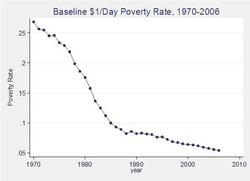 | World poverty is falling faster than previously thought. From 1970 to 2006, poverty fell by 86% in South Asia, 73% in Latin America, 39% in the Middle East, and 20% in Africa. Barring a catastrophe, there will never be more than a billion people in poverty in the future history of the world. More |
Attack of the Minimum-Wage Increase - 1/22/10
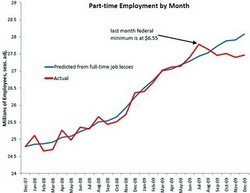 | After initially increasing by almost three million during this recession, part-time employment fell sharply during the last five months of 2009. The federal minimum wage hike on July 24, 2009, is probably to blame. More |
It's Jobs, Not Discouraged Workers - 1/22/10
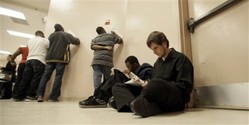 | Though they represent only a small fraction of the overall labor force (roughly 0.3 percent on average from 1994 through 2007), discouraged workers have received a good deal of attention lately because of the dramatic increase in their numbers during the current recession. More |
Baumol's Cost Disease and Health Reform - 1/19/10
 | What afflicts the American health care system (and those of other industrialized nations) is called Baumol’s cost disease. While some industries enjoy sharp increases in productivity (cars can be built faster than ever, retail inventory can be managed better), endeavors like health care are as labor-intensive as ever. More |
A Commercial Real Estate Bubble? - 1/15/10
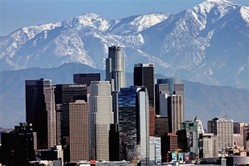 | I see little evidence of a commercial real estate bubble that was inflated with the same fuel as the housing boom. Rather, commercial real estate seemed to be reacting to the situation in the housing sector, and in the wider economy. More |
Statistics Vs. Real People - 1/13/10
 | The media often confuse what is happening to statistical categories over time and what is happening to flesh-and-blood individuals over time, as they move from one statistical category to another. More |
Should States Try Deregulation? - 1/13/10
 | A New Year's resolution for failing state governments. More |
Contours of Housing Hangover - 1/12/10
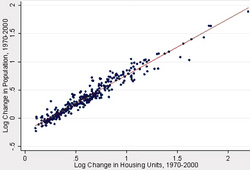 | For decades, growth has gone to places with sunshine and unfettered housing supply. A cyclical downturn is unlikely to undo that long-term trend. More |
Tomes that Unravel the Financial Crisis - 1/12/10
 | The financial collapse of 2008 spawned a myriad of books attempting to make sense of it. While our list is by no means exhaustive, these are some of the best books that analyzed the causes of and offered solutions to our current economic turmoil. More |
When Banks Will Start Lending Again - 1/08/10
 | When the financial system is impaired, it takes a steeper yield curve for a longer period of time to produce an expansion in money and credit -- just as it did in the early 90s. The invitation to party stands. Banks have yet to RSVP. With time, the spread will translate into more borrowing and lending. More |
Re-writing the News on Trade Tariffs - 1/06/10
 | What news reports on trade and tariffs would look like if they accurately reflected the impact of foreign tariffs on the American economy. More |
2010 Economic Forecasts - 1/06/10
 | Seven top economists share their outlook for the coming year. More |
Fruitful Decade For Many Worldwide - 1/06/10
 | Many people worldwide saw their standard of living rise during the last decade. More |
Folly In Government Student Loan Effort - 1/06/10
 | Forty odd years of government infusions of cash in loan programs have increased the percentage of high school students going to college, but the graduation rate for many of those taking out these loans is scandalously low. More |