


To Create More Opportunity, Clear the Rigging From the Economy
On a 22-acre parcel of land in Columbus, Mississippi, sit the remnants of a boondoggle. KiOR was supposed to take biomass and turn it into fuel. Instead, it took over $75 million in taxpayer money and made it disappear.
KiOR is not an outlier. Failed economic development projects are strewn across the map, companies that took advantage of public subsidies only to fold up or move onto the next greener pasture when government benefits ran out.
When politicians decide to play venture capitalist with public funds, the shovel ceremonies and job promises make the front page. Far less attention is paid to the systemic harm done by these multibillion-dollar races to the bottom conducted by cities and states. But blighted warehouses and plants, unmet expectations and damaged communities serve as a testament to their failures.
And sweetheart deals for politically connected corporations don’t just hurt when they fail. They unfairly disadvantage principled businesses that neither seek nor receive corporate welfare. More still, they undermine public trust in core institutions. A recent Washington Post/ABC News poll found 62% of Americans think the U.S. economic system works to benefit those in power.
People are right to feel that way.
State and federal tax codes are littered with special-interest exemptions and deductions designed to benefit certain industries. The massive accumulation of regulation over the last few decades occurred primarily not out of concern for public safety, as some argue, but as a result of regulatory capture by industries looking to protect themselves from competition. Armies of lobbyists descend on Capitol Hill and on state capitols every year seeking special favors and rewarding lawmakers who grant them.
Perhaps nowhere is this more pervasive than the practice of licensing professions. Almost one-in-four workers now requires a government permission slip to work and thousands more are locked out entirely by irrational fee and training requirements. Few could argue with a straight face that florists and interior decorators pose a sufficient threat to society warranting onerous government mandates.
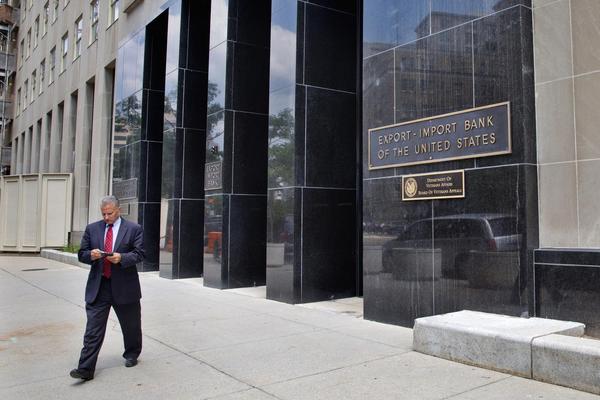
Protectionism also runs amok in vital industries, such as health care.Certificate-of-need laws require qualified medical providers to get government permission to locate in a certain town, or offer certain procedures, or even to update equipment, making it harder for people to get care when minutes can be the difference between life and death. Some state medical lobbies are erecting roadblocks to allowing trusted nurse practitioners to provide care in areas where physician access is limited, and are fighting innovative technologies that allow people to access care remotely through telemedicine. At the federal level, the Export-Import Bank offers special financing for a handful of well-connected businesses at the expense of competitors and taxpayers. The history of the bank is replete with corruption and scandal. In recent years, the bank’s operations nearly ground to a halt. No one was worse for it. Yet even with real-world evidence showing the bank doesn’t matter, Congress is on a bipartisan march to reauthorize it to benefit corporations like Boeing and General Electric.
Another example is so-called tax extenders. As part of Tax Cut and Jobs Act, several provisions that benefitted niche industries were allowed to expire at the close of 2017. Our roaring economy didn’t blink an eye as these special interest perks fell by the wayside. But the people who benefitted from these perks — Hollywood film producers, racehorse owners, biofuel manufacturers — would like to see them brought back to life and applied retroactively, some 18-months after they died.
The Ex-Im Bank and tax extenders are symptoms of a fundamentally unfair system of corporate welfare. When the government puts its thumb on the scale, it deprives people not only of opportunity, but of the belief they can rise. We’ve seen the impact of that over the last four decades as the number of business start-ups, once the engine of our economy and of American innovation, has taken a precipitous dive.
It is no wonder many people feel left behind. This frustration has led some to gravitate toward greater government control of our economy. We see it manifest in the “Green New Deal,” which would exert control over almost every facet of American life, and in the endless proposals for greater intervention from presidential candidates trying to one-up each other.
But since the rigging of our economy is a result of government playing favorites in the first place, ceding government more power to intervene isn’t the solution. The radical solution is to tear down the system that plays favorites and create an environment where people and businesses succeed, based not on which politicians they know, but whether they create products or services that actually help others live better lives.
People of good faith, from all political stripes, should join together to unrig our economy and create an atmosphere of opportunity.
