


Don't Be Fooled, Falling Mortgage Rates Are a Bearish Signal
Imagine if Amazon were just a bookseller. As in imagine if Amazon, having unearthed a way to connect buyers with sellers, had stopped at the first product it initially revolutionized retail with.
If so, Amazon probably doesn’t exist today. Either it would have been swallowed by a much bigger player, or it would have been overrun by online retailers (along with physical retailers possessing better brand recognition) with much more expansive plans.
Importantly, Amazon never planned to just be a bookseller. When its share price moved above $100 around 2000, and amid a major run-up for internet companies, its price had little to do with book sales even though book sales were a major driver of Amazon’s business back then. Instead, Amazon’s share price was a projection of all that it would eventually do to connect buyers and sellers. Books, CDs, and DVDs were merely the beginning of much, much more. Founder Jeff Bezos made plain to institutional investors that he was building something much greater than an online version of Barnes & Noble.
All of the above helps explain why investors weren’t turned off by Amazon’s “Amazon.org” nickname. No doubt it was losing money in gargantuan sums, but it was doing so with a much bigger purpose in mind. These investments, investments that often failed spectacularly, would unearth crucial information that Bezos could use in order to create one of the greatest businesses the world had ever seen.
Crucial about this is that there were doubters. And they were everywhere. As anyone who owned Amazon shares back in 2000 would now attest, shareholders of the “non-profit” were frequently mocked for owning that which seemingly couldn’t make money. And if 2000 was bad, 2001 was much worse. That’s when Amazon’s shares plummeted into the single digits.
Luckily not all investors walked away from what some said would never make it. Thanks to their intrepid ways being matched with Bezos’s remarkable imagination, a brilliant company was created. After years of successes and failures, Amazon is now a blue chip company. And it’s one of the five most valuable corporations in the world. But rather than rest on its laurels Amazon continues to invest in new ideas, and new ways of meeting the needs of its customers. If not, it invites obsolescence. Things like that don’t change. Without relentless investment, a cruel future will catch up to today’s superstar companies with blinding speed.
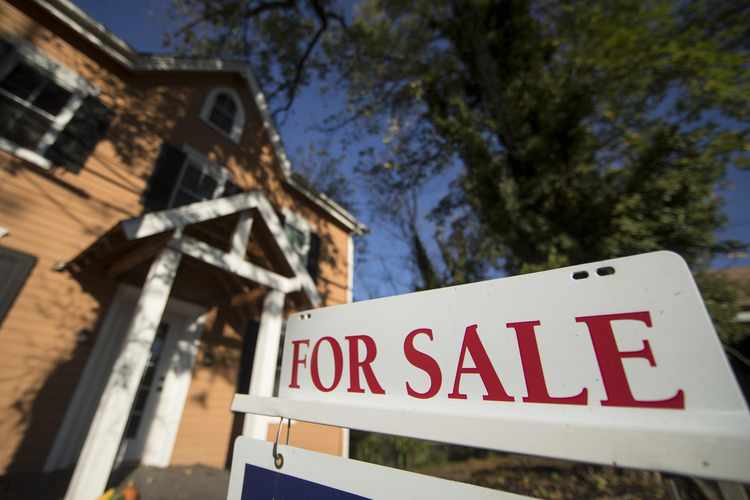
All of this rates mention in consideration of a recent headline from USA Today, “Fear of a slowing economy is good news.” According to reporter Janna Herron, one “silver lining from trade tensions with China and fears about a slowing global economy” is that “mortgage rates are heading lower.” As Herron sees it, those “who bought in the last two to three years may pocket major savings by refinancing their mortgage, while those hunting for a new home may get a bit more spending power, thanks to lower rates.” Herron misses the much bigger, and bleaker economic picture, that cheaper mortgage rates represent.
In particular, Herron misses that cheaper mortgages represent a rush away from risk. More specifically, they represent a rush away from the very investment that sets corporations on growth paths, and that made it possible Amazon to evolve from a tiny bookseller into the most innovative retailer in the world.
Seemingly missed by Herron is that during the last stretch of cheaper home financing, there were very few notable IPOs or exciting new companies. Most can remember them. Google went public during the housing boom, and Facebook, though it didn’t float its shares until 2012, became a big deal. After that, not much to speak of during the first decade of the 2000s.
One factor in this was the movement away from risk, and into housing. Yes, housing is the opposite of risk. There’s a reason it’s much easier to borrow hundreds of thousands to buy a house than it is to attract even a fraction of the previous amount to start a business, or build one. With a house, there’s always an asset to recover. With a business, there’s often nothing to take back. So while it’s often said that financial institutions of varying stripes swung for the fences with their aggressive mortgage lending in the 2000s, the greater truth is that this was a movement away from risk. And that’s why readers should be concerned now about the direction of the economy.
To be clear, this is not the latest of the tens of thousands of pieces produced by pundits eager to predict “the next financial crisis.” Rest assured that they’re lying if they told you they predicted the one in 2008, and that they don’t know if or when one’s coming now. The reason for this is that a “financial crisis” is always and everywhere a man-made event. It’s born of political error. Financial crises don’t result from business failure when it’s remembered that businesses and individuals fail all the time. It’s called progress. Crises are a consequence of government intervention in the marketplace, including intervention in the progress that is failure.
What’s instead being said here is that the re-orientation of lending toward low-risk consumption of housing speaks ill for future economic growth. It’s not good news as Herron presumes, and it’s not for the reason that Amazon has transformed itself into a remarkable company over the last twenty years. It’s once again been able to thanks to intrepid investment made amid immense skepticism.
Concerning then about falling mortgage rates is that they signal a migration of precious capital away from the innovative companies of today and tomorrow, and toward the consumption of housing. That’s all buying a house is. Consumption. When you buy a house your purchase won’t fund someone working to cure pancreatic cancer, it won’t provide experimental funds for a creative software developer, nor will it lead to transportation advances that will eventually render today’s air travel primitive. Easier home lending essentially funds stasis. It’s a relatively low risk way for savers to conservatively put their capital to work, and that doesn’t author advance.
All of this is something to think about in consideration of how most reporters, economists and pundits think. They see consumption as the basis of economic growth. No, it’s what happens after we produce. And if always limited capital is headed in greater amounts to housing, this will show up in reduced production down the line.
