




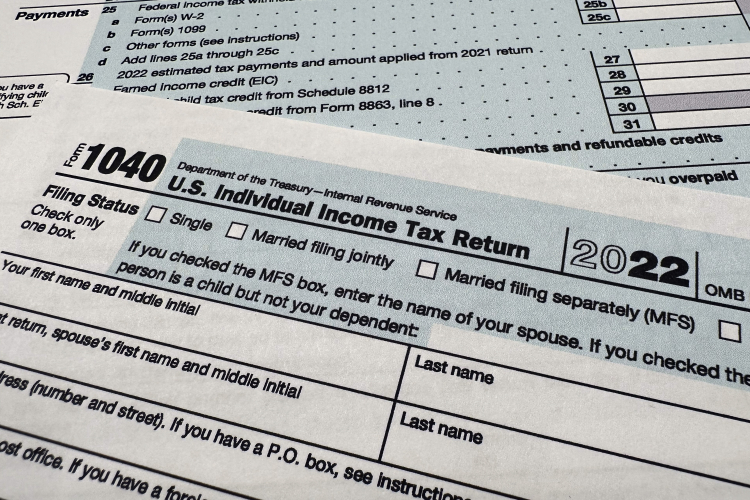
One of the great misperceptions about federal tax policy is that the United States is a low-tax country. Every left leaning Washington think tank and most of the media promote this notion, and use it to push for higher taxes on the American people.
This low-tax claim is at best misleading, if not outright deceptive. In reality, the U.S. is a high-tax country, with average U.S. tax rates on individuals, corporations, and investors higher than the average tax rates in the rest of the developed world.
The argument that the U.S. is a low-tax country relies entirely on the simplistic calculation that our overall tax burden as a percent of GDP is lower than that of OECD nations. But that is so only because the U.S. is the only country in the OECD without a value-added tax. The OECD “higher tax burden” is entirely the result of the steep value-added taxes the 37 other OECD countries impose on their people to fund their welfare states. The one and only difference is the value-added tax.
As a matter of fact, the U.S. tax burden on individuals, corporations, and investors is higher than much of Europe, Asia, and the OECD.
In terms of personal income taxes, individual income taxes in the U.S. amount to 11.2% of GDP. This is much higher than the OECD, which raises only 8.3% of GDP from individual income taxes. The top average marginal tax rate in the U.S. is 43.7%, higher than the top OECD rate of 42.6%. Major U.S. states such as California, New York, New Jersey, and Minnesota have top marginal rates higher than 50%, among the highest in the world.
As for capital gains taxes, the average U.S. combined federal-state tax rate is 29.2%, more than ten percentage points higher than the average OECD rate of 19.1%. California, New York, Minnesota, and Oregon have capital gains rates exceeding 30%. According to the Tax Foundation, taxpayers in every single U.S. state face a capital gains rate higher than the OECD average rate.
With respect to corporate taxes, the average U.S. combined federal-state tax rate is 25.8%, higher than the average OECD rate of 23.6%. The U.S. rate is higher than the average European rate of 20.2%, the average Asian rate of 19.7%, and even the average Scandinavian rate of 21.1%. Sweden has a lower corporate tax rate.
Prior to the 2017 rate cut, the U.S. rate was the highest in the world, pushing jobs and investments out of the U.S. and damaging U.S. competitiveness. Raising the rate even a few points to 25%, as many on the left suggest, would put the average combined U.S. rate at near 30%, and approaching 35% in many states, once again back to the highest level in the world.
U.S. taxes are not too low. Our tax rates on individuals, corporations, and investors are much too high. Total federal taxes hit $5 trillion this year, and are on track to reach $6 trillion in just two years. As we have seen time and time again, higher taxes will only lead to more spending and larger deficits and debt. We are a high-tax country and we need lower not higher taxes.
The U.S. Is Not a Low-Tax Country Despite What You've Been Told
November 24, 2025
Comment
Show comments
Hide Comments
