




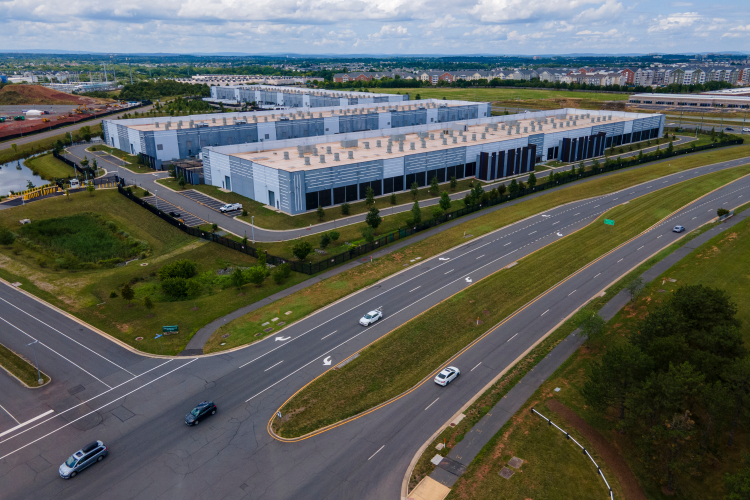
Recent multi-billion-dollar infrastructure investments like Meta’s plan for another gigawatt AI data center in El Paso, Texas, signal that the Lone Star State plans to defend its 20th-century dominance of the energy industry and convert it into the 21st-century nexus of tech and computing.
This shouldn’t surprise anyone. In fact, using its massive size and geography to position itself at the intersection of revolutionary tech seems to be as Texan as beanless chili. Before the world associated it with cattle drives or Permian crude, Texas sat at the crossroads of both east-west and north-south railroads. Those lines didn’t just move cows and cotton; they moved people to Texas. They industrialized the state. They carried black gold from Spindletop to refineries back East and brought back folks looking to strike it rich. They made oil profitable, then indispensable.
As important as the oil reserves themselves became, the railroad delivered the wealth. It created the conditions for Texas to become the energy capital of the last century. And that’s the point. Build the dam today so you can capture the floodwaters tomorrow. Today, the modern infrastructure equivalents lie in the twin realms of microchip manufacturing and data-center capacity.
While it’s technically true that these centers could be built anywhere, Texas’ varied geography, topology, conservative governance, skilled labor, and climate allow it to concentrate cost-efficient tech hubs in under-utilized regions of the state.
In Grayson County, an exurban micropolitan area with 150,000 people, 60 miles from Dallas, both Texas Instruments (TI) and Global Wafer invested billions—with billions more to come—to reshore chip and wafer production in the United States. They chose the site because of nearby Lake Texoma and the Denison Dam, which provide clean, consistent power and water, the two ingredients that bedevil the chipmaking process everywhere else.
And while water and electricity vex chipmaking, the AI data centers that use those chips make that usage look quaint. But Texas has more than enough utilities, thanks in part to mistakes it’s made along the way. Texas learned a lot from the near collapse of its independent grid during Winter Storm Uri in 2021. The deregulated market, the only one like it in the United States, allows producers to avoid certain federal regulations and bring new supply to the market quickly. It also allows a data center to build its own power station, use it for its own purposes, and sell excess power back to the grid.
Meta’s El Paso facility fits that mold. Meta has committed to making its facility as environmentally conscious as possible, but even the best-run GPU farms still require extensive cooling. Those chips hit oven-level temperatures without it. Yet Meta’s plan will double the amount of water it returns to the system through its closed-loop recycling process. In the desert, no less.
This is the part critics always seem to miss. Beyond hardening the grid after Uri, Texas voters approved a dedicated $20 billion fund for water projects. Flood-drought cycles forced the state to innovate for a century. Texas has 188 lakes (or, more technically, reservoirs). Still, only one is naturally occurring—the rest were built because generations of leaders understood two truths: people will keep coming, and those people will need water. Preparing for growth wasn’t optional. It was survival.
That’s one reason why Texas, despite having roughly 80 percent of California’s population, uses double the electricity, and Texas doesn’t suffer the frequency of rolling blackouts that bedevil California. Highly inefficient and ill-placed agricultural industries don’t suck up our water. Texas has enough utilities for today, and it’s building more for tomorrow.
Meta’s El Paso project is not an outlier. It's the latest chapter in a familiar story. Railroads built the pipes for the oil boom. Oil built the backbone for the industrial boom. Microchips are reshoring because Texas has the power and the water. And AI is the next engine rolling down the track to the Texas station. Whatever future awaits, Texas will be ready: you can bet on it.
