




How does a country with the world’s largest oil reserves go from being the richest country in Latin American to being one of the poorest in a few short decades? As with almost all the countries which went from being relatively rich to impoverished, the answer is one word – “socialism.”
After the U.S. military and law enforcement performed the flawless abduction of Venezuelan dictator Maduro and his wife, President Trump went on TV to explain what happened. Unfortunately, during his remarks, he said we will now be “controlling” Venezuela. He might better have said the U.S will be helping to guide Venezuela back to a free-market economy and democracy.
The appropriate revitalization model is what happened in Eastern Europe after the fall of communism more than three decades ago. Many of the countries had been free-market democracies before being forced to adopt socialism/communism.
Now, many of formally Soviet-controlled countries have incomes rivaling or even exceeding those in Western Europe, notably the Baltic nations and Poland. How did they accomplish this? Merely by going back to the basics which have been known for three centuries and following examples that worked. In sum, countries need to establish the rule of law with strong protections for private property, sound money, free markets (including free trade, low levels of tax on labor and capital, and modest government spending as a percent of GDP), and regulations that do not stifle economic growth and innovation.
Poland had an exceptionally fine economist, Leszek Balcerowicz who over time held many key positions including finance minister, chairman of the central bank, and deputy prime minister. He was able to convince his fellow Poles to follow his free-market recommendations, and now the country is well on its way to having a per capita income exceeding that of the U.K.
Other countries, invited foreign free-market experts to create joint advisory teams to work with local economists on the details of how to create a relatively smooth transition from socialism to free-market democratic capitalism – which most often involved reforming institutions, laws and regulations. Former U.S. governor and congressman, the late Pete Dupont was co-chairman of the successful Hungarian transition team. I had the privilege of serving as the co-chairman of the Bulgarian transition team. (Over the last 35 years, Bulgaria has gone from one of the poorest countries in Europe to a lower middle-income country with consistent economic growth.)
Venezuela would probably find it useful to have a non-governmental economic advisory team to provide both technical advice and serve as an offset to the socialists who will continue to seek power and control – as they did but failed in Eastern Europe.
It is also important to keep the advisory team apart from any direct foreign government or international institution control. Existing international institutions and foreign governments have their own agendas which may not be in the best interest of the subject country. For instance, the IMF pressures governments (as they are now doing in Argentina) to have the type of central bank that the IMF can control, where a currency board or direct adoption of the U.S. dollar or Euro might be more appropriate.
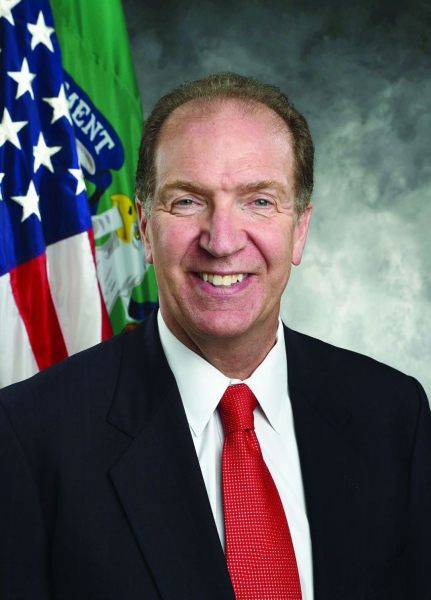
Former World Bank President, David Malpass, may well be the ideal co-chairman for a Venezuelan advisory board. Malpass is a very fine market-oriented economist, who speaks Spanish and has considerable experience in Venezuela. He understands the problems and is used to dealing with the international bureaucratic class. Finally, he has the international stature to command immediate respect.
