




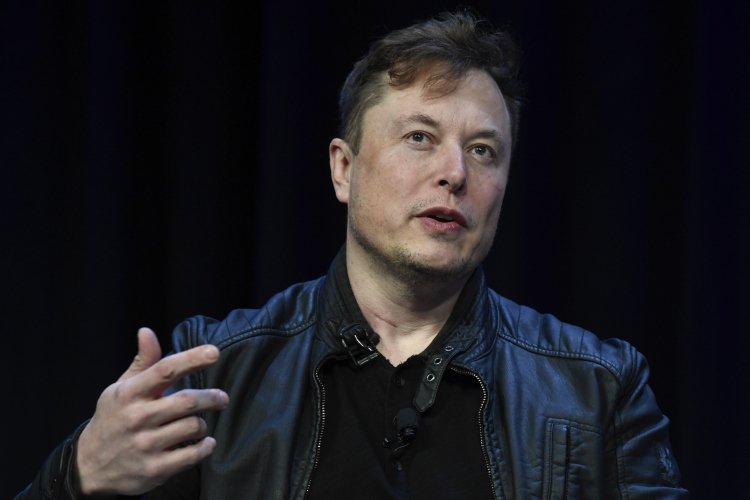
They thought Elon Musk was retarded. That’s what Walter Isaacson reports in his biography of Musk about the teachers at Musk’s elementary school. Musk’s response to Isaacson was “I wasn’t really going to put an effort into things I thought were meaningless.”
From Musk’s reply readers can hopefully see true hope for education. Opposite members of the right, it won’t be fixed with more government (educational vouchers, tuition tax credits), nor will it be fixed if the left gets its way and more resources are directed to teachers and administrators. Both sides imply that progress can be had with government as the planner, and much more disturbingly, both sides imply that the problem with education has to do with kids failing to learn the same subjects that schools have been teaching for centuries. Imagine a business owner proposing more of the same to investors...
The good news is that Musk has the means, and perhaps more remarkably, the energy to fix a calcified and trite education narrative that suggests the path to life-preparedness can be found in one-size-fits-all approaches to learning whereby everyone takes math, history, English lit, science, and a language. Based on the latter, is it any wonder that some kids struggle, or much like Musk did, tune out what’s taught?
Musk is using his immense wealth and even greater conviction to push back against accepted wisdom about what is and isn’t education. Describing his educational philosophy in a recent interview, Musk made a case that “you want education to be as close to a video game as possible. You do not need to tell your kid to play video games. They will play video games on autopilot all day. So if you can make it interactive and engaging, then you can make education far more compelling and far easier to do."
Where it gets even better is how the school is administered. Musk adds that "There aren't any grades. There's no grade one, grade two, grade three type of thing making all the children go in the same grade at the same time, like an assembly line. Some people love English, some people love math, some people love music; different abilities at different times. It makes more sense to cater the education to match their aptitudes and abilities." [emphasis mine]
Somehow along the way it became accepted wisdom that school should be defined by dread, fear of the unexpected (pop quizzes), and humiliation for some depending on the subject. What a strange approach. Bosses who created a work environment like this would be called “toxic” and likely worse, but education has long gained prestige based on the age of the institution, along with how grueling it is. Looking back on his own schooling that plainly had no impact on his career (how to major in industries that you’ve largely created?), Musk recalls that “I hated going to school when I was a kid. It was torture."
Musk’s Ad Astra in Bastrop, TX, meant to educate the kids of SpaceX employees, doesn’t resemble the education of old. Instead of melancholy Sundays, "The kids really love going to school. They actually think vacations are too long. They want to go back to school.”
It’s said that education prepares us for the working world, but how could generalized, one-size-fits-all instruction prepare individuals for a future that will increasingly be about specialized skills for jobs not yet invented? The bet here is that the answer to the question will be found in Musk who, in addition to all his other achievements, will totally rewrite how we think about learning to the betterment of students and teachers alike.
