




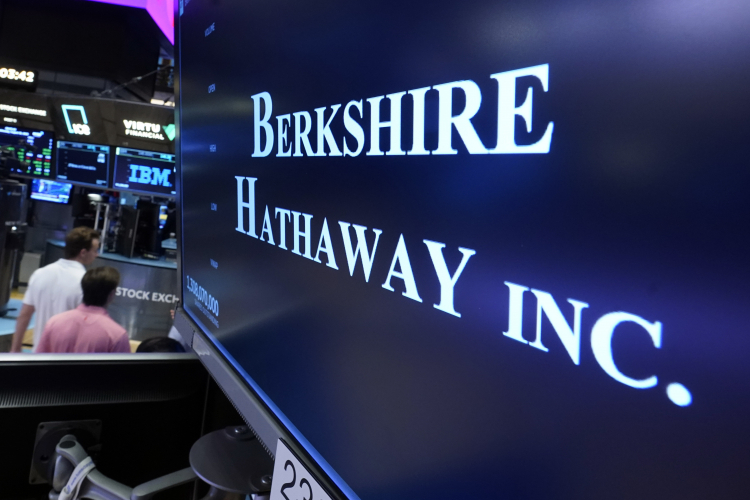
When shareholders ask a simple question about how their money is being spent, the answer should be transparency. When the answer is evasion, it raises a troubling question: What is the company hiding? This proxy season, the National Center for Public Policy Research (NCPPR) submitted a straightforward proposal to Berkshire Hathaway. NCPPR requested a report assessing whether the company’s subsidiaries’ sustainability commitments are actually justified by expected-value and return-on-investment (ROI) analysis.
The request is fundamental to the concept of ownership. For example, Berkshire Hathaway Energy has stated it has invested $40.6 billion in renewable generation and storage, with plans to invest an additional $4.5 billion through 2026, all while "striving to achieve Net Zero Greenhouse Gas Emissions by 2050". Yet, corporate presentations regarding these vast sums apparently lack cash flow models, internal rate of return estimates, or the sensitivity analysis required to assure owners that these are financial investments rather than symbolic expenses.
Rather than answering the question or allowing a vote, Berkshire plans to silence the inquiry.
Taking advantage of a recent shift in regulatory procedure, Berkshire intends to exclude this proposal from its proxy statement. In November 2025, the SEC announced it would no longer provide substantive "no-action" responses to companies seeking to exclude shareholder proposals, allowing companies to proceed if they simply claim a "reasonable basis" for doing so. Berkshire appears to be utilizing this lack of regulatory oversight to block shareholders from voting on a critical governance issue. (While beyond the scope of this op ed, the new SEC policy arguably raises serious questions about the extent to which the SEC’s new policy arbitrarily favors management at the expense of shareholders.)
Berkshire’s legal justifications for this exclusion (on file with this author) are that the proposal interferes with "ordinary business" or seeks to "micromanage" the company. But these arguments collapse under scrutiny. First, the proposal is precatory; it requests a report, imposing no mandate on management. (Note that there is some SEC precedence asserting that in this context (1) a report is not a report and (2) a request is not a request, but that “rule” is so facially preposterous as to warrant immediate rejection.) Second, if asking whether ROI was part of a multi-billion dollar investment decision constitutes impermissible "questioning of business decisions," then the concept of shareholder ownership is dead. As I have argued elsewhere (here and here), if corporate leaders dress up ideological expenditures as profitable investments without vetting them via traditional financial metrics, they risk not merely misallocating capital but misleading stakeholders.
Furthermore, Berkshire’s stance ignores the "social significance" exception that typically prevents the exclusion of proposals related to major policy debates. To argue that the global transition to Net Zero—and the tens of billions of dollars Berkshire subsidiaries are apparently pouring into it—is not socially significant is facially absurd.
By aggressively blocking this proposal, Berkshire is turning a single red flag into two. The first red flag was the apparent lack of disclosed ROI analysis for potentially ideological spending. The second is the apparent cover-up. This evasion risks triggering the "Streisand effect," where the effort to suppress information only highlights the company’s refusal to be transparent.
This strategy also carries significant risk in the upcoming proxy season. Glass Lewis has apparently reiterated its strong belief that even under the new conditions, "shareholders should be afforded the opportunity to vote on matters of material importance". If Berkshire excludes this proposal without the traditional safety net of a fully-vetted SEC no-action letter, it may face adverse voting recommendations against its board members or governance committee.
The fundamental obligation of a corporate fiduciary is to make business decisions on a fully informed basis to maximize shareholder value. Using shareholder capital to fund politically motivated agendas without a rigorous ROI analysis is a dereliction of that duty. By refusing to simply disclose whether such analysis exists, Berkshire Hathaway is arguably telling its owners that they do not have the right to know if their capital is being stewarded responsibly or squandered on political fashion.
Shareholders deserve the truth. If the investments make financial sense, show the math. If they don't, admit the cost. But do not hide behind legalistic maneuvers to avoid answering to the owners of the company.
Imagine hiring a contractor to build a house who demands $40,000 upfront for "sustainable materials." When you ask to see the receipts to ensure the materials were actually purchased and competitively priced, the contractor refuses, claiming that your request "micromanages" his ordinary business of hammering nails. You wouldn't assume he is a genius at construction; you would assume you are being robbed.
