




Cable television visionary John Malone could have owned a substantial portion of AOL before it was AOL. Where it perhaps becomes more ironic is that it was Malone’s TCI that was laying the cable throughout the U.S. in the 1970s that set the stage for broad internet access decades later. Said another way, over twenty years before the internet was even a thing, Malone was unwittingly building the infrastructure for its mass rollout.
Malone’s seminal role in creating the backbone for what would eventually enable the rise of a transformative technology rates thought right now as data centers sprout up all over the U.S. In 2025 alone, pioneer data-center developer Microsoft spent over $80 billion on new developments.
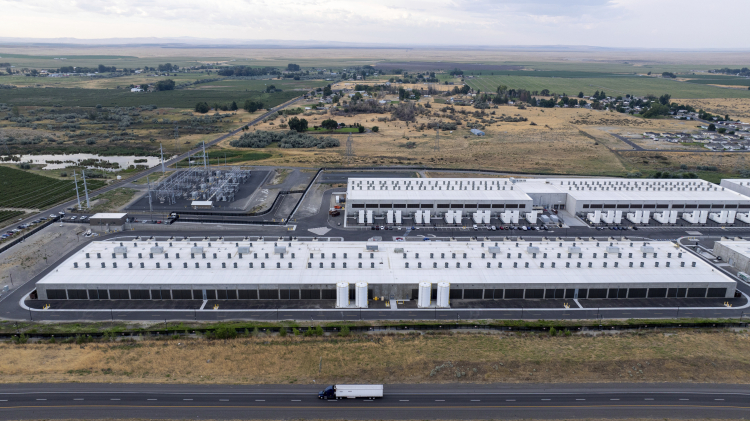
Microsoft’s substantive spending calls for a look back as a way of looking forward. It built its first off campus data center in Quincy, WA. Notable about the latter is that in a very real sense Microsoft’s Quincy center helped build Quincy itself. Local tax revenue has soared subsequent to the build, and it’s been vivified by schools that are a marvel for their advanced nature and look, along with hospitals and other high-end advances that are surely an effect of Microsoft essentially building the future far away from its Redmond, WA headquarters.
What’s important is that there’s no way of knowing what's next as a remarkable consequence of all this soaring investments. Consider OpenAI and its ChatGPT. Until November of 2022, it’s safe to say that something well north of 99% of Americans had never heard of either. That they hadn’t speaks volumes about Microsoft being early to data centers.
Given the immense costs associated with building them, it’s hardly insightful to say that before ChatGPT, the then non-profit that was OpenAI most certainly lacked the means to build a data center on which to develop its remarkable innovation in ChatGPT. Luckily for OpenAI, it could use data centers already created by Microsoft.
Notable about all this is that long before ChatGPT, Microsoft’s data centers in Redmond, Quincy, and beyond surely elicited questions about what they would be for. Which is the exciting point. No one really knew. Consider OpenAI and ChatGPT once again in the days and years before November 30, 2022.
What it tells us about the future is that the story of the data center and its expansive economic meaning has yet to be told. Readers reading this opinion piece no doubt grasp enhanced search, knowledge-creation, and work being done thanks to the proliferation of data centers, but it would be naïve to presume that the near-term effects of data center investment and construction are limited to what we know.
There quite simply must be so much more. And we know there’s so much more simply because so much of the potential found in what the cable visionaries were doing in the 1970s didn’t reveal its brilliant self until decades later. All we know is that it wound up being great.
Which makes a strong case for looking optimistically at what Microsoft and others are doing with copious investment in data centers as certainly brilliant, but also far-reaching in its brilliance. With Quincy, WA we see schools and hospitals, with OpenAI and ChatGPT we see the next fruits of Microsoft’s intrepid investment, all of which encourages us to marvel at what will follow now that this crucial infrastructure is operational and expanding in scope all the time.
