




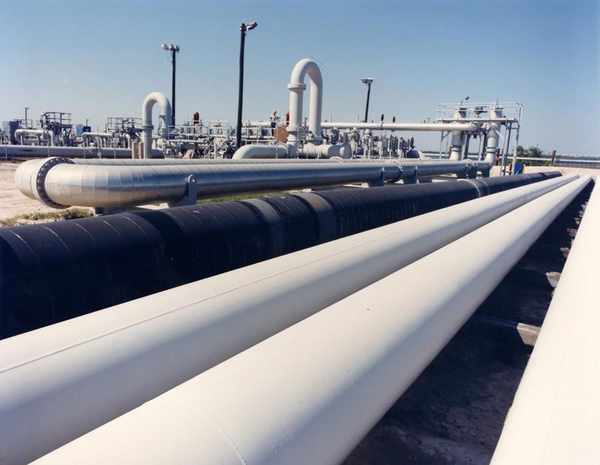
The fallout from plucking former dictator Nicolas Maduro from Venezuela to face multiple criminal charges is plain. What will the transition look like? How much will life change for Venezuelans? How will his allies react? Will their oil industry recover?
About the latter, San Antonio Express-News Deputy Editorial Page Editor Tony Quesada cautions that our “designs on Venezuela’s oil highlights need to slow consumption.” After an initial hit, he arguably swings and misses the rest of the way.
He has a fair point when he says “prudent — and previously burned — companies will wait to see whether a stable government emerges that can provide the kind of long-term security such investments demand.”
Institutions matter. Econ 101 students learn that a basic prerequisite for prosperity is stability. This comes in the form of, among other things, respect for private property, enforcement of contracts and a fair rule of law.
From there however, the ground under Mr. Quesada’s argument gets shakier.
For one, he feels it’s “reasonable to assume” that unproven reserves won’t add more than a “generation or two or three” to the “47 to 56 years … proven reserves” are estimated to last us. There are few more popular exercises amongst experts than predictions of depletion of natural resources.
Whether as the result of overpopulation, or in our case here, peak oil, many times these projections do not come to pass.
One big reason is the presence of enterprising and entrepreneurial minds amongst us. Of all the things the media, academia and the like explore, those don’t appear to be among them, at least when it comes to certain industries.
While he laments the current lack of “monumental technologies” for renewables, not mentioned is hydraulic fracturing i.e. fracking, and horizontal drilling. That’s curious considering we reside in the heart of the domestic energy renaissance of the 21st century.
Though fracking didn’t become viable until the dollar weakened in the early 2000s, the subsequent price signals of nearly $150/barrel and $5/gallon, respectively, worked. It will happen again if natural shortages ever occur.
Not only will more fossil fuels be found, but the “cold fusion … solar, wind, geothermal and hydroelectric” that Mr. Quesada et al prefer, will become more naturally viable as well. Unfortunately, that doesn’t seem to be soon enough.
They prefer “decisive action to slow oil consumption.” Some of us already do that. For example, I have always prized cars that have a high miles-per-gallon estimate. It saves me money.
Others however, need more capacity. As a father of four, been there done that. I had to sacrifice MPG when my girls were little. Still others drive full-sized trucks for work, and domestic automakers haven’t quite mastered that market yet.
Though Mr. Quesada criticizes the Trump administration for “aggressively revers(ing) policies … aimed at addressing climate change,” the struggles EVs have faced predate the cancelation the $7,500 tax credit available at purchase.
Moreover, since that credit essentially amounted to an upper-class subsidy courtesy of middle-class taxpayers, its expiration is welcome. One expiration that is not welcome is that of local newspapers, and print press took another hit recently when the Pittsburgh Post-Gazette announced its closure.
Though the Express-News doesn’t appear to have similar union issues, the imbalance on its editorial board doesn’t help. It has not had a single columnist in recent memory who leans opposite of its prevailing leftward tilt.
That’s odd given that, for example, the Wall Street Journal, New York Times and Washington Post all do.
While they serve “as the institutional voice for the newspaper’s editorial page,” being reflective of the area might be better for business. This spring, another conservative won a seat on the city council, while three others made runoffs, including the mayoral candidate who pulled 45% of the vote.
(Full disclosure: yours truly finished just over 2% back of first, and less than 2% out of a runoff)
Though they take right-of-center submissions from the public, it’s at their discretion. There was a time not long ago when that door narrowed significantly, during a crisis no less, when all we heard was that our problems were the result of a virus rather than the government reaction to it.
The bias was clear, whether intentional or not.
As a major steward of first amendment rights in the region, their duty to convey a more balanced view in the marketplace of ideas is arguably more important than doing so in the energy market.
