




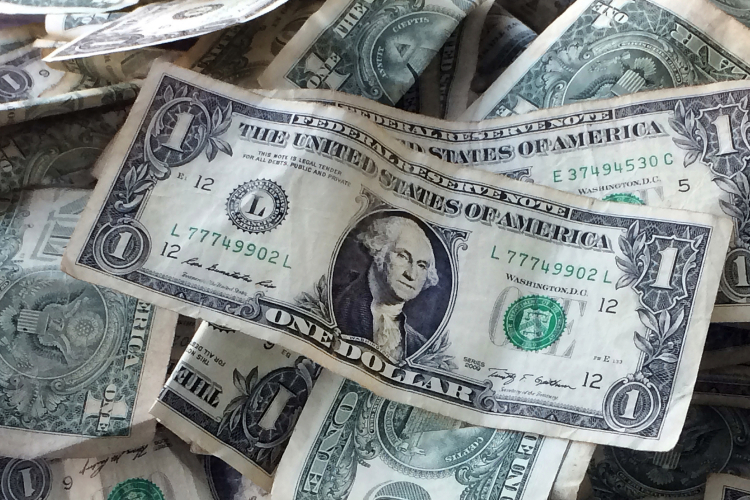
A tip is a gift, but it has somehow come to be regarded as mandatory. But gifts aren’t mandatory. Tipping someone is an expression of gratitude for service valued above expectations, and because two patrons at the same table will likely value differently the service received, the notion of tipping minimums vandalizes reason. No one deserves anything, especially those working in the service industry, which is the point: the better the service, the larger the tips because generosity is earned, not guaranteed. Your author is aware that restaurant owners in most states pay servers well below the minimum wage and that servers in those states need tips in order to earn the minimum wage or exceed it. And therein lies the incentive for servers to excel. It’s a self-policing system, as servers in those states who do not earn what equates to the minimum wage receive the loudest market signal that they’re working in the wrong industry and that they’d likely be more productive elsewhere. And it’s an abuse of words to assert that it’s the customer’s job to ensure that the server is paid well.
Before discussing the potential solution, it’s necessary to first address two absurdities, the first of which is tipping self-service kiosks. Yes, it’s outrageous, but don’t let the outrage drown out the deafening market signal: most people have been conditioned to believe that tipping is not only mandatory but virtuous, so business owners took advantage of what is obviously an easily exploitable character flaw. If customers are giving away their money without second thoughts, why wouldn’t the owners of the self-service kiosks provide that option for the unthinking masses? Instead of asking, “Why are they doing this?” ask yourself, “Why would I go along with it?” Also, if tipping in the majority of states serves as the backstop for servers earning no less than the minimum wage, then, if we follow this line of reasoning in conjunction with self-service kiosks, tipping ensures that robots are ‘earning’ a wage. Your author trusts that no further elaboration is required before proceeding to the next absurdity.
There are a few states in which employers are required to pay their tipped workers their state’s full, minimum wage, and for the purposes of this article, your author will focus on the West Coast, which comprises three of the top four wine-producing states in the country. Servers in Washington, Oregon, and California earn their state’s full, minimum wage, in addition to tips. Some believe that this is all well and good, but they could probably be persuaded to rethink their opinion. In these three states, servers are objectively less incentivized to provide less-than excellent service, but that hasn’t stopped patrons from tipping twenty or even thirty percent—on top of tax. But why? What do these culinary couriers provide? Sure, they bring their customers what was requested, in addition to smiling and topping off water, but what else? If you spend an hour dining at a full-service restaurant, how many of those sixty minutes are spent with your server? Five minutes? And for that, my dear reader is compelled to tip no less than 20%. Yes, this is, indeed, a mass psychosis.
But perhaps you disagree and believe that servers earning the full, minimum wage are also deserving of twenty-percent tips—or more. Well, let’s look into that. If we follow that logic, everyone who provides a service ‘deserves’ a tip. Personal trainers deserve a tip. Masseuses deserve a tip. Lawn-maintenance crews deserve a tip. Accountants deserve a tip. Lawyers—including “family law” attorneys—deserve a tip. Can you imagine?! God help us all if it’s considered just to tip the experts in injustice. You might believe that all of the above deserve a tip, but do you tip them as generously as you tip your restaurant server? Personal trainers spend a full, face-to-face hour with their clients, so surely we can agree that, if this logic follows, personal trainers are more deserving of tips than are the servers who spend 8% of your dining hour with you. But personal trainers aren’t alone in this regard, and herein lies the solution to this madness.
Those who believe that tipping is out of control will have little luck in changing tipping expectations, and laws will prove just as futile (and insulting to an allegedly free people). The only path forward is for the service industry itself to acknowledge that tipping is out of control and to alter tipping norms for their customers. Yes, in a very real, entrepreneurial sense, the service industry must lead its customers—not enable them—and your author is doing his part.
I sell wine for Bartholomew Winery—the value capital of the Pacific Northwest with a fanatical affinity for world-class carmenere. When I’m about to complete my customers’ purchases, I look them in the eye and ask, “May I skip the tip line?” The responses range from “sure” to try-not-to-spit-out-the-wine “no,” and all responses are great, as both sides of the counter are devoid of guilt. My boss confirmed that I received more tips than anyone else at the winery in 2025, so I’d say that I’ve implemented a winning strategy. Winery servers beat restaurant servers eight days a week on knowledge of the products sold and on time spent with customers, but it’s customary to tip the former nothing and the latter, 20%, which is exactly backwards. The West Coast wine industry is best suited to lead the way in providing superior service while reminding its customers that tips are welcomed but by no means expected. Here’s hoping the trend spreads across all service industries nationwide.
This initally ran at American Thinker.
