




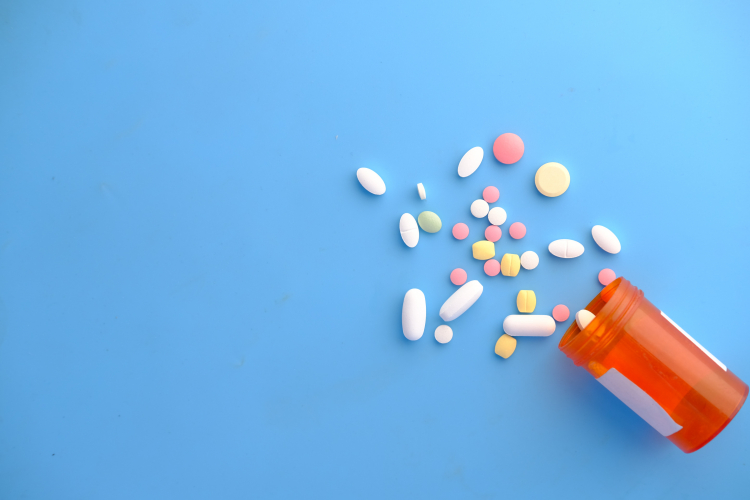
Generic drugs are the rare part of American health care that actually drives down costs. In 2024, they accounted for 90 percent of all prescriptions filled in the United States yet accounted for only twelve percent of prescription drug spending.
That massive divergence in volume versus cost underlines the simple fact that the price competition engendered by generic drugs dramatically drives down prices and delivers savings to patients, employers, and taxpayers.
Generic drugs contain the same active ingredients as brand-name medications but are sold under their common chemical name after the generic clears the brand patent. Generics must meet strict U.S. Food and Drug Administration (FDA) standards for safety and bioequivalence, meaning they work the same way in the body as the brand-name version.
Generics are the backbone of everyday affordability for chronic conditions, acute illnesses, and essential medicine coverage across America, especially for seniors, low-income households, and public programs like Medicare. A recent industry analysis estimates that generics and biosimilars saved Americans $467 billion in 2024 and more than $3.4 trillion over the past decade.
Despite this record of savings and safety, generics are suddenly under assault. Recent congressional activity threatens to destabilize the system, with little evidence to justify the alarmism.
The Senate Aging Committee—led by Sens. Rick Scott (R-Fla.) and Kirsten Gillibrand (D-N.Y.)—recently held a series of alarmist hearings and released an “investigative report” warning that America is dangerously dependent on foreign-made generics. The senators piled on with letters to federal agencies, distributors, and group-purchasing organizations, pressing for sweeping new oversight and even a federal buyer’s market for domestically-made drugs.
This rhetoric may sound alarming—especially to seniors—but most of this bluster is merely political theater and not an evidence-based assessment of risk. What is missing from the hearings and the report is the fact that brand-name drugs rely on the same global supply chains for active ingredients as do their generic equivalents, often from the very same facilities in India and China. If Congress is truly concerned about the foreign sourcing of drugs, it would be scrutinizing the entire pharmaceutical sector, rather than singling out generic drugs.
There’s no question that a reliance on foreign supply chains introduces strategic and public health questions. Manufacturing globalization has shifted a significant amount of drug production overseas, but that does not necessarily imply generics are untrustworthy or that the right response is to stigmatize them.
The spurious claims and fearmongering about generics’ quality and safety feel like a past era, the very tactics naysayers used to try to tank the generic drug market around the time Congress passed the seminal Hatch-Waxman Act.
For instance, one key claim—that foreign manufacturers are inherently unsafe—is built on a basic misunderstanding of FDA inspection data. Foreign plants show more violations today not because they’ve gotten worse, but because the FDA now inspects them far more often and far more aggressively than it did a decade ago. These heightened safety measures are thanks to billions in user-fee funding provided by the generic industry. Increased scrutiny naturally uncovers more violations, which is exactly what robust enforcement is supposed to do.
Before Congress created the Generic Drug User Fee Amendments in 2012, foreign facilities sometimes went nearly a decade without an FDA inspection; the law funded more inspectors, more frequent site visits, and more unannounced inspections abroad. The FDA inspected 774 generic manufacturing facilities worldwide in 2024, including 570 international inspections.
The point of generics has always been to lower costs and expand access, but the new congressional push, framed as a safety concern or national-security imperative, threatens to undermine generics not because of proven systemic failures, but because of worst-case anecdotes and unfounded supply-chain fears.
Generics operate on razor-thin margins, and a policy overreaction—such as new tariffs, mandatory reshoring, or restrictive procurement rules—could make many generic drugs economically unsustainable to produce or import, leading to shortages and fewer companies willing to make generic drugs. Seniors and veterans would no doubt feel the pain from unjustified government action.
When margins collapse, companies stop making low-priced drugs first—especially sterile injectables and older antibiotics, which already face the greatest economic pressures. That is precisely how the country ends up with shortages of cheap, essential medicines even as expensive brand-name therapies flood the market.
Policymakers should pursue targeted, evidence-based reforms rather than considering sweeping restrictions that would undermine affordability. Such a move would entail strengthening FDA oversight where genuine risks exist while avoiding a broad stigmatization of foreign-sourced generics. It would also require creating real incentives for U.S. manufacturing—such as regulatory streamlining or a prioritized review for domestically made products—instead of imposing punitive trade barriers that would only raise prices for patients.
Finally, lawmakers can promote greater supply-chain transparency, including country-of-origin information, while recognizing that a diverse global manufacturing base is not inherently unsafe when robust regulatory standards are consistently enforced.
Congress should fix real vulnerabilities in the drug supply chain, not invent new ones for the sake of political theatre. The surest way to jeopardize access to safe, affordable medicines is to undermine the very system that makes them possible.
