




There was nothing “financial” about the so-called “2008 financial crisis.” Markets quite simply ARE. They’re neither left nor right, nor are they biased toward one Party or another. They just tell the truth which, by its very description, is never the stuff of “crisis.”
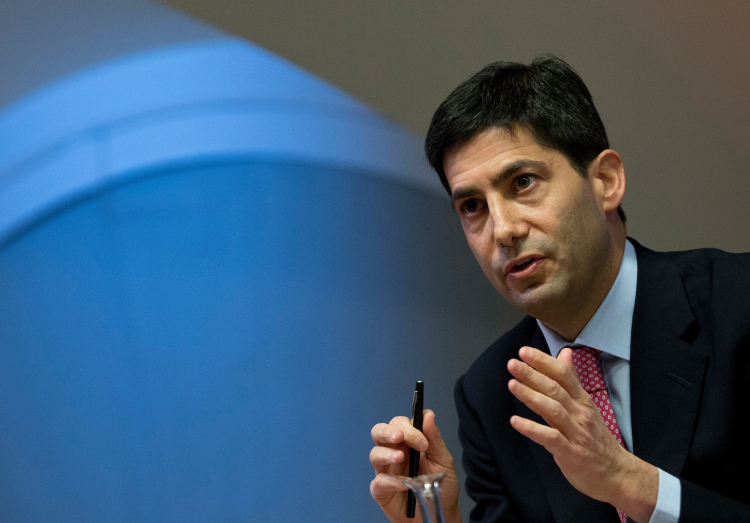
What’s been said rates prominent mention right now with President Trump’s nomination of Kevin Warsh as Fed Chairman. In attempting to predict Warsh’s performance in the Fed’s top job, economists and pundits will judge him based on what he’s said and written in the past about inflation and interest rates. They’re wasting your time. More on this in a bit.
For now, what’s arguably much more important as a way of judging Warsh and his ability to succeed in his new role is to investigate his thinking more broadly. This is where Warsh becomes worrisome.
That’s because he’s an interventionist. If anyone doubts this, they need only reference his Wall Street Journal opinion pieces from 2020. It was then that the U.S. economy was in freefall after the political class all the way up to President Trump panicked about the coronavirus, and subsequently locked Americans down.
Responding to the disastrous use of economic contraction as a virus mitigation strategy, Warsh provided non sequitur. Rather than state the obvious, that businesses of all stripes would be back on their feet quickly if the lockdowns ended, Warsh called for the Fed to subsidize the political class’s vandalization of reason with various federal lending facilities to businesses.
The virus didn’t break the economy in 2020, panicky politicians did. Warsh aided the panicked and disastrously wrongheaded approach to the virus with opinion pieces that called for increasing the government’s role in a collapse caused by government error.
Traveling further back in time to around 2011, and after Warsh left the Fed, he spoke to a small group of economics writers (me included) at the Hoover Institution. His admiration for his former Federal Reserve boss (Ben Bernanke) was very apparent, as was his reverence for Bernanke’s 2008 demand that his Fed underlings (including Warsh) essentially “try everything” to revive an economy that was in serious trouble.
The problem is that governments have no resources other than what they extract from the private sector first. The Fed is no different in this regard. It can’t intervene to revive the economy simply because by intervening, the Fed is substituting its microscopically narrow knowledge for the boundless knowledge of the marketplace. The “try everything” approach that Bernanke cheered (and Warsh revered), and that included bailouts that George W. Bush, Bernanke and others deemed essential for saving the economy, were in reality the crisis that Americans and the world endured in 2008.
It’s worth thinking about all of this while contemplating Warsh at the Fed. Far less than people grasp, Fed Chairs can’t influence inflation exactly because the dollar’s exchange value has never been part of the central bank’s portfolio. Furthermore, the economists who will be in Warsh’s employ at the Fed think inflation is an effect of too much economic growth (the discredited Phillips Curve), not a shrinking dollar as is.
Interest rates? Free market types have been writing for weeks that President Trump’s aim to cap interest rates on credit cards at 10% will result in a scarcity of cards and credit. Well, yes. Cheap credit can’t be decreed by presidents. It also can’t be decreed by Fed Chairs.
Which means the only thing that really matters with Warsh is what he would do, and what he would recommend a president do, in times of uncertainty. We know the answer, and that’s why Warsh is such a worrisome choice.
