




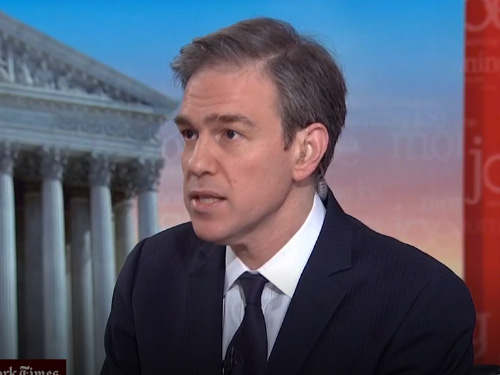
The frequently excellent Bret Stephens was thrilled about Secretary of State Marco Rubio’s elevation of Western civilization in his Munich Security Conference speech last week. Stephens desires a renewed reverence for the civilizational qualities that shaped Europe, and subsequently the United States.
He laments the “damage” done to “normal citizens in modern democracies who, unless they’ve sought it out for themselves, lack a clear idea of what the west stands for.” Stephens is of the view that they should know “the [great] conversation between Plato and Aristotle, Locke and Rousseau, Keynes and Hayek.” Something like that.
It's the nostalgia argument, that somehow things were better in the past when people knew what they don't know now. But the past as the way of judging the present is hard to countenance, plus it raises an innocent question: when did Americans or Europeans ever have a faint clue about what Stephens thinks they should?
The contention here is that Stephens missed. And that’s not a critique of Western civilization. Instead, it’s a comment that what Stephens believes in deeply is decidedly not what the United States is about. Perhaps it’s what Europe is about, but that’s doubtful too.
This isn’t to deny the Western civilization origins of the U.S. and Europe, including the free underpinnings of both. But please read again about the allegedly “Great Conversation” that Stephens desires and that he believes “the West stands for.” In his column Stephens wasn’t just extolling the virtues of past knowledge, he thinks we’re damaged for not knowing. It's hard to take seriously.
That’s because there are likely not enough 9s next to 99.9 to accurately depict the percentage of Americans who don’t know what Stephens deems so essential. Yet despite now knowing what Stephens knows, Americans have done alright over the decades. Quite a bit more than alright, and in all walks of life.
Stephens could perhaps be persuaded that he's overstating things. After all, the people are the market and collectively quite bright. As opposed to deciding what makes us better, Stephens would ideally try to persuade us to know what he thinks we should, and we can decide if we agree. The bet here is that most won't, and that those who disagree with Stephens will, if possible, grow in number. Where we're happily headed is to a place of even narrower knowledge, not more.
As for governments, they most certainly shouldn’t have the power to decide what is good or bad for us, and what will “damage” us if we don’t know it. And that’s not just because a little more than six years ago our panicky federal minders decided lockdowns, masks, and economic contraction were what was good for us. There’s more.
The crucial truth seemingly ignored by Stephens is that the greatest American ideal isn’t Western civilization, it’s fierce individualism. The late Cato Institute co-founder Ed Crane long made the previous case. It's what makes the United States the United States.
We’re thankfully free to learn or not learn whatever we want, and we’re free to think that what Stephens considers a great conversation is a total snooze that we don’t need to spend any time on. The government’s job in a country founded on skepticism about politicians is to protect our freedom, including our right to pay no mind to what Stephens has decided is so necessary for us. Central planning that always fails in an economic sense hardly gains validity when it’s centralized instruction.
