




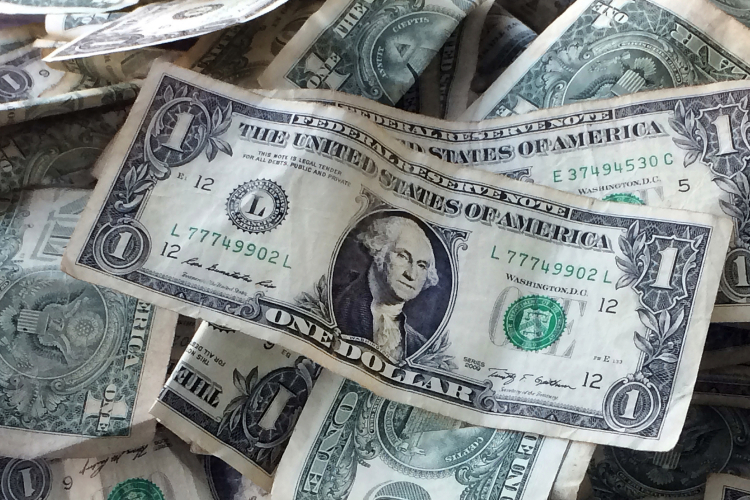
The most important question in macro investing right now may not be about tariffs, deficits, or Federal Reserve policy. It may be this: Can a digital dollar do what Paul Volcker could not — permanently arrest the debasement trade?
Stablecoins are no longer a cryptocurrency curiosity. The total market capitalization of USD-pegged stablecoins has grown from roughly $6 billion in early 2020 to over $230 billion by early 2025. The GENIUS Act — passed in 2025 — provides a federal framework requiring issuers to back every stablecoin dollar with U.S. Treasury instruments or equivalent liquid reserves. The implication is a self-reinforcing demand loop: global appetite for stablecoins generates Treasury demand, which lowers U.S. borrowing costs, which strengthens the dollar against foreign currencies. Brent Johnson's "Dollar Milkshake Theory" — the thesis that the dollar would strengthen even as it debased — may be finding its digital mechanism.
The logic is most powerful outside U.S. borders. A citizen in Argentina, Turkey, or Nigeria facing 40 to 100 percent annual currency depreciation does not need a stablecoin to yield 5 percent. Stability itself is the product. A USD-pegged instrument that holds value relative to a collapsing local currency is an extraordinary value proposition — and it creates Treasury demand without a single American buying in. This is financial repression at a scale Alexander Hamilton could not have imagined: the world's savers, fleeing their own governments, become involuntary buyers of U.S. debt.
The GENIUS Act's most consequential provision — prohibiting stablecoin holders from earning interest — reveals exactly who this is designed to serve. Domestic American investors have no reason to hold a non-yielding stablecoin when Treasury bills offer 4 to 5 percent. The structure is optimized for international adoption, which maximizes Treasury demand while avoiding competition with domestic bank deposits. The legislation is elegant in its design and unambiguous in its purpose.
For gold investors, the stablecoin thesis poses a genuine — if frequently overstated — challenge. If emerging-market savers who previously held physical gold as a currency hedge migrate to USD-backed stablecoins, that represents real demand displacement. Gold priced in dollars could face a multi-year suppression period as the relative dollar strengthens. History offers precedent: the dollar's rise from 2011 to 2016 coincided with gold falling from $1,900 to $1,050. A repeat is not inconceivable.
But here is where the stablecoin thesis hits its structural limit. It conflates the dollar's relative strength against other currencies with the dollar's absolute purchasing power. These are not the same thing. A stablecoin creates demand for Treasuries; it does not reduce the deficit that necessitates those Treasuries. It lowers borrowing costs at the margin; it does not alter the fiscal trajectory that makes debasement inevitable. The dollar can be the strongest currency in a race to the bottom while still losing 3 to 4 percent annually against real goods and services. Gold's long-term bull case has never been primarily about the DXY index — it is about the preservation of absolute purchasing power across time. Stablecoins address the former while leaving the latter entirely intact.
The more serious threat to gold comes from a direction the stablecoin advocates rarely discuss: central bank buying. Emerging-market central banks — China, Russia, India, Poland, Turkey — have been accumulating gold at the fastest pace in fifty years. Their motivation is geopolitical, not inflationary. They are reducing exposure to dollar-denominated assets that can be frozen, sanctioned, or weaponized. A USD-backed stablecoin, by definition, does nothing to address this concern. It is a dollar instrument. Central banks diversifying away from dollar exposure will not substitute stablecoins for gold; they will continue buying gold regardless of what Tether or Circle does.
This is why gold continued rising in 2022 through 2024 even as the DXY strengthened — a historically unusual pattern that suggests gold is now pricing something beyond currency relativism. Three signals will determine which force prevails. First, whether stablecoin adoption in emerging markets is displacing physical gold purchases or simply growing alongside them. Second, whether the no-interest provision survives political pressure, since a yield-bearing stablecoin would transform the competitive landscape entirely. Third, whether the gold-DXY correlation reasserts itself or continues to break down.
The stablecoin revolution is real. Its support for the dollar is real. Its potential to suppress gold in dollar terms, at least temporarily, deserves serious consideration from any investor who has built positions in precious metals over the last five years.
What it is not is a cure for debasement. The fiscal dynamics that created the gold bull market remain not just intact but accelerating. Stablecoins may reshape the timeline and the expression of that thesis. They do not refute it. Stablecoins may give the dollar a better race. They cannot change the finish line.
