




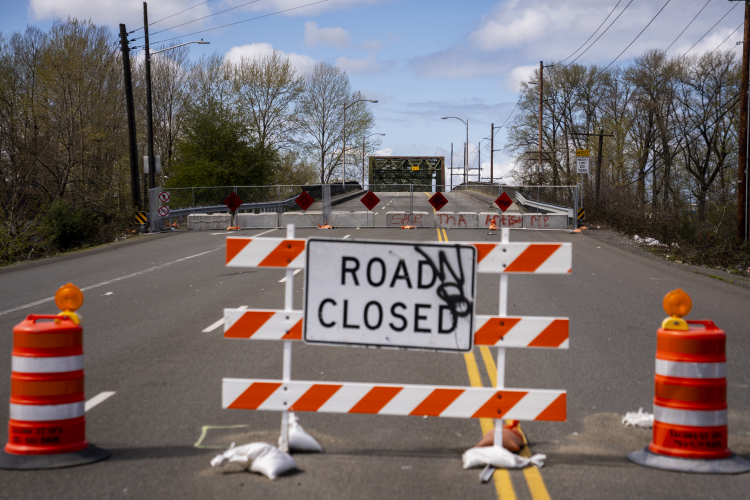
America stands at an inflection point for infrastructure investment. The systems that move goods, power homes, and connect communities are ageing faster than they are being developed or replaced. At the same time, technological advances are reshaping how we move, communicate, and generate energy, making the cost of inaction higher than ever. It is a challenge faced by developed economies across the globe.
The American Society of Civil Engineers projects a $3.7 trillion infrastructure funding gap through 2033. This is a financing challenge. It also means the opportunity to modernize US infrastructure has never been greater.
As policymakers look for solutions, we believe there is a rapidly-growing source of private capital that remains underutilized – Australian pension capital.
Australian pension funds, known as superannuation funds, are generally considered to be among the world’s most sophisticated and experienced infrastructure investors. In the United States alone, they have invested across a diverse portfolio of critical infrastructure, including ports, data centers, natural gas facilities and renewable energy platforms.
With over $2.6 billion of inflows every week, the Australian pension system is predicted to become the second largest in the world behind the US, reaching $5.4 trillion by 2035. Built for long-term investing, these funds are generally private markets investors actively seeking stable, high-quality infrastructure assets, exactly the profile of many US transportation, energy, and water systems.
These funds already have ownership stakes in US infrastructure worth $29 billion, with total infrastructure investment projected to reach almost $67 billion by 2035.
At IFM Investors, which was founded by Australian pension funds to collectively invest, we not only invest on behalf of working Australians, but we count more than 200 US pension funds as our clients. This means our investments in the US have the potential to flow back into the pockets of more than 20 million working Americans too.
Our investments are helping to repave roads and bridges across Indiana, export US natural gas off the coast of Freeport, Texas, pump jet fuel from Houston to JFK airport, and are help create new income streams for American farmers by investing in biogas production in South Carolina.
But there is an opportunity to do more and help bridge the infrastructure gap. As one of America’s closest allies and a long-standing strategic and economic partner, we believe Australia represents a trusted source of aligned, long-term capital for US infrastructure modernization.
Which is why this week, IFM Investors has released a policy blueprint which proposes practical regulatory and tax changes designed to help lower financing costs for states and municipalities, attract long-duration pension capital and accelerate investment into roads, energy systems, ports, airports and other critical US assets
These recommendations seek to open the door to greater long-term, at scale investment by Australian pension capital.
Despite 36 states having public-private partnerships (P3) enabling legislation, P3s account for just 1-3% of U.S. transport and water infrastructure spending since 1990, compared with 5-20% in comparable developed nations. Why? The problem is not a lack of capital or legal authority; it is that current rules discourage efficient deployment of private, long-term capital.
Australian pension fund investment in the United States is projected to more than double over the next decade, rising from roughly $400 billion to over $1 trillion. Three targeted policy updates could unlock this capital and transform America's infrastructure pipeline, directing more of this long-term capital into infrastructure projects, accelerating project delivery and strengthening the nation’s economic foundation, with each $1 billion invested supports approximately 13,000 jobs annually.
America faces a $3.7 trillion infrastructure challenge, and there is a willing partner with the capital, expertise, and long-term perspective to help meet it. With targeted policy adjustments and practical administrative updates, this capital may be mobilized at a lower cost and greater scale.
We believe the opportunity now is to remove avoidable friction, expand the pipeline of investable projects, and long-duration capital to work alongside public partners. The next step is creating conditions that allow these projects to move forward.
