




Government spending is by far the biggest, most freedom and economy-sapping tax of all. While Larry Ellison, Elon Musk and Reed Hastings will work at all sorts of tax rates, they can’t innovate without the capital that government consumes in humongous amounts.
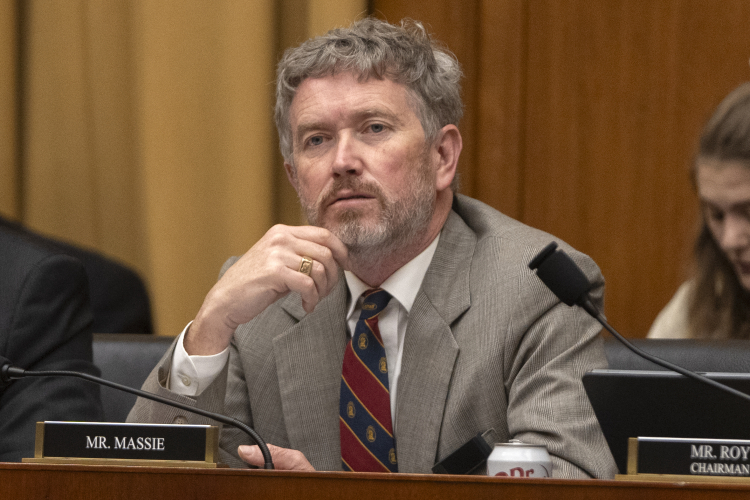
This is important right now given the growing amounts of noise the great Rep. Thomas Massie is making about Washington's waste. He’s right that government spending brings with it very real horrors, but his examples near totally miss the horrors.
See a recent post on X by the congressman. Massie wrote that “When Congress votes to increase spending, they’re voting to increase your taxes because you’ll pay for the additional spending through inflation and debt and taxes today.” Let’s start with where Massie is right.
Government spending is once again a tax. See above. It’s also paid for today, though for the most part not in the ways that Massie contends.
For Massie to say government spending causes inflation is for the congressman to suggest that Paul Krugman's “Keynesian Multiplier” is real, that government can take consumptive power from the producers of it, redistribute it, and voila, increase demand in the economy alongside rising prices. It can't. Consumption always matches production that must happen first, and this is true even when the producers are fleeced by Congress so that favored others can spend.
Some will reply that Massie is implying that the money spent by Congress isn’t being taxed away, it’s being borrowed. Which is a non sequitur. Consumption is yet again mirrored by production. If Treasury is selling bonds so that Congress can spend, then some producer somewhere is consuming less so that the Treasury could be purchased.
After which, some will then pivot to the popular notion that governments borrow in enormous amounts, only to devalue away their debt obligations. No doubt devaluation IS inflation, not to mention that it’s the only inflation opposite the overnight Keynesians in the conservative world who’ve found the impossibility that is “excess demand” in government spending. But to believe government debt sales are inflationary is to suggest markets aren’t just stupid, but that they’re monumentally so. In other words, buyers of debt don’t do so with an eye on receiving income streams denominated in devalued dollars.
Just the same, Massie is right that we all pay for government spending today. Which is why it’s too bad so many, including so many libertarian supporters of Massie, inexplicably contend that the proverbial bill for government spending and debt accrued to increase the spending is a future concept. This is a popular view at the Cato Institute, and sadly one the scholars there won’t debate.
The tax is right now, though it’s unseen. As evidenced by the formerly impossible achievements of Ellison, Musk and Hastings, they accessed the capital to pursue their visions in incredibly difficult fashion. Their successes against all odds signal that the list of entrepreneurial leaps that never took place is long. There’s your crisis.
As in the crisis is all about what’s not taking place right now amid all the government consumption, not the debt that investors continue to charge ever lower rates for. Which speaks to the other crisis, the excessive taxation right now that enables all the borrowing.
If only Massie and other libertarians would talk about the real crises, not symptoms. Not only are they not talking about them, they’re totally ignoring the unseen horrors of high tax revenues now, and the market expectation of much higher tax revenues in the future that are once again enabling all the debt that libertarians rightly abhor.
