




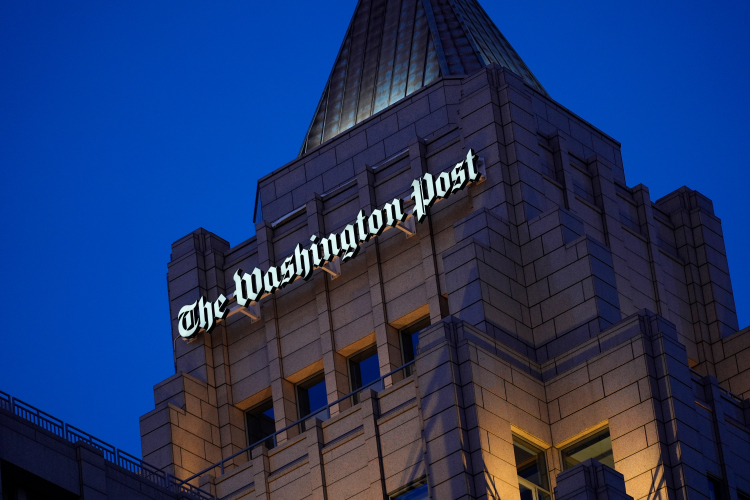
It’s Jeff Bezos’s money. And it wastes words to say that he has a right to not lose tens of millions annually on the Washington Post.
At the same time, it seemed like Bezos knew he would lose enormous sums when he bought the Post in 2013. The $250 million he paid relative to what prominent newspapers were formerly worth (Rupert Murdoch paid $5 billion for the Wall Street Journal in 2007) was arguably the market signal that Bezos was buying a money loser.
Furthermore, wasn’t losing money the point? In August of 2013, not long after the purchase, I wrote at Forbes (“Is Jeff Bezos the Greatest Politician Ever?”) that perhaps Bezos’s acquisition of the Post was protection from the antitrust crowd in Washington. He would keep the Post intact so that the political class would allow him to keep Amazon intact. Sad, but that’s sadly how Washington works.
Was the speculation correct? It’s worth pointing out that when Amazon announced its planned purchase of Whole Foods in 2017, the deal closed very quickly.
Fast forward to the present, most reading this are aware that after persistent losses, Bezos demanded mass layoffs at the Washington Post. Some will revel in this since the Post is left wing, but what did those cheering expect? Consider the market the Post serves in the Washington, DC area.
Notable there is that a year before the layoffs, readers no doubt remember the shift Bezos announced for the Post’s editorial page toward "personal liberties and free markets.” There was nothing wrong with the shift, plus it’s Bezos’s newspaper, but even there…the editorial page already had George Will, Megan McArdle, and all sorts of National Review writers. As a deep believer in liberty and free markets, the view here is that the Post was more informative and useful when it offered a look into the other team’s huddle.
It seemed like Bezos’s implied deal early on was that he would keep the Post upright for political reasons (those who know him say his own politics are libertarian), but also nostalgic ones. It’s the Washington Post, after all.
Again, Bezos had to have known the Post was a money loser when he bought it for so little. As for ideology, consider yet again the market. Beyond ideology, the Washington Post was always a great read. To focus on its politics (not mine, obviously) was to miss the point.
That’s because the Washington Post was more than politics. The sports page had great writers like Jerry Brewer who, while occasionally too political for a market that arguably demanded it, wrote very insightfully. Monica Hesse, while thankfully still at the Post, forced readers of her columns in both the Style and Opinions section to rethink how they thought about all sorts of issues. Ty Burr and Anne Hornaday wrote great movie reviews for readers who wanted to know about movies that frequently they wouldn’t have the time to see.
Pick up the Post now, and the Sports page is literally all Associated Press articles. Movie reviews? They might as well be AI. As with Sports, Burr, Hornaday and others have been replaced by reviews picked up on the wire services.
Again, it’s Bezos’s money. And market outcomes are the best outcomes. Still, it’s difficult to not at least speculate that the Washington Post purchase was never about markets to begin with. It was about losing tens of millions to protect businesses worth exponentially more. At least for a time, the money losing implied in the deal made for a fun daily read. Sadly, it isn't much fun anymore.
