




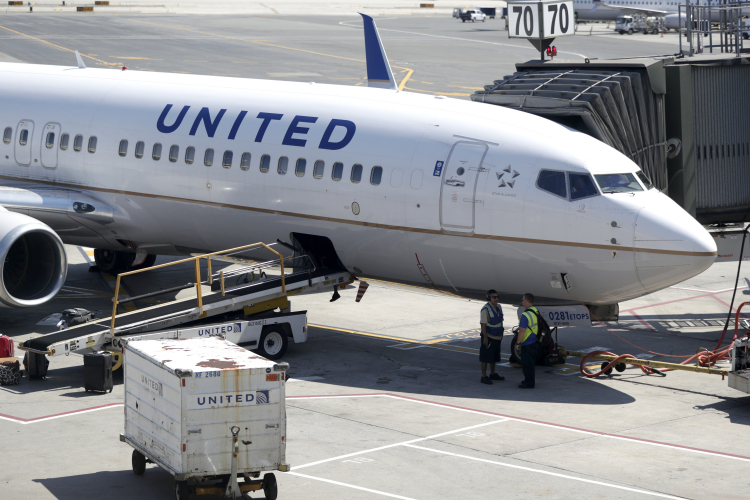
The O’Hare Airport is important for more than just Chicago: As the busiest airport in the country and hub for the two largest airlines, it has a disproportionate impact on the national air system. Delays, cancellations, and missed connections there inevitably propagate across the country.
Its outsized importance is precisely why the Federal Aviation Administration’s new proposal to reduce overscheduled flights at O’Hare is so important and welcome. It is a commonsense intervention aimed at preventing chaos before it starts.
At issue is the extraordinary number of flights scheduled for O’Hare this summer. For example, United Airlines said it planned to operate roughly 780 flights per day from O’Hare, which would be a dramatic increase of about 200 daily flights and would lead to a schedule that would exceed airport capacity during the peak times. If left in place, that schedule would make 2026 the busiest summer ever at O’Hare.
The expansion would make an already bad problem even worse. O’Hare recorded the most delays of any U.S. airport last year, and with ongoing construction affecting runways and other parts of the airport the expansion of flights would inevitably result in rolling delays, cancellations, and misery for travelers in Chicago and across the country.
To its credit, the FAA recognizes the potential problem at hand and is attempting to nip it in the bud. It recently concluded meetings with airline representatives to discuss the potential problems that the current schedule would have summer. It appears that the agency will issue a schedule reduction order soon; it has already proposed a framework for doing so, which essentially ties reductions to 2025 levels.
Gate allocation at O’Hare is partly determined by how much traffic an airline has, and United’s scheduling choices partly reflect that: For instance, its proposed nearly-hourly flights from South Bend and Grand Rapids do not reflect consumer demand, but they do allow it to inexpensively hold onto existing slots at the airport even without going through the motions of actually flying more planes to these locales.
My hometown neighbor, former DOT secretary Ray Lahood, recently observed that United seems intent on going through the motions to claim more flights from Chicago to Peoria. While this would be a boon for my family if it were to occur, Lahood sagely points out that there does not appear to be sufficient demand for these flights, and it is not apparent that greater demand will materialize. Making a pretense of offering more flights for Peoria while having no intention of actually following through on it may help United with its scheme to claim market share in O’Hare but it will inconvenience (and anger) a lot of Peorians, myself included.
United executives have been explicit about their goal to maintain their hold onto its Chicago market share. Earlier this year, United CEO Scott Kirby said that it would not allow American Airlines to obtain a single gate at its expense and that, “We’re going to add as many flights as are required to keep our gate count the same in Chicago.” United CFO Michael Leskinen made the strategy even plainer when he commented that they see American’s O’Hare hub as merely being “temporary.”
This is not new: In 2017, Kirby said his long-term goal in Chicago was to grow and eventually take over those gates controlled by American Airlines. The FAA proposal would put a dent into that anti-competitive strategy, and that would be good news for consumers: Protecting competition keeps airfares lower.
When airlines compete head-to-head at the same airport, travelers tend to get lower fares and more choices. Sure enough, that is exactly what has happened at O’Hare, where the average ticket price fell by 3.8 percent in 2025. In airports where United is the only carrier operating a hub--such as Washington Dulles and San Francisco International--prices have been significantly higher.
Transportation Secretary Sean Duffy and FAA Administrator Bryan Bedford deserve credit for stepping in before United’s plans came to fruition and degraded O’Hare’s already-subpar performance.
The FAA’s proposal is a reasonable answer to a serious threat. It prevents one airline’s ambition from turning the country’s busiest airport into a summer disaster. And it sends the right message: airlines should not be allowed to overstuff schedules, undermine competition, and leave travelers holding the bag.
