




Opportunities to spend other people’s money are a joy, and a fortiori when the goals being pursued are political and thus guaranteed to elicit applause from the right-minded at all the right cocktail parties. This is a substantial problem for corporate governance, as proposals presented for shareholder votes often have little to do with business operations that in principle are supposed to maximize shareholder value, that is, the economic value of investments in the given company.
Instead, many such proposals are blatantly political: environmental (reductions in greenhouse gas emissions in particular) objectives, racial and gender quotas on corporate boards, investments designed to curry favor with specific geographic and ideological groups, investment and operational choices intended to ostracize specific economic sectors, and acquiescence with the business operation demands of such international organizations as the European Union.
Consider now the implications of passive index investing, that is, investment in index funds by both individual investors and managers of large investment portfolios. Index funds simply replicate such market baskets of securities as the S&P 500. Because investments in index funds avoid the costs of analyzing the prospective performance of individual companies, fees are low — exceptionally low in many cases — and the benefits of diversification remain high.
A given index fund replicating the Dow 30 or the S&P 500 or the Russell 2000 is essentially identical to any other, and so it can surprise no one that the market for passive index fund investing has consolidated, because the costs that remain can be spread across ever-more investors. Accordingly, three huge asset managers — BlackRock, State Street, and Vanguard — now own half or more of fund assets under management in the U.S. The three hold the largest shareholder positions in 40 percent of all listed U.S. corporations and 88 percent of S&P 500 firms.
So what’s the problem? The Big Three have enormous control over the outcomes of shareholder votes on proposals through their passive investments in index funds, but precisely because those investments are passive — they merely are trying to replicate a large part of the overall market — they avoid for the most part the adverse effects of their voting recommendations for specific companies.
This means that they can vote their large shares in specific companies in favor of proposals that advance their political goals rather than the goal of value maximization. In 2021 Engine No. 1 — a small “environmental” hedge fund — was able to install two climate-activist directors on the board of ExxonMobil, despite the fact that it held only a trivial number of ExxonMobil shares. How? The Big Three voted in favor of that proposal!
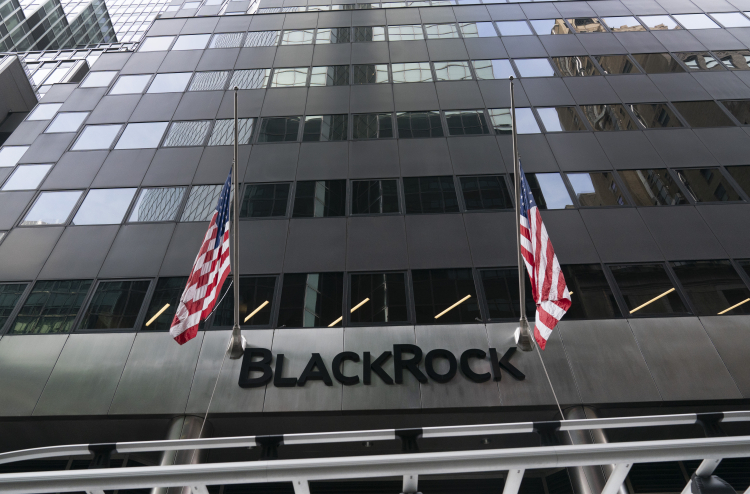
BlackRock has been particularly egregious in recent years. In 2020, Blackrock voted its large investment in ExxonMobil to pass a resolution pressuring the company to adhere to the constraints nominally imposed by the Paris climate agreement. (That the Paris agreement is an absurdity was not relevant to Blackrock’s political posturing.) In 2021, BlackRock attempted to force Johnson & Johnson to conduct a similar “Racial Equity Audit,” in the hope that the proposal would “accelerate” Johnson & Johnson’s “progress” toward “racial equity.” Only a third of shareholders supported that proposal. In 2022, Blackrock formally supported a proposal that would have forced Alphabet to conduct a similar “racial equity audit” on its supposed “adverse impacts on Black, Indigenous, and People of Color (BIPOC) communities.” The proposal failed only because Alphabet’s founders held a controlling share of the company, and voted against it.
More recently, Blackrock’s CEO, Larry Fink, has moderated his stated support for “Environmental, Social, and Governance” and “Diversity, Equity, and Inclusion” initiatives, and there is some evidence that Blackrock’s support for such proposals has declined. But because the political winds can shift, this change might not prove durable.
Action by the Securities and Exchange Commission would be useful, but it can be reversed by a future change in SEC leadership. James R. Copland of the Manhattan Institute has argued that holders of passive index fund investments in given companies should abstain from voting on proposals, which would require new legislation.
Senator Dan Sullivan (R-AK) has proposed that passive funds owning more than 1 percent of a company pass voting rights through to their own investors, who then would have the right to vote their respective shares of a given company’s stock. The problem is that most investors choosing index funds do so because it avoids the time and other costs of doing research on the individual companies held in an index fund.
In his bill, Sullivan proposes an alternative as well: “mirror voting.” If a passive index fund is unable to determine the voting preferences of its underlying investors, then the asset manager should cast the votes in the same proportion as other nonpassive shareholders. This would mean that the large asset managers would have a neutral impact on any given proposal, simply reflecting the voting behavior of investors actively pursuing profitable investment opportunities.
This would be salutary for the economy as a whole, in that efforts of large passive index fund investors to impose their political preferences on public companies centrally is an endeavor to achieve surreptitiously what Congress refuses to enact. Action now by the SEC might spur more fundamental Congressional action, which would serve to protect our Constitutional institutions.
