




“I didn’t get better on his steady dose of antibiotics, the constant pain didn’t go away — while the advice to go off antibiotics entirely led to disasters, where I stopped the drugs and disintegrated quickly.” That's what New York Times columnist Ross Douthat wrote about his painful and long battle with Lyme Disease.
Though some are lucky enough to recover quickly from the malady, others don’t. Douthat’s passage was plainly awful, and readers no doubt know other people personally who suffered a recovery like Douthat’s. There’s no way of knowing ahead of time, but if you’re one of the unlucky ones, the path back to normal health is brutal.
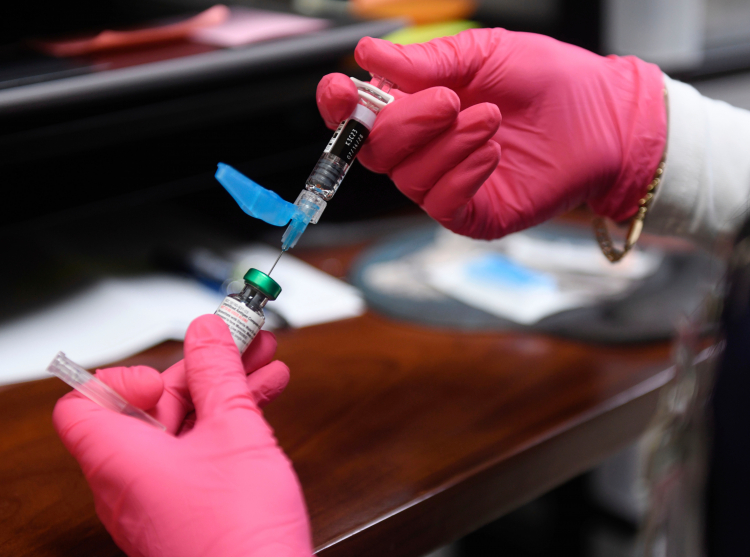
Which is why it’s exciting to learn that progress is being made. As a recent report in the Washington Post indicated, “Four doses of an experimental vaccine to protect against Lyme disease reduced the number of tick-borne infections by more than 70 percent.” This development comes care of pharma companies Pfizer and Valneva, who’ve developed the shot.
About the leap reported, it rates extra stress that no one’s suggesting the Lyme Disease problem has been solved such that doctors and scientists can move on to what’s next. Right now the vaccine is not a sure thing. As a statement from Pfizer indicated, the corporation is “confident in the vaccine’s potential,” not certain that the “constant pain” that some endure with the disease will go away.
Still, it’s progress. Which is the point. It’s not science if there’s not doubt, and there’s no scientific advance without leaps that result not in cures, but frequently in the proverbial dry hole. With most great advances in all walks of life, there’s abundant failure on the path to success.
So, while it will obviously be hoped that Pfizer and Valneva’s confidence about the Lyme Disease shot’s potential will soon enough have certain qualities to it, what can’t be stressed enough is that there should be excitement about a vaccine that could change the disease discussion. In the latter there’s information that could help more than Lyme Disease sufferers. This is the genius of advance: not only are frequently expensive leaps important, they can also lead to knowledge discoveries that were entirely unexpected.
All of which speaks to the importance of ensuring more news stories like this one, and regardless of whether Pfizer and Valneva’s vaccine is ultimately approved for broad usage. The news stories are a crucial effect of intrepid, frequently expensive experimenting within the pharmaceutical industry.
The experimentation taking place is worth thinking about vis-à-vis the sadly routine commentary from politicians that they want to “make healthcare affordable,” and that they’ll do so by “bending the healthcare cost curve downward.” Politicians can’t do any of what they say.
The only way that healthcare can become more affordable, and cures like the Lyme Disease vaccine common, is if healthcare and various pharma advances are expensive first. Precisely because these life-enhancing leaps meant to mitigate pain and suffering are often incredibly expensive, it’s necessary that prices reflect this reality.
From there, history is clear that once any kind of market advance has broad applications for the population, that the advance will soon enough be mass produced. Wall Street rewards the businesses that create affordable options more than any other.
Still, the path to affordable is costly and it’s littered with lots of costly failures along the way. Hopefully politicians recognize this truth, only to amend their healthcare strategy to enabling its affordability by allowing prices to reflect market truths, not the decrees of politicians.
