




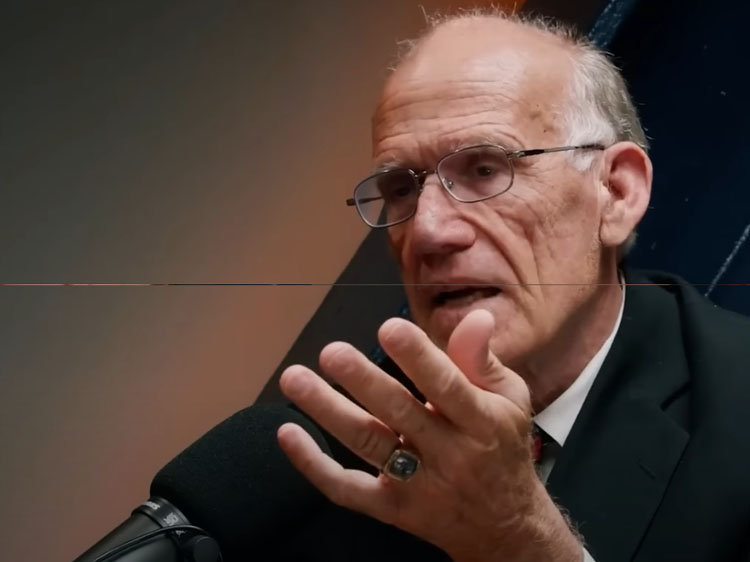
Professor Hanson has had it with economists. We are a “doctrinaire” group of supposed scholars. We fawn over “free trade.” (Anyone, such as this author, who places scare quotes around about the phase depicting this system, has to be watched carefully. This institution, favored by Adam Smith, has done more for the human race than perhaps any other institution known to man).
Hanson’s main objection to this system is what he characterizes as “unfair trade.” And by this he points to when one country racks up “massive mercantilist surpluses,” something of which he accuses China and Mexico.
I, personally, have a horrid balance of trade with Walmart and (full disclosure, I am no gourmet) McDonalds. I purchase several hundreds of dollars from each of them every year. They buy nothing from me at all, rotten kids that they are. Not a penny for my economic consulting services pass from their coffers to my bank account.
Are they exploiting me? Of course not. The idea is totally silly. Every time I purchase a burger meal from one of them for a few dollars, or groceries from the other for perhaps $100, I value these items it take with me more highly than the money I must forgo to obtain them. Otherwise, I would hardly engage in such purchases. This is necessarily true ex ante, at the point of sale. So far, at least, it has never failed even ex post, in the aftermath of these commercial arrangements. Every time I enter one of these establishments, I come away with a profit.
So, perhaps, I am exploiting them? Of course not. They place a value on the items at less than the price they impose upon me, so they, too, make a profit on the sale. So they are exploiting me? Maybe there is mutual exploitation going on here? This would be the logical implication of this author’s Marxist remarks on the matter. But common sense, let alone the dismal science, speaks with practically one voice and states, instead, that we have a mutually beneficial arrangement.
On the other hand, I have terrific, gigantic, humongous positive trade surplus with my employer, Loyola University New Orleans. They pay me a decent middle-class salary, and I purchase from them a mere pittance. A few items from their bookstore, and a few meals, per year, from their cafeteria, and that’s it.
So, am I exploiting them? Well, hopefully not. Presumably, they are getting from me teaching services of greater value to them than my salary. At least they thought so, ex ante, when they initially hired me with tenure. Ex post, I’m not so sure. I introduce my students to free enterprise, which is not exactly congruent with their communist weltanschauung of “social justice.”
The point is, this entire idea of Hanson’s that a trade surplus is exploitative, is highly problematic. And the same holds true whether the “exploiter” is China, Mexico, McDonalds, Walmart, me or Loyola University. This concept is fallacious in all cases.
Suppose Iowa has a positive balance of trade vis a vis Louisiana. We buy less corn from them than they purchase jazz and tourism from us. Those rascals have a positive balance of trade with us, Hanson would aver. Should we then set up a tariff against the importation of corn from them? If Hanson, or Trump were governor of the Pelican State, that is exactly what they would do. Thank goodness that the Constitution forbids any and all such economic mischief. (Canada does have internal tariffs between their provinces. That is one reason they are far poorer than the U.S., despite piggy-backing off of the U.S. military, something which irks Hanson to no end. As well, they have more resources than you can choke a horse with, and a very skilled labor force)
What other economic fallacies are committed by Prof. Hanson? He states: “But many exporters to the U.S. are propped up by their own governments. They may seem more competitive only because their governments want to dump products at a loss to capture market share, subsidize their businesses’ overhead to protect domestic employment or seek to create a monopoly over a strategic industry.”
There is more wrong here than you can shake a stick at. When I first heard of the concept “dumping” it was a complaint against Japan. I visualized Japanese pilots dumping Hondas and Toyotas from 30,000 feet on us huddled masses, doing serious damage to houses and people below. Yes, that would indeed be awful.
But what this really means is that the Japanese then, or Chinese nowadays, take a financial loss on every item they sell to us. In other words, they are giving us a (partial) gift!
Hanson maintains that the problem is not foreigners dumping goods on us at below cost prices. The difficulty is when they stop. For, during this initial period of dumping they drive into bankruptcy American firms who were previously supplying these goods. These nefarious creatures leave us with no domestic industry in this regard. Then they jack up their prices to the heavens, kicking out economic butts!
There are several and serious problem with this shopworn socialist criticism of the free enterprise system. One of them is that domestic producers are not entirely stupid as presumed by this argument. They can keep a skeleton crew on hand to keep their capital equipment well oiled. Then when these dastardly “dumpers” implement their nefarious plan, quickly open up shop and foil the bad guys. Secondly, the domestic producers can themselves purchase these supposedly artificially cheap products and keep them in storage, as against the day when the evil doers implement their wicked plan. This is precisely the criticism launched at Rockefeller’s Standard Oil. Prof. Hansen really ought to read John McGee’s total debunking of that charge in the Journal of Law and Economics, 1960. (Hint: this company only gained ground since it had better techniques for refining oil than its competitors.)
Socialist Hanson waxes eloquent about the fact that “Mexico adds insult to injury by raking in profits from some $63 billion in remittances sent from its former resident citizens now residing in the United States.” This is mercantilism once again. The criterion for wealth is piling up money domestically. All money outflows are to be condemned.
The fallacy, here, is that those Mexicans in this country build our houses; repair them as in the case of New Orleans after Katrina; till our soil, pick our crops, organize restaurants, etc. And what, pray tell, do the recipients still in Mexico do with those hard-earned funds given to them by their family members in the U.S.? Why, they purchase domestic goods and services. This ought to warm the cockles of Hanson’s economically illiterate heart.
So much for the economic fallacies perpetrated by this eminent and supposedly conservative historian. (Don’t they teach economics to historians any more?)
