




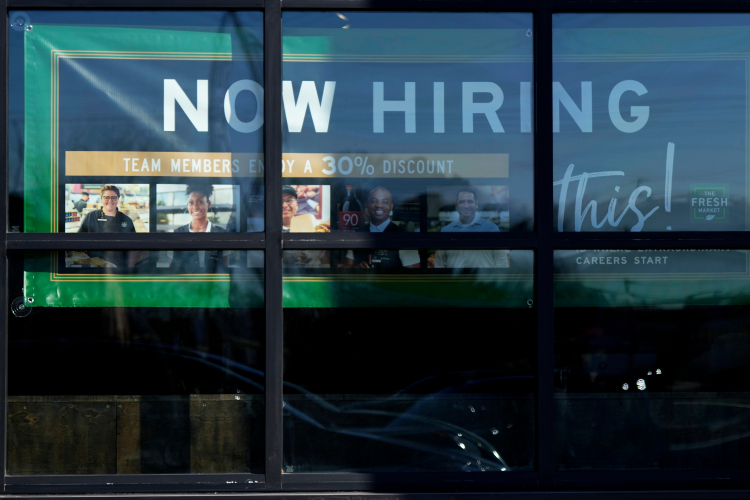
Today’s jobs report is another reminder that the American labor market is a lot stronger than the professional pessimists want to admit. In March, the economy added 178,000 jobs, crushing consensus expectations that had been clustered around roughly 60,000 to 65,000. Even better, private payrolls did the heavy lifting, and the unemployment rate edged down to 4.3 percent.
That is not the picture of an economy in retreat. It is the picture of an economy that still has productive muscle, even after months of media warnings about tariffs, inflation, and looming recession.
Recall here that the February numbers were relatively weak. But a good part of that weakness was always likely to prove temporary, driven by weather distortions and strike effects. March confirmed exactly that, with hiring rebounding sharply as those temporary drags faded.
And the broader point that many of the doomcasters still do not understand is that America does not need to create anywhere near the number of jobs as during the Biden administration to maintain labor-market stability—Biden’s open border policies added millions of illegals to the workforce. However, with the border now effectively shut by President Trump and significant deportations underway, the “breakeven” monthly number of jobs needed to keep unemployment stable has also dropped.
As for a deeper look under the hood at today’s jobs report, the story gets even more interesting.
Construction was strong. Transportation and warehousing improved. Federal payrolls continued to shrink. And while health care still remains a major source of hiring, the bigger point is that this labor market is adjusting toward a healthier mix—less dependency on bloated government payrolls and more emphasis on the productive private economy. That is exactly the kind of Trumpnomics rebalancing a serious growth agenda should want.
The right question now is no longer whether monthly payroll gains match the artificial highs of the post-pandemic or open-border years. The right question is whether the economy is creating enough jobs to absorb labor-force growth while lifting wages and shifting resources back into productive sectors like construction, logistics, energy, and manufacturing. On that score, today’s report hits the mark.
One caution flag: the headline labor force participation rate slipped a tenth. But the more important supply-side story is better: prime-age women hit a record participation rate in March, and prime-age men remain near the top of their post-2009 range. That is not a labor market rolling over. That is a labor market still drawing core workers in.
In sum, in the face of every supposed headwind, the economy still delivered a decisive upside surprise. The American private sector is proving more resilient than the tariff critics, recession hawks, and anti-Trump doomcasters expected.
And this jobs report did not arrive in a vacuum. Earlier in the week, the ISM manufacturing report showed the factory sector still expanding for a third straight month, with production strengthening and new orders staying positive.
The latest trade report told a similar story. Yes, exports boomed to a record high in February. But just as important, the rise in imports was not mainly about consumer trinkets bloating the deficit. It was driven far more by capital goods like computers, accessories, and semiconductors, along with autos and parts feeding business investment. That is what an economy looks like when it is building out productive capacity rather than merely borrowing to consume.
And today’s jobs report says the foundation is holding, the labor market remains resilient, and the productive side of the economy still has room to run.
