




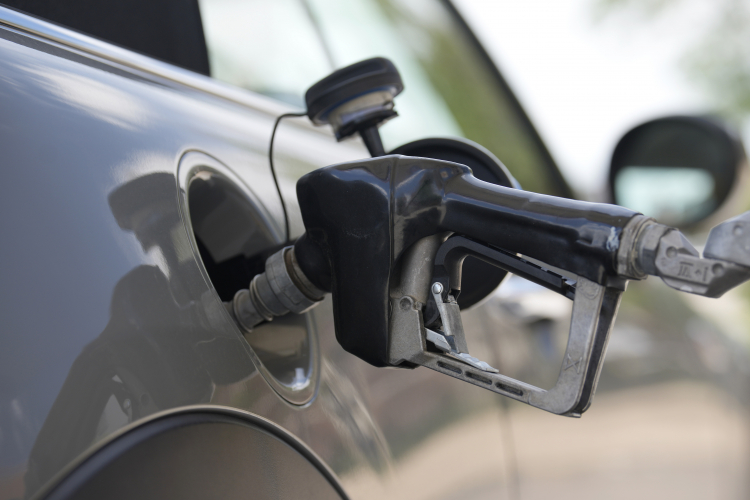
Filling up your car is a big deal.
George Gilder has made the crucial point that all the inputs for cars and gasoline are as old as the earth, but that cars and fuel only reached mankind for a tiny fraction of the earth’s existence: early 20th century to the present. Gilder notes that when we fill up our gas tank, we’re filling it not with fuel but with information.
Except there’s more. Think about what cars in modern times tell us upon filling the tank: usually the car’s computer indicates roughly how many miles the car will travel before requiring another fill-up. Depending on the car, it’s anywhere from 250 to 400 miles?
The total miles the car will travel before the next filling station trip doesn’t much matter, but the symbolism of it does. Contemplate the bigger, bullish meaning of it all.
Factoring in once again how small the 20th century to the present is to the total life of earth (are you listening, global warming alarmists), not to mention how tiny it is relative to when upright man stalked the earth, what a story of progress a full gas tank is. Think about it.
For the overwhelming majority of man’s existence, humans for the most part never traveled even a few miles beyond where they were born, let alone the number of miles a tank of gasoline gets us. No doubt the hunting and gathering nature of work in prehistoric and even relatively modern times (think the 19th century) required humans to walk many more miles in their lifetimes, but once again almost certainly within a very compressed stretch of land.
That travel was so limited for so long probably helps explain why the U.S. prospered, and did so very quickly. The people crossing oceans to get to the U.S. weren’t just anybody, rather they were the rarest of the rare not just willing to start all over again in return for freedom, but risking their lives to do so.
Yet once again, and once here, their travel was limited. Surely some crossed the continent, and many moved a bit more in smaller spaces given their restlessness amid abundance (that’s how Alexis de Tocqueville described Americans), but primitive transportation options almost certainly limited how much Americans could move. By extension, what a cruel existence it was.
No wonder those before us were so poor by comparison. People weren’t just disconnected by geography, but the disconnect also deprived most of the ability to match their talents with work that elevated their unique skills. They farmed whether they wanted to or not.
It’s so different now. Most of us fill up our cars and very understandably don’t contemplate the bullish meaning of doing just that. But for an increasingly small portion of our total earnings, we can buy mobility that most never had.
Is it a surprise that inequality has brilliantly spiked alongside leaps like this? What enhances our mobility not only frees us to move our human capital (the most important capital of all, by far) to its highest use, but it's also rapidly expanded the ability of the rarest of rare commercial talents to reach others with their genius. Translated, if Jeff Bezos had been born in 1864 rather than 1964, he likely still would have been prosperous, but much less so thanks to technological limits that would have substantially shrunk the number of people he could have served.
Going to the gas station is bullish. It’s probably a trite thought, but it’s meaningful. That’s because mobility symbolizes freedom, and most certainly prosperity.
