




If you followed the breathless media coverage of Friday’s CPI report, you got a lot of noise—but not much signal.
Yes, prices rose sharply in March. But that 0.87 percent headline number was driven overwhelmingly by a single factor: an energy shock tied to the Iran conflict.
Energy prices jumped 10.9 percent on the month, with gasoline surging more than 20 percent—one of the largest one-month increases on record. Strip out that non-core spike, and the inflation story looks very different.
Core inflation—which excludes both food and energy—rose just 0.2 percent, below expectations. On a 12-month basis, core came in at 2.6 percent. That is not an economy overheating. It is an economy absorbing a geopolitical oil price spike while underlying inflation pressures continue to cool.
Remember what both former Fed Chairs Alan Greenspan and Ben Bernanke argued about oil price shocks: don’t overreact to them with tighter monetary policy.
Outside of energy, price increases were modest and, in many cases, easing. Used vehicle prices fell again. New vehicle prices are barely rising on a year-over-year basis. Medical care commodities declined. These are not the signals of a broad-based inflation resurgence.
Then there is shelter, including rent and owners’ equivalent rent. It still accounts for the largest share of core inflation above the 2.3 percent benchmark.
Here is the salient point: shelter is a lagging indicator almost by definition, the part of the inflation basket most likely to keep reflecting yesterday’s rent pressures long after conditions on the ground have begun to cool.
And what exactly was one of the biggest drivers of those earlier rent pressures? Biden’s illegal immigrant border mega-surge. Remember the rule of thumb: for every one million more illegals, rents rise by 1 percent. At an estimated 20 million illegals, the Biden tab translated into roughly 20 percent higher rents nationwide.
The CBO has specifically found that the surge in immigration pushed up rents and property values. So as illegal crossings fall to zero, and as deportations and enforcement rise, shelter inflation should keep losing steam.
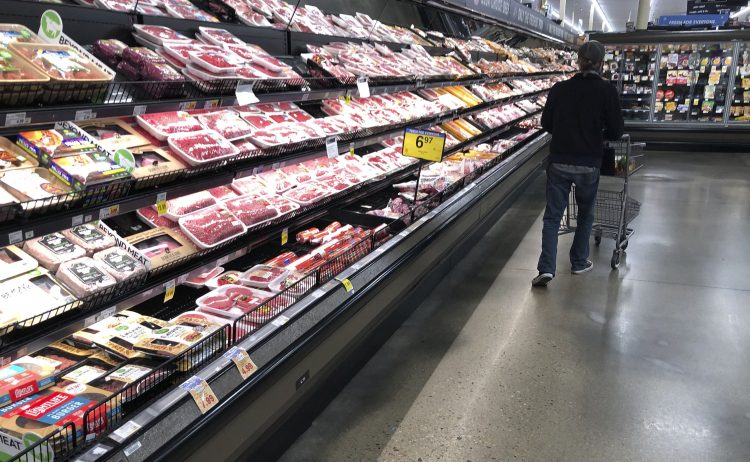
As for food, overall prices were flat in March, and grocery prices declined. Domestic farm-food inflation has cooled sharply and is now running below the long-run target range. Within categories, prices for meats, poultry, fish, and eggs have cooled noticeably in recent months. That is not accidental.
Agriculture Secretary Brooke Rollins has been pushing an aggressive, results-oriented strategy to bring down food prices. She tamed Biden’s horrific egg-price spike.
Rollins and USDA have also been working in close coordination with the White House and the Justice Department to monitor foreign supply chains and scrutinize cartel-like market structures that can amplify price swings, particularly in the beef, pork, and poultry markets.
The focus has been on identifying where bottlenecks, pricing power, or coordination effects—especially in processing and distribution—are keeping prices elevated even as farm-level costs ease.
Energy is the wild card. The March spike reflects geopolitical risk, not domestic economic overheating. There may be some passthrough into transportation-related categories in the next report—and some possible bleed-through into the core. But this is not a fundamental shift in inflation’s trajectory.
So here is the bottom line: Friday’s report does not show inflation reaccelerating across the economy. It shows an external energy shock layered on top of a domestic inflation trend that is continuing to move in the right direction.
That’s the signal. Ignore the noise.
