




Economic thought with any pretense of seriousness is all about removing all barriers to production. No doubt taxes are a barrier, as are regulations, tariffs, currency devaluation, and government spending. Whatever inhibits production is paid for right now.
The problem presently is that even the right-of-center economic religions, though they would nod their heads to much of what you’ve just read, don’t quite grasp the truth of it. It can be found in their commentary about tax day. A recently published piece at American Institute for Economic Research vivified this.
The opinion piece started out well, with a Bastiat-like lament about taxation and the “savings never accumulated, the investment never made, and the business never expanded because resources were first claimed by the state.” Yes, precisely. Taxes are a price, and they’re paid for dearly right away. Only for the piece to stray into accepted, but easily discredited economic wisdom.
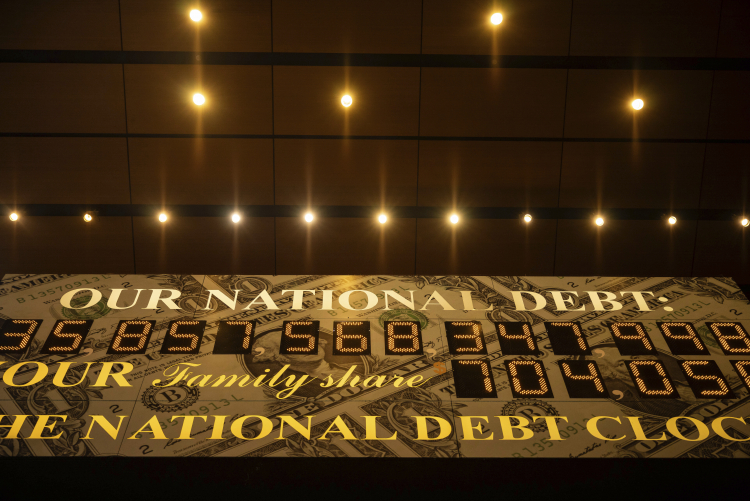
While the author effectively clarifies the burden of direct taxation, government borrowing quickly becomes some kind of other, the pain of which is only felt deep into the future. He writes that borrowing allows politicians to “preserve the benefits of spending while muting the immediate pain.” Really? How?
Politicians substituting themselves for the marketplace in the allocation of resources is just another bit of phrasing for central planning. And the pain of central planning is immediate.
To add Nobel Prize-heft to his troubling navel gazing, the author quotes public choice founder James Buchanan (1919-2013) as saying that “The primary real burden of a public debt is shifted to future generations.” Sorry, but Buchanan was incorrect. So is the individual quoting him.
If this is doubted, merely contemplate the debt run up in 2020 by the first Trump administration to subsidize ($3 trillion Cares Act) lockdowns across the country. Were he alive, could Buchanan seriously contend that the horrors of government consumption were somehow postponed solely because borrowing, not direct taxation, informed them?
It all speaks to the dangerous obsession conservatives and libertarians have with government debt. They focus on nominal numbers and “future taxation” as though we’re somehow spared the burden of this wealth extraction in the present. It would be difficult to find a more obtuse line of economic thinking, but the AIER (where I’m a fellow) piece most certainly did.
As is the case with so many on the U.S. right, there’s a tendency to say that government borrowing is reduced by the Fed through dollar debasement. Oh well, if we ignore what’s true, that the dollar’s exchange value has never been a part of the Fed’s policy portfolio as is, we can’t ignore that if inflation were the policy choice to shrink debt, that there would be very little debt. That’s because markets are wise, and by extension markets for money exchangeable for all goods and services are incredibly wise.
Without defending a substantial majority of taxing or borrowing for even a second, and without foolishly arguing that there’s been no inflation since 1971, it’s just not serious for economic scholars to so blithely contend that the federal government uses “inflation” to shrink its debt burden. The latter implies that those with title to money would mindlessly direct it to government income streams that will soon be devalued. Again, not serious.
What requires much more serious thought is how much greater total national debt would be absent any inflation. This isn’t to defend inflation, but it is to defend serious economic thought that calls for all economic thinkers to recognize what’s true: as with currency devaluation (inflation), government spending is painful, and the pain of it is immediate.
