




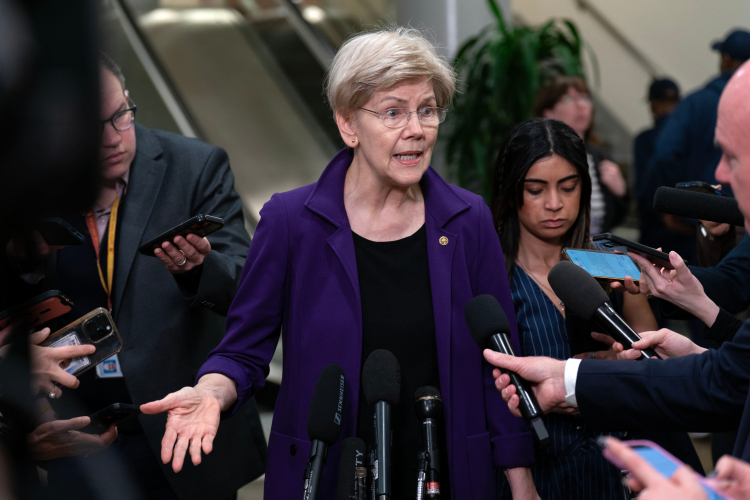
Massachusetts Senator Elizabeth Warren is back on the warpath against American chip manufacturer NVIDIA. This time, it was the purchase of SchedMD that earned her ire. But when factoring in her previous outrage over the acquisitions of Groq and Enfabrica and her ongoing efforts to ban its exports, it seems Warren has fallen into the strange belief that by shrinking America’s tech leaders, we can somehow outcompete China.
Senator Warren can’t have it both ways. If competing with China is truly her highest objective, then it follows that the problem with America’s current AI leaders isn’t that they are too big — it’s that they are still too small.
Of course, Senator Warren’s refusal to acknowledge that the growth of NVIDIA — and other key players — is necessary to stay on top is unsurprising, given it would call into question so many of the policies she has championed.
Back in January, the Commerce Department issued a statement in support of NVIDIA exporting its H200 chips to China stating that “under controlled conditions” it would “strengthen the American technology ecosystem.” That makes total sense. Chipmakers are in the business of making chips, and China is intent on being a player in the AI boom.
Unlike the Blackwell chips – which is NVIDIA’s ‘latest and greatest,’ most advanced chips – the H200 are less sophisticated in terms of speed and performance, while still outperforming any chip currently available in China domestically.
This presents a strategic opportunity. If the Commerce Department is wise enough to ignore Warren and her shortsighted allies, NVIDIA could effectively “addict” China to American AI technology — at a tiered, lower level — while essentially forcing China to front the research and development costs for the next generation of chips beyond Blackwell.
Contrast this with the alternative, where the Biden administration's export controls deprived NVIDIA of tens of billions of dollars in revenue while backwardly incentivizing its Chinese rivals to build their own cheaper, substandard chips and to go after America’s global market share.
Rather than fueling Huawei’s rise and creating the pathway for our global partners to build their AI futures on Chinese tech instead of ours, the Trump administration should embrace strategic exports that would inject capital into our technology sector and strengthen our ability to compete.
Finally, it is no secret that China has been buying chip manufacturing equipment in hopes of building a self-sufficient industry. This raises a fundamental question: Wouldn’t we prefer them to remain tethered to American chips and software for as long as possible? Can they ever overtake us if we're their supplier, and keep them a generation behind?
Exporting our less advanced tech, like the H200, keeps China locked into our ecosystem, whereas total prohibition only accelerates their perceived need to transition to domestic alternatives. By forcing China to innovate out of necessity, Warren would effectively build the very foreign competitor she most fears.
Government market interventions rarely improve market outcomes. A historic chance to hook the world on American technology could be squandered because of politicians’ panic.
