




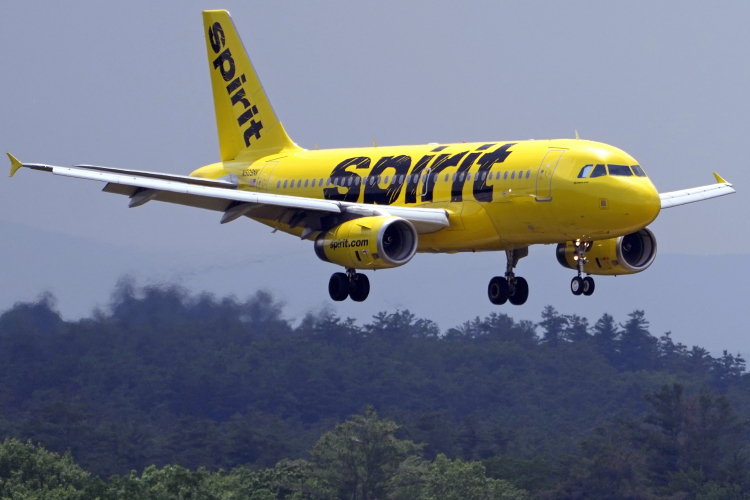
Saturday, I woke up to the news that Spirit Airlines had canceled every flight and begun an orderly wind-down of operations. Seventeen thousand people—pilots, flight attendants, mechanics, ramp workers—are now out of work. Thousands of passengers holding tickets for the coming weeks are stranded, staring at refund notices and scrambling for rides on pricier carriers. The yellow planes that once crammed budget travelers from coast to coast for fares cheaper than a tank of gas are parked for the last time.
I have spent thirty years managing private wealth for ultra-high-net-worth families. From 2004 to 2007, I worked at a money manager that held Southwest Airlines as a supposed diversifier. It never generated real gains and paid dividends you could miss with a magnifying glass. That experience drilled one lesson into me: airlines are a brutal business. Heavy regulation, wild fuel swings, union labor that can shut down a fleet overnight, and demand that collapses every time the economy sneezes. Yet Spirit carved out a niche by doing what free markets are supposed to do—deliver a no-frills ride at a no-frills price. Passengers put up with the memes, the fights, the nickel-and-dime fees because the alternative was paying full fare or not flying at all. Low-cost carriers attract the lowest common denominators of society? Sure. They also got working families, students, and soldiers home for the holidays when the big carriers would not.
Then the Biden administration decided it knew better than the market. In 2023 the Justice Department, egged on by Senator Elizabeth Warren and Transportation Secretary Pete Buttigieg, sued to block JetBlue’s $3.8 billion acquisition of Spirit. A federal judge in liberal Massachusetts—U.S. District Judge William Young—agreed in January 2024, ruling the deal would “substantially lessen competition.” Warren celebrated it as a “win for flyers.” Buttigieg warned the industry was turning into “Coke and Pepsi.” They framed the merger as a threat to consumers. The consequence? One fewer ultra-low-cost carrier, reduced competition on dozens of routes, and the predictable fare increases that always follow when the cheapest option disappears. Industry analysts already project average round-trip fares jumping 20-25% on affected routes.
The hypocrisy stings. While Warren and her liberal cohorts like Bernie Sanders and Alexandria Ocasio-Cortez rail against airline consolidation from the Senate floor, they hop private jets without a second thought. Sanders has logged more miles in luxury aircraft than most commercial pilots. AOC’s campaign rhetoric rails against corporate excess while the private-jet set lectures the rest of us about fairness. Meanwhile, the very budget travelers they claimed to protect, regular folks who could not afford Delta’s sky-high fares, are now paying more or staying grounded.
Seventeen thousand unemployed Americans are the direct consequence of Warren and Buttigieg’s antitrust victory lap. Spirit filed Chapter 11 twice since late 2024, restructured once, then faced surging jet-fuel prices from the Iran conflict. Creditor talks collapsed. The airline tried to survive on its own. It could not. The Trump administration floated a bailout but ultimately walked away. Good. Companies, like children, need to learn to stand on their own two feet. Laissez-faire policy is not cruelty; it is discipline. Shielding a business from market reality produces the same fragile results I saw coaching youth rugby: athletes who fold at the first real hit because no one ever let them take one.
Critics will say Spirit’s problems were self-inflicted—over-expansion, heavy debt, a business model built on fees passengers loved to hate. Fair enough. Markets are supposed to punish bad decisions through bankruptcy and acquisition, not through political vetoes dressed up as consumer protection. The JetBlue merger offered a private-sector lifeline that would have preserved routes, jobs, and low fares. Regulators turned it into a noose. The result is exactly what free-market skeptics always warn against: less competition, higher prices, and working people paying the bill.
I coached youth sports for years. You do not build tough kids by removing every obstacle. You build them by letting them fail, get up, and try again. The same principle applies to companies. Spirit was never going to be Delta, and it did not need to be. It needed the freedom to compete, merge, fail, or succeed on its own terms. Washington decided it knew better. The yellow planes that no longer fly are proof.
The lesson is straightforward. Real consumer protection is not blocking deals that keep discount carriers alive. It is getting government out of the way so markets can deliver choices, even if the seats don’t recline and the peanuts cost extra. Next time a politician brags about “standing up to corporate power,” remember the grounded planes and the 17,000 families now looking for work. Sometimes the best thing government can do is nothing at all.
