




Government spending is the biggest, most economy-sapping tax of all. While Elon Musk, Jeff Bezos and Mark Zuckerberg will work at all sorts of tax rates, none can work and innovate without capital. Government spending is the consumption of precious capital that could otherwise be accessed by Musk, Bezos and Zuckerberg in the present, or their equivalents in the future.
Government debt is government spending’s near-term, economy-sapping corollary. Which is why trying to distinguish between it and government spending is a fool’s errand.
Just the same, there’s a notable aspect about debt that the various economic religions fail to acknowledge: Treasury’s ability to run it up is an effect of excessive taxation in the present that showers the government with abundant tax revenues now, plus a market expectation that future tax revenues will make those of the present appear small by comparison.
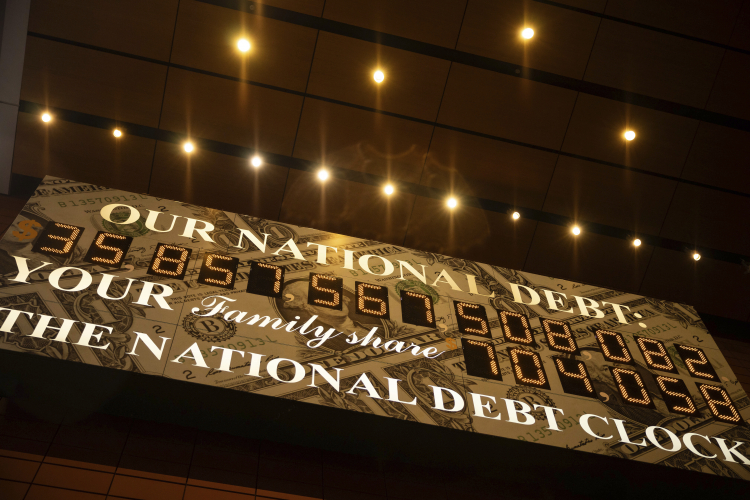
That’s the loud message in the $39 trillion national debt. Unless buyers of Treasury debt were wholly confident about Treasury’s present and future incomings, there’s no way Treasury would have so much debt.
Which brings us to a recent New York Post editorial. Titled “Uncle Sam’s spending dooms our kids’ economic future,” the editorial paradoxically vivified why the national debt will continue to rise. That’s because it revealed how much the warring economic religions aren’t focused on why there’s debt.
The commentary predictably began and ended with talk of doom. Consider the title. Consider a line toward the end about how the debt path we’re on “guarantees disaster down the line.” Except that if disaster awaited, there logically would be no debt. Markets are forward facing and the opposite of stupid. If the U.S. economy weren’t expected to grow in enormous amounts in the present and future, then there would be no market for U.S. Treasury debt.
The Post editorial added the stock line promoted by right-leaning religionists that the debt is an effect of “Too. Much. Spending,” which is the Post’s editorial board unwittingly suggesting that markets are stupid. Can all governments borrow every time they have spending overages, particularly in amounts measured in trillions? Hopefully the question answers itself.
The Post’s editorialists - like the scholars at Hoover, Cato, Brookings, AEI, and countless others - continue to promote the fiction that Treasury’s debt is an effect of overspending as opposed to it being an effect of too much tax revenue now, and the expectation of much more in the future. This distinction is crucial for it signaling that the surest solution to excessive spending and debt is substantially reduced tax revenue now and in the future.
The Post editorial rates credit for acknowledging what’s written above about how “Uncle Sam’s insatiable appetite diverts cash from the private sector,” but it quickly tacks back to false notions about interest rates (no, the debt is not pulling them up) and economic doom ahead. None of this is meant to excuse the horrors of government spending, debt, or both. Government consumption is once again a huge tax, and the U.S. economy would be much larger absent all the spending and debt.
Just the same, the kids’ economic future isn't bleak. The rising debt is the market signal telling us just that. Still, imagine how much brighter the kids’ economic future would be if their parents and grandparents weren’t so heavily taxed now such that Treasury couldn't run up so much debt now.
