




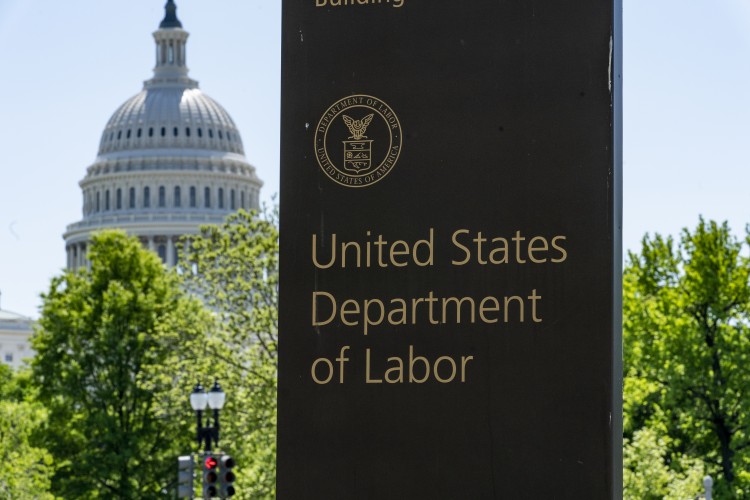
With headlines dominated by the Iran War, the resulting increase in gas prices, and the attempted assassination of President Trump at the White House Correspondents’ Dinner, it is understandable that the resignation of Labor Secretary Lori Chavez-DeRemer did not receive a lot of attention. And yet she was one of President Trump’s most controversial nominees, who resigned because of what, in more normal times, would have been a headline-making scandal.
Chavez-DeRemer was originally recommended to President Trump by Teamster’s Union President Sean O’Brien. Although O’Brien had a high-profile speech at the 2024 Republican convention, the Teamsters remained neutral in the contest between President Trump and then-Vice President Kamala Harris. Given the strong relationship between organized labor and the Democratic Party, O’Brien’s refusal to endorse Harris was almost as valuable to President Trump as an actual endorsement. It was thus not surprising that President Trump would accept O’Brien’s pick for Labor Secretary. It was also not surprising that O’Brien recommended former Representative Chavez-DeRemer.
During her one term in the House of Representatives, Chavez-DeRemer became of one of the union leaders’ favorite Republicans by being one of only three Republicans to support the PRO Act. The PRO Act is a union boss wish list which would, among other things, repeal Section 14 (b) of the Taft-Hartley Act—which authorizes state Right to Work laws.
The PRO Act would thus nullify 37 state Right to Work laws, forcing workers in those states to comply with federal laws that allow unions to force workers to pay union dues as a condition of employment. Workers in Right to Work states not only have the freedom to choose whether or not to join a union, they also enjoy higher real wages, lower unemployment, and lower taxes than in states without Right to Work laws.
The PRO Act also allows the National Labor Relations Board (NLRB) to certify a union as the exclusive bargaining agent of a company without obtaining support from a majority of the business’s workers in a secret ballot election. Instead, a union would only need to collect signed cards from a majority of the workforce. Signed cards are considered legitimate even if a worker is surrounded by their pro-union coworkers pressuring them to sign. The PRO Act also contains the union bosses’ long sought ban on businesses replacing striking workers, regardless of how long the strike lasts or how much it costs the company.
During her confirmation hearing, Chavez-DeRemer backpedaled on her support for the PRO Act, specifically the nullification of state Right to Work laws. Then as labor secretary, Chavez-DeRemer disappointed her progressive pro-union supporters. For example, Timothy Noah, writing in The New Republic, complained that under Chavez-DeRemer the number of compliance actions against businesses that allegedly violated federal wage and hour laws fell from their Biden-era high of 21,000 to 17,000.
Compliance actions against the worst performing industries fell from their Biden-era average of 842 to 649 under Trump and Chavez-DeRemer. Noah attributes this to the fact that, despite her past support for the PRO Act and other union-backed legislation, Chavez-DeRemer is a Republican. And a Republican Secretary of Labor faces insurmountable pressures from their party and allied business interests to favor management over labor. Noah never considers the possibility that the decline in wage and hour violations cases brought could be because of overzealous enforcement by Biden’s Labor Department. Noah also criticized Chavez-DeRemer for supporting a regulation allowing pension plans to invest in cryptocurrencies and other unconventional assets. Noah thinks it is a bad thing for workers to have more options in their 401(K)… at least for investments not approved by the New Republic.
Chavez-DeRemer’s resignation had nothing to do with policy. Instead, she resigned because of an inappropriate relationship with a member of her security detail. There were also allegations that her husband harassed Department staff. Chavez-DeRemer’s resignation gives President Trump a chance to appoint a Labor Secretary who understands that being pro-worker is not the same as being pro-union.
The next Secretary of Labor should commit to protecting state Right to Work laws from federal interference and protect the right of workers in compulsory unionism states to not be forced to subsidize the union bosses’ political machine. The Secretary should also promote greater cooperation between workers and management and give workers greater options for their retirement and health care plans. Most importantly, the secretary should recognize that the generation raised with Uber and streaming will want greater say in their working conditions. Changing policies to reflect the needs of the new workforce could help businesses improve their operations while strengthening unions by making them more responsive to the needs of their members.
