




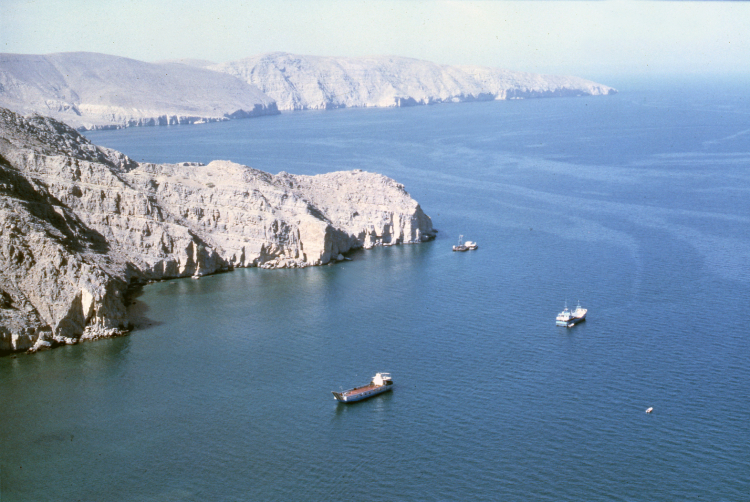
Only twelve ships crossed the Strait of Hormuz in a recent 24-hour period, according to Reuters reporting based on vessel-tracking data. Before the war, between 125 and 140 ships typically moved in and out of the strait each day.
This issue goes beyond just shipping; it serves as a warning about the conditions necessary for trade, investment, and enterprise to operate effectively.
A durable commercial order depends on more than markets. The situation also relies on institutions that ensure market credibility, such as secure transportation, enforceable contracts, reliable delivery schedules, predictable financing, and the assurance that commercial routes will not be used as political bargaining chips. When the passage through one of the world’s most significant trade corridors becomes uncertain, the repercussions extend well beyond just oil prices.
The Strait of Hormuz should be seen more as an entrepreneurship issue than just an energy one. Companies typically expand internationally when they can rely on sourcing materials, transporting goods, attracting investors, and reaching customers, all while feeling confident that trade infrastructure will be accessible. When that confidence is shaken, businesses often pull back without needing a formal embargo. Issues like delayed shipments, higher insurance costs, changing fuel prices, and nervous lenders can be enough to push them away.
The scale of the risk is significant. The U.N. Conference on Trade and Development notes that the Strait handles about a quarter of the world's seaborne oil trade. Large amounts of liquefied natural gas, and around a third of the global seaborne fertilizer trade, which totals approximately 16 million tons. If there’s a disruption in this area, it would quickly impact energy markets, food production, shipping costs, and supply chains across industries.
For the Gulf states, the costs are structural rather than temporary. Their economic diversification strategies depend on firms capable of trading, investing, and scaling beyond domestic markets. Startups, exporters, logistics companies, manufacturers, and growth-oriented family businesses all need predictable access to global customers and suppliers.
Addressing these challenges is particularly crucial given the region's existing limitations. According to the World Bank’s regional analysis from January 2026, job creation continues to struggle, largely due to a lack of private-sector growth, rigid regulations, and skill mismatches among youth. Adding to this, a chokepoint crisis complicates matters further, creating uncertainty that makes it hard for entrepreneurs and innovators to stay committed in the long run.
The effects do not stop in the Gulf; American businesses are tied to the same chain. Higher diesel prices raise freight costs. Disrupted fertilizer flows raise costs for farmers. More expensive petroleum inputs ripple into packaging, transportation, and manufacturing. Retailers, trucking firms, food producers, and younger companies with thin margins all feel the pressure.
The U.S. Energy Information Administration’s May 2026 outlook shows how quickly the shock moved through energy markets. It reported that the de facto closure of Hormuz had reduced oil supplies to global markets and produced cascading effects across oil supply chains. It also forecast average U.S. retail gasoline prices of $3.88 per gallon for 2026. Those numbers matter because energy costs are not isolated. They shape the operating environment for almost every business that moves goods, uses plastic, ships products, or depends on predictable input prices.
Some will still describe Hormuz mainly as a military problem or an oil-market problem. Both descriptions are true, but incomplete. The deeper issue is whether civilian commerce can be protected from selective access, informal clearance, and recurring coercion. If firms and investors come to believe that major trade arteries can be turned on and off by political pressure, the result will be less risk-taking, less cross-border investment, and fewer opportunities for the very private-sector growth the region needs.
That is why reopening Hormuz should be treated as an economic priority bound up with innovation, trade, and institutional credibility. A truce that leaves commercial shipping vulnerable to repeated disruption would not restore confidence. It would simply delay the next shock.
If the goal is a more innovative, connected, and resilient regional order, the first requirement is clear: Hormuz must function as infrastructure, not leverage.
