




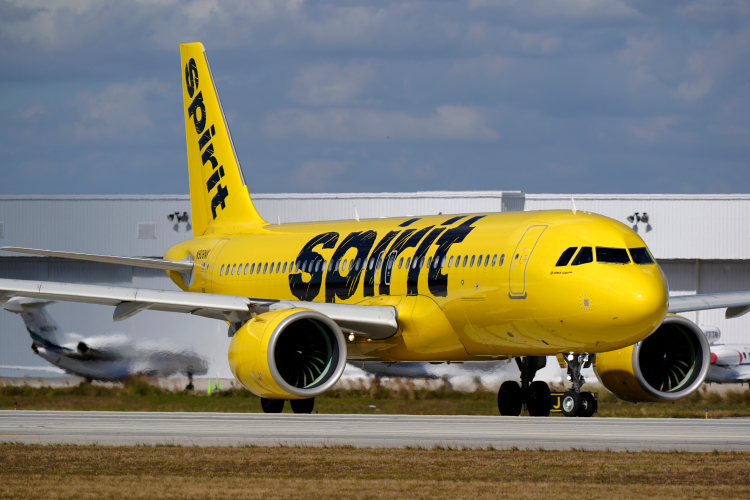
Spirit Airlines shut down before dawn on May 2, 2026, two years after the Biden Justice Department blocked the merger that would have saved it and weeks after a $500 million federal rescue collapsed in negotiations with bondholders. The cabin crew and gate agents who lost their jobs when the airline stopped flying were reduced to a GoFundMe to pay their bills. The 46 percent of national ultra-low-cost airline capacity that anchored the lawsuit is sitting on tarmacs in Fort Lauderdale and Orlando, waiting to be sold for parts. Spirit's former passengers will fly Delta, American, and United now, on the legacy carriers Spirit had been disciplining on price, at fares those carriers can set without the constraint of a budget competitor.
Call it the static market fallacy: the assumption that a market's competitive structure at the moment a complaint is filed is the relevant counterfactual against which the merger should be measured. Under this view, blocking the deal preserves the status quo, and consumers are protected from a transaction that would change it.
Markets do not freeze while regulators deliberate. Firms in distress run down cash, miss payroll, and eventually fail. When they fail, the competition they were providing disappears entirely rather than partially. The consumers the regulators thought they were protecting end up worse off than they would have been under the blocked transaction. Spirit could not wait two years for a court to decide whether the merger that would have saved it should be allowed.
The failing-firm doctrine was built for this. The Supreme Court has recognized it for decades, and the 2023 Merger Guidelines acknowledge it. But the doctrine has been read so narrowly over the years that it functionally requires a firm to be in active liquidation before the defense becomes available. That standard does not serve consumers. It serves the bureaucratic preference for blocking deals on a snapshot of market shares, and it produces predictable winners. The winners in the Spirit case were Delta, American, and United, the carriers whose pricing power was constrained by Spirit's continued operation and whose market positions improved as the merger was blocked and the carrier moved toward bankruptcy. The losers were the passengers the Justice Department claimed to be protecting.
Bank regulators face this scenario routinely. When First Republic Bank failed in May 2023, the FDIC arranged an emergency sale to JPMorgan within days. The Justice Department waved the transaction through without an antitrust challenge. Nobody in Washington argued that letting JPMorgan get bigger would harm bank customers, because everyone understood that the alternative was a hole in the deposit-insurance fund and a run on regional banks. Bank regulators take exit scenarios seriously because they have to live with the consequences when the exit happens. The Justice Department's antitrust division apparently does not.
The same pattern is alive in cases the new administration inherited. The Biden-era Visa complaint treats the debit-payments market as if Apple Pay, Venmo, Cash App, and Zelle do not exist as competitive constraints. They do. Buy-now-pay-later products and bank-to-bank transfer systems compete for the same consumer transactions, and the complaint's market definition was drawn narrowly enough to exclude them.
The Southern Glazer's price-discrimination complaint treats differential pricing in wine and spirits distribution as a one-sided exercise of market power. The largest distributors are being squeezed from the other direction by direct-to-consumer shipping, private label brands, and retailer buying groups that did not exist in their current form when the relevant precedents were written.
The PepsiCo case, which Andrew Ferguson's FTC dropped last year, rested on the same fiction: that large retailers like Walmart, Costco, Kroger, and Amazon do not routinely negotiate preferential terms with their suppliers.
Ferguson did not drop the PepsiCo case because the prior administration filed it. He dropped it because the underlying theory could not be sustained on the evidence. The Visa and Southern Glazer's cases should be evaluated on the same standard: whether the complaint's theory of the market survives contact with the actual competitive dynamics in payments and in alcohol distribution. Some matters may survive that review, and others will not. What matters is the standard, applied case by case.
The standard needs work. The Antitrust Division should be required to model the realistic counterfactual in which the deal does not happen, including the scenario in which the target firm exits the market entirely. The Merger Guidelines should be revised to make that requirement explicit, and Congress should consider amendments to the merger laws that place the burden on the government to address the exit counterfactual before an injunction issues. Bureaucrats who want to block a deal should have to say on the record what they expect the market to look like in three years if the deal is blocked. They should be accountable when their predictions are proven wrong by the firm's failure.
The bureaucrats who built the case against Spirit have moved on to other matters. The analytical framework that let them treat a dying airline as a permanent fixture of the market is still on the books. Unless this administration is willing to fix it, the next Spirit is already in the pipeline.
