




Antitrust enforcers and policy makers generally view the digital economy as a collection of separate products: search, advertising, app stores, social media, smartphones. Regulate each piece aggressively enough, the theory goes, and competition will flourish.
But the digital economy doesn’t work that way.
The Justice Department’s cases against Google treat search and advertising as distinct markets. The Federal Trade Commission’s long-running pursuit of Meta treated Instagram and WhatsApp as products whose acquisitions allegedly reduced competition. The DOJ’s recent case against Apple, and legislation such as the American Innovation and Choice Online Act, similarly treat the iPhone as a self-contained product over which Apple allegedly exercises excessive control.
This approach reflects a broader assumption in antitrust thinking: that our digital system can be analyzed component by component, with each element’s value determined mainly by network effects. In this view, smartphones compete with smartphones, search engines with search engines, and apps with apps.
Yet economists have long understood that digital markets are better viewed as interconnected systems whose value emerges from interactions across technologies, industries and users. Michael Katz and Carl Shapiro demonstrated decades ago that competition often occurs not merely between products, but between systems of complementary components. Eli Noam later described the digital economy as a “system of systems.”
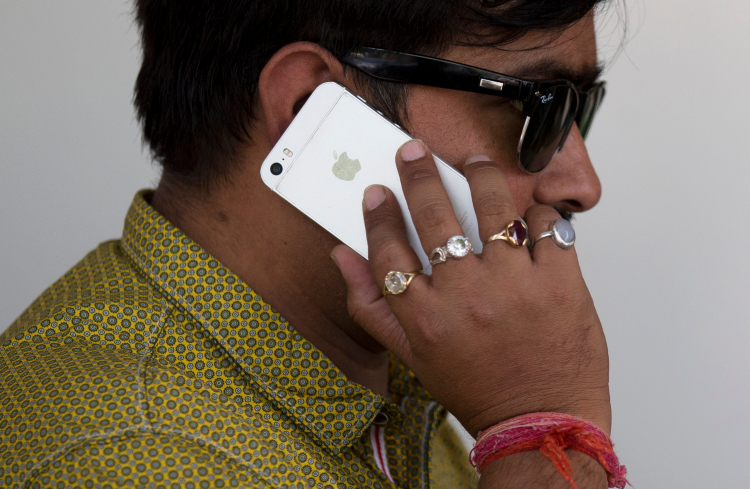
A recent paper by Peter Wang and me illustrates why this distinction matters. We examined one of the most scrutinized products in modern antitrust policy: Apple’s iPhone. Rather than asking whether the iPhone dominates smartphones, we asked a broader question: How did the iPhone change the value of the mobile-broadband ecosystem?
The answer is striking.
When Apple introduced the iPhone in 2007, smartphones were largely dominated by Blackberry, Microsoft, and Nokia. Within a decade, those systems had effectively vanished. But smartphone shipments exploded, camera sales collapsed, and mobile broadband subscriptions soared from 268 million worldwide in 2007 to 4.7 billion by 2017.
The iPhone itself represented only a fraction of smartphone sales. Android devices quickly imitated and surpassed Apple’s in unit volume. Yet the iPhone had fundamentally changed what consumers expected mobile devices to do. The result was not merely a successful product, but a transformation of the entire computing and communications system.
Using data from 56 countries, we estimated the effect of the iPhone-led smartphone revolution on mobile broadband adoption. Our results suggest that the iPhone’s introduction triggered over half of mobile-broadband growth.
The effect was especially dramatic in developing countries. In OECD nations, smartphones accelerated already-growing broadband adoption. But in non-OECD countries, the new smartphones appear to explain essentially the entire rise in mobile broadband during the relevant period. Without the transformation launched by the iPhone, mobile broadband in much of the developing world would likely have remained effectively non-existent for years.
This has profound implications for public policy.
The iPhone was not merely another smartphone competing for market share. It was a catalyst that reshaped and even created industries, accelerated broadband investment, altered consumer behavior, and induced imitation. The economic value it created extended far beyond Apple’s own sales.
That broader value is largely invisible in modern antitrust analysis.
When regulators narrowly define markets as isolated products, they risk missing the larger system-wide gains generated by innovation. Worse, they risk punishing the very firms that create those gains. The more important the innovation, the more interconnected are its effects—and the less likely conventional antitrust is to measure them properly.
History also shows how quickly digital dominance can evaporate. Before the iPhone, Blackberry was widely seen as the inevitable winner in smartphones. Nokia and Microsoft were important, yet marginal players. All were rapidly displaced—not because regulators engineered competition, but because innovators reimagined the broader system.
That is the recurring pattern in technology markets. Competition often comes not from producing a marginally cheaper version of an existing product, but from redefining the surrounding ecosystem entirely.
Today’s antitrust theories frequently assume markets are static collections of products that governments must carefully rebalance. But digital markets are dynamic networks of complements, imitations, and spillover effects. Innovations in one area can unlock enormous value across many others.
The danger is not simply that regulators may overestimate market power. It is that they underestimate market value.
