




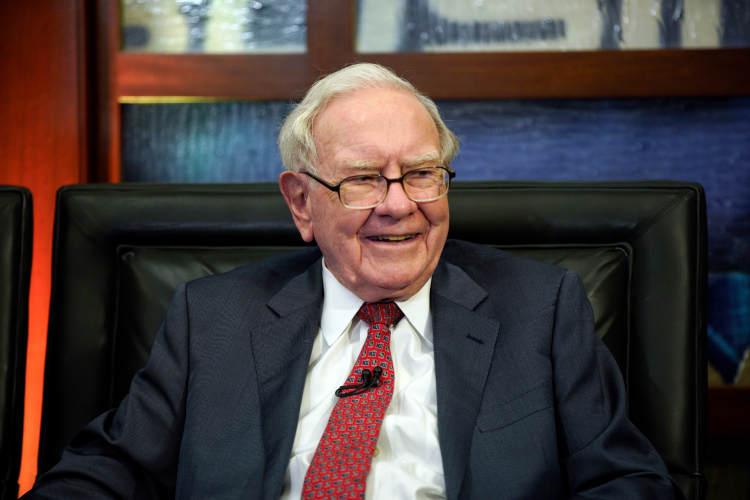
Warren Buffett has a long history of making inflammatory, false, and politically motivated assertions regarding United States federal taxation matters. Here are but a few:
(1) In 2011, he wrote an op-ed for the New York Times in which he stated that his 2010 “federal tax rate” (as he defined it) of 21% was far less than the 36% rate paid by his office workers. This incendiary assertion became the basis of the “Buffett Rule”, a failed tax proposal introduced by Barack Obama in late 2011 under which individuals making $1 million per year would be subject to a 30% minimum federal tax.
But Buffett’s “federal tax rate” assertion was completely wrong. He included taxes that he shouldn’t have (employee and employer-paid Social Security taxes) and excluded massive taxes that he should have included (his share, as a 33% owner of Berkshire-Hathaway’s 2010 federal taxes paid). When looked at correctly, Buffett’s 2010 “federal tax rate” was roughly 10 percentage points higher than the rate paid by his office workers.
Buffett’s NYT op-ed is perhaps the most disingenuous tax analysis ever published. A fawning and sycophantic press never took the time to research, analyze, and dissect Buffett’s assertions. They simply carried the ball for him, straight into the halls of Congress.
(2) In 2017, Buffett told attendees of Berkshire Hathaway’s annual meeting: “If you go back to 1960 or thereabouts, corporate taxes were about 4 percent of GDP,” Mr. Buffett said. “I mean, they bounced around some. And now, they’re about 2 percent of GDP.”
Buffett was clearly suggesting that corporate tax burdens had fallen substantially over the previous five decades because of advantageous changes to the corporate tax code—a drop of two percentage points of GDP, or 50% in absolute terms. On the surface a very material drop.
But what Buffett failed to tell his shareholders is that most of this decline resulted not from nefarious tax code changes, but rather from a major shift over the past several decades in how businesses are organized—from C corporations to S corporations, LLCs, and partnerships, which are collectively known as pass-through entities. Income from these businesses is taxed at the individual level rather than the corporate level, reducing the corporate tax base.
I compiled an analysis of this shift in entity structure over time and found that this shift reduced corporate tax revenue by 1.5 percentage points of GDP from 1980 to 2012, a period that covers only part of the timeframe Buffett discussed. That accounts for roughly 75% of the corporate tax decline Buffett trumpeted to his shareholders.
This phenomenon was not masked by a dense and byzantine tax code; it was a transparent and well-known strategy that hundreds of entities adopted to avoid the double taxation of C-Corporation profits.
It was Buffett’s desire to keep corporate tax rates high in order to appeal to his progressive allies that led him to dispense highly misleading tax metrics to his shareholders.
And, yet again, no one in the press challenged Buffett’s statement.
(3) At a Hillary Clinton campaign rally in December 2015, Buffett discussed the federal tax rates paid by the top 400 income earners. He began by noting that their average income rose from $46.8 million in 1992 to $335.7 million in 2012.
"This group had their income increase sevenfold," he said, adding, however, that "their tax rate has fallen (from 26.4%) to 16.7 percent, so they got a one-third tax cut as their income went up 7 to 1."
Note the ending year of this tax-rate comparison: 2012. Buffett lamented, in late 2015, the fact that tax rates for the “wealthy” had declined from 1992 to 2012. In making this assertion, however, he totally ignored a huge tax increase imposed solely on the wealthy to fund Obamacare on January 1, 2013, almost three years earlier! This tax increase amounted to roughly a 6-percentage point increase in the tax rate of the top 400 earners. Considering this, he level of deceit and obfuscation displayed by Mr. Buffett in delivering that Clinton campaign statement is rather stunning, even by Buffett’s standards.
And, yet again, no one in the mainstream press challenged Buffett’s statement.
Mr. Buffett’s most recent inaccurate and misleading federal tax assertion occurred at Berkshire Hathaway’s 2024 shareholder meeting, when he told his shareholders that Berkshire Hathaway paid over $5 billion in U.S. federal corporate income taxes in 2023, and that "if 800 other companies had done the same thing (paid $5 billion in taxes), no other person in the United States would have had to pay a dime of federal taxes."
Buffett went on to say that corporate tax receipts of this magnitude would theoretically cover the entire federal tax burden for all other Americans (including income, Social Security, Medicare, and estate taxes). His statement generated enthusiastic applause from meeting attendees.
Here is the basic math behind Buffett’s statement:
(1) In 2023, individual federal income, Social Security, Medicare, and estate tax receipts totaled just over $3.8 trillion.
(2) If the other 799 of the largest corporations had each ponied up $5 billion in corporate income taxes (matching Berkshire Hathaway’s 2023 U.S. tax bill), total corporate tax receipts of $4.0 trillion would have been received in 2023 (800 x $5 billion).
Voilà! This all seems so easy and reasonable on the surface. But just as it is with all of Buffett’s tax assertions, it falls apart quickly when subjected to a modicum of research and analysis.
In 2023, the other 799 of the largest 800 U.S. corporations had average worldwide revenue of just over $25 billion. If we conservatively assume that 80% of this revenue is achieved in the U.S. (a fact-based assumption), then U.S. based revenue for these companies in 2023 averaged $20 billion.
Remember, corporations are taxed on profits, not on revenue, so we must dive a bit deeper.
If a 15% pretax profit margin is assumed (a very high estimate), these companies averaged $3 billion in U.S. pretax profit in 2023. And Buffett wants them to pay an average federal corporate income tax of $5 billion on an average of $3 billion of profit? The money simply isn’t there. The aggregate shortfall is almost $1.6 trillion.
Buffett’s simplistic analysis is further burdened by the fact that it is what economists call a static analysis. He made no attempt to estimate how corporations would react when faced with the prospect of paying significantly higher federal taxes. Would hiring be curtailed? Would compensation be impacted? Would business expansion efforts be curtailed? And what would be the impact on federal corporate tax receipts of these decisions?
And did Buffett think through the political angle of his corporate taxation plan? In 2024, the top 1% of earners paid over 40% of total federal individual income tax receipts and the top 2% paid over 60%. Further, the bottom 50% of earners paid only 3% of the total federal income tax receipts. I wonder what Buffett’s progressive pals would really think about a plan that would undo this extremely progressive tax mechanism, resulting in a vast tax cut to America’s highest earners?
It is unfathomable that Buffett would be handed this tax talking point to dispense to his shareholders without anyone on his team taking fifteen minutes to test its reasonableness and veracity, but apparently that is exactly what happened, just as it has in the past.
And, yet again, no one in the mainstream press challenged Buffett’s latest statement.
It is perfectly fine for Warren Buffett to hold progressive views regarding tax matters. That is, of course, his prerogative. But it is completely unacceptable for him to use deceptive statements based on fallacious and disingenuous analyses to advocate in support of his views, something he has engaged in for many years.
Buffett could not have gotten away with this nonsense for as long as he has if not for a biased and lazy press corps that has failed to apply the lens of critical analysis and thinking to his tax pronouncements. In doing so, they are equally to blame for the dissemination of yet another false and politically charged tax assertion.
The American people deserve much better.
