




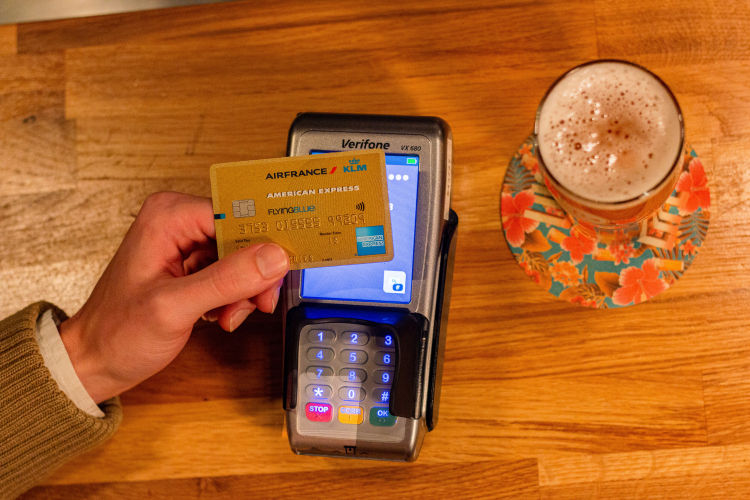
Every business traveler has been there. You arrive late in a foreign city, hand your passport and credit card to the clerk at the hotel front desk, and … wait. After a minute, the clerk looks at you nervously, “I’m sorry, I’ll try again.” You stare at the point-of-sale terminal, as if some miasmic mechanism will ensure the hold on your card is authorized this time through your intense desire to slump on your bed. Again the clerk gives you that nervous look but this time shaded with pity, “Do you have another card, perhaps?”
Sometimes the cause is mundane but legitimate. A fraud alert caused by the fact that you have not travelled recently and the system did not expect you to be checking in to a hotel in Moravia. Or you reached your credit limit (oops). But, increasingly, the problem may lie in a place most travelers never think about: interchange-fee regulation.
Interchange fees are the small amounts retained by a cardholder’s bank when a card is used. To travelers, they are invisible. To payment networks, they are essential. They help fund the systems that make modern card payments work: fraud prevention, real-time authorization, currency conversion, chargeback handling, rewards, travel insurance, and purchase protection.
Those services matter everywhere. They matter even more when you cross a border.
A domestic card payment is relatively straightforward. A cross-border payment is not. It may involve a foreign merchant, a foreign acquirer, a different currency, multiple regulatory regimes, a higher fraud score, and settlement across jurisdictions. For the issuing bank, the transaction is riskier and more expensive to approve.
That is why interchange fees vary. Networks do not set one uniform fee for every card and every transaction. Fees differ by card type, merchant category, transaction channel, and geography. A debit-card purchase at a neighborhood grocery store is not the same as a premium-credit-card charge at a hotel in another country. The costs, risks, and benefits differ, and the fee structure reflects that.
Price controls flatten those differences. Regulators often cap interchange fees with the promise of lowering merchant costs. But when the same caps apply to cross-border transactions, they can create a mismatch between the revenue issuing banks receive and the costs they bear. The result is predictable: Banks become more cautious about approving marginal transactions.
For business travelers, that caution can be costly.
A declined transaction abroad is not a minor inconvenience when you are trying to check into a hotel before a morning meeting, pay for a client dinner, book last-minute transportation, or replace a broken laptop on the road. It can disrupt schedules, damage relationships, and create expense-report headaches long after the trip ends.
The problem hits premium and corporate cards especially hard. Business travelers often rely on these cards precisely because they offer the features that make international travel manageable: higher authorization limits, no foreign-transaction fees, travel protections, rental-car coverage, fraud monitoring, rewards, and detailed reporting. Those benefits are not free. They depend on a revenue model that lets issuers recover the costs of serving higher-value, higher-risk transactions.
Compress that revenue, and issuers have a few options. They can reduce rewards. They can narrow travel protections. They can raise annual fees. They can impose destination-specific foreign-transaction charges. Or they can tighten authorization rules for transactions that look risky or uneconomic.
None of those outcomes helps the business traveler.
Merchants do not escape the harm either. Hotels, restaurants, airlines, conference venues, and retailers depend on travelers who can pay quickly and reliably. A false decline means a lost sale, a frustrated customer, and sometimes a reputational hit. For tourism-dependent economies, the stakes are larger still. High-spending visitors generate significant local value, and card friction can push that spending elsewhere.
Cross-border e-commerce faces the same problem. Business travelers increasingly book lodging, transportation, equipment, and services online before and during trips. Those transactions are often card-not-present, cross-border, and higher risk from the issuer’s perspective. If capped interchange fees make marginal approvals less attractive, legitimate purchases will fail more often.
Regulators rarely see these costs. A cap looks simple on paper: Lower the fee paid by merchants, and consumers should benefit. But payment cards operate as two-sided markets. Push costs down on one side, and they often reappear somewhere else: higher cardholder fees, fewer rewards, less innovation, weaker fraud protection, or more declined transactions.
The smarter approach is not to pretend that every payment is alike. Policymakers considering interchange regulation should exempt cross-border transactions or, at minimum, apply separate, higher caps that reflect their real costs. A domestic debit purchase should not set the benchmark for an international corporate-card transaction.
Business travel depends on trust: trust that flights will connect, hotels will honor reservations, and payments will work when needed. Interchange-fee caps that ignore cross-border realities undermine that trust. They turn invisible payment plumbing into a visible travel problem.
The next time a business traveler’s card is declined abroad, the culprit may not be the traveler, the bank, or the merchant. It may be a rule written by regulators who treated a global payment as if it were a local one.
