




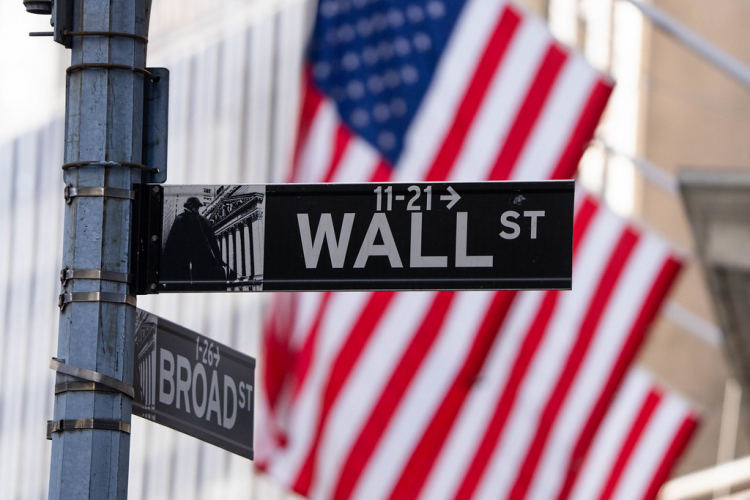
As the United States approaches its 250th anniversary, much of the reflection will focus on politics, culture, and global leadership. There's another lens less discussed, yet just as consequential: America as the most successful long-term investment in history.
From its earliest days, America wasn't just founded as a nation. It was funded as an idea.
The first colonies were financed by joint-stock companies, early ventures that pooled capital in pursuit of uncertain but transformative returns. That spirit of risk-taking, innovation, and a willingness to fund the future became a defining feature of the American system. Over the next two and a half centuries, the American experiment produced something with no historical precedent: a self-reinforcing engine of growth and wealth creation.
Since 1800, $1 invested in U.S. equities would have grown to more than $200 million today. Over that same period, the rest of the world combined turned $1 into roughly $2 million. The gap isn't incremental; it's exponential. As Charles Ellis observed, time is Archimedes' lever in investing—and no nation has pulled that lever longer or harder than America.
What explains it?
Part of the answer lies in structure. The U.S. developed deep, transparent capital markets earlier than most nations. Strong property rights, a relatively consistent rule of law, and a culture that rewards entrepreneurship created fertile ground for compounding to take hold. But structure alone doesn't tell the whole story.
The deeper explanation is resilience.
Over 250 years, the United States has endured a civil war, two world wars, a Great Depression, repeated financial panics, inflation shocks, pandemics, political crises, and acts of terrorism. Each episode felt, at the time, like a potential breaking point. Yet across all of these disruptions, the long-term trajectory of American markets has been upward.
That doesn't mean the path was smooth as stock market drawdowns were frequent and sometimes severe with losses of 50% to over 80% in the Great Depression. Entire decades tested investor patience where stocks went nowhere.
While drawdowns and geopolitical events tempted many investors to bail, Charlie Munger captured the essential discipline required: "The first rule of compounding is to never interrupt it unnecessarily." America's investors, the patient ones, at least, took that lesson to heart. The American system, while messy, adaptive, and relentlessly forward-looking proved durable.
Compounding requires two things: time and survival. America, uniquely, has delivered both.
This is not to say the future is guaranteed to mirror the past. The same forces that enabled 250 years of success such as open markets, innovation, and global leadership face constant pressure. The creative destruction of free markets means the top stocks of decades past (IBM, AT&T, Exxon) get replaced by new entrants (Apple, NVIDIA, Amazon).
The lesson of the past 250 years is not that markets only go up. It's that systems built on capital formation, experimentation, and long-term incentives can absorb extraordinary stress—and continue to create value. J. Paul Getty put it plainly: the door to the American Millionaire's Club is not locked. What it requires is the resolve to walk through it, and the patience to stay.
As the U.S. marks its semi-quincentennial, it's worth recognizing that its greatest export may not be a product or a policy, but a model: a living demonstration of what sustained compounding can achieve.
For investors, that perspective matters. While headlines fixate on the next quarters earnings or election cycle, the real story of wealth creation has always been measured in decades.
For 250 years, America has been the best place in the world to let that story unfold.
